





By VFC PestMan | 30-09-2026
Bees or wasps appearing around factory roofs, loading areas, warehouses or technical areas can create risks for workers, affect receiving and dispatch operations, and make sanitation and maintenance more difficult. In business environments, bee and wasp control in factories needs to begin with correctly identifying the nest location, level of activity, affected area and an appropriate solution based on actual operating conditions.
1. Why can bees or wasps build nests in factories and warehouses?
Factories and warehouses contain many locations suitable for bees or wasps to shelter, such as canopies, structural gaps, spaces behind signs, utility boxes, low-traffic areas, or voids near walls and ceilings. Some areas may also have nearby water sources, vegetation or food, creating favourable conditions for bee or wasp activity around the facility.
Risk often increases at facilities with many gaps, high roofs, complex utility systems or perimeter areas close to vegetation. Once bees or wasps begin nesting in a stable location, activity density around that area may gradually increase and affect personnel movement.
Therefore, bee and wasp control in factories needs to consider both the nest and the surrounding conditions. Treating only the insects that are flying at a particular moment may not address the cause that allows them to continue returning.
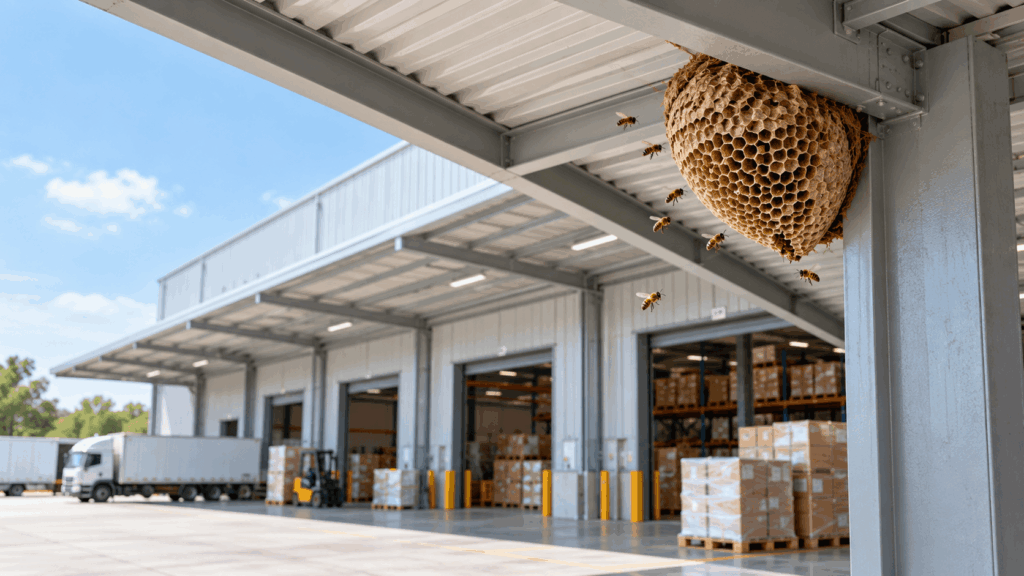
2. What risks can bee or wasp nests create in factories?
The most obvious risk is workers, drivers, contractors or visitors being stung. The level of impact increases if the nest is located near doors, receiving areas, walkways or locations where personnel frequently work.
High bee or wasp activity in warehouses or factories can also disrupt activities such as loading and unloading, roof maintenance, equipment inspection or area cleaning. Personnel may avoid passing through areas with bee or wasp activity, affecting operational flow and work progress.
At food facilities or environments with stringent pest management requirements, the presence of bees or wasps in sensitive areas also needs to be recorded and addressed appropriately. This is why businesses should include bees and wasps within the scope of pest-risk assessment when repeated activity is detected.
At food facilities, bee or wasp activity in sensitive areas needs to be recorded within the food-factory pest management programme and assessed according to the actual level of risk.
3. Which areas need to be inspected when bees or wasps are detected?
3.1. Factory roofs and canopies
Voids beneath roofs, sheet-metal junctions, beams and gaps behind canopies are locations where bees or wasps may choose to build nests. These areas are often difficult to observe from the ground, so a nest may develop for some time before being detected.
When bees or wasps are seen flying repeatedly in a fixed direction toward the roof, the business should record the area and restrict access until a specific assessment has been completed.
3.2. Loading areas and receiving and dispatch doors
Loading docks contain many canopies, service gaps and elevated structures, so they require attention when inspecting for bees or wasps. These areas also have high levels of personnel and vehicle movement, so a nest here can directly affect operational safety. Receiving areas are also points that require attention in warehouse insect-control procedures.
Bee and wasp control at factory loading areas needs to be planned in line with receiving and dispatch schedules to reduce disruption to goods flow.
3.3. Technical voids and low-traffic areas
Electrical boxes, wall cavities, suspended ceilings, areas behind equipment or infrequently used auxiliary storage rooms can become shelter points for bees or wasps. These locations should be included in the inspection scope if personnel repeatedly observe insects entering and leaving them.
Correctly identifying the flight path helps narrow the search area for the nest and supports the development of a more appropriate treatment plan.
3.4. Landscaping and perimeter areas
Vegetation, car-park canopies, fences and external auxiliary structures may also contain bee or wasp nests. Even if they are outside production areas, these locations still need to be assessed if bees or wasps frequently move across walkways or areas with high personnel traffic.
4. What should businesses do immediately after detecting a bee or wasp nest?
4.1. Isolate the risk area
The business should identify the area of bee or wasp activity and restrict access by unauthorised personnel. If the nest is near a walkway, loading area or work location, clear warnings need to be provided to reduce the risk of personnel accidentally approaching too closely.
Information about the nest location, time of detection and activity density should be recorded to support the subsequent assessment.
4.2. Limit direct disturbance to the nest
Strong disturbances such as vibration, hitting, poking the nest or suddenly changing the surrounding environment may cause bees or wasps to react defensively. Therefore, businesses should keep their distance and wait for assessment by an experienced technical team.
This is an important step in bee and wasp control in factories, particularly when the nest is located at height, near a crowded area or within a difficult-to-access structure.
4.3. Assess the impact on operations
The responsible person needs to determine whether the nest affects walkways, loading and unloading activities, production areas, areas containing products or maintenance routes. The level of impact helps determine priority and treatment timing.
If the area operates continuously, the treatment plan needs to consider implementation timing to minimise impact on production and ensure the safety of nearby personnel.
5. What steps should a factory bee and wasp control process include?
5.1. Assess the site and identify the nest location
The technical team needs to identify where bees or wasps enter and exit, the nest location, height, accessibility and surrounding area. This information determines the method, equipment and safety requirements for the treatment process.
The assessment also helps determine whether activity is associated with a single nest or multiple related points within the same area.
5.2. Assess the level of risk
The level of risk is assessed based on nest location, bee or wasp activity density, personnel traffic and operating conditions. A nest located near a main entrance or loading area requires a different level of priority from one located in a low-traffic perimeter area.
This assessment helps the business select an appropriate treatment time and prepare a suitable safety zone.
5.3. Select an appropriate solution
The treatment approach depends on the location, bee or wasp type, accessibility and site conditions. In sensitive areas, the technical team needs to carefully consider the method to minimise impacts on people, products and production activities.
VFC PestMan provides bee and wasp control as part of its specialised pest-control services, alongside rodent, fly, mosquito, ant, cockroach, termite and other pest-control services.
5.4. Reinspect after treatment
After treatment, the area needs to be monitored to determine whether bee or wasp activity has decreased or is continuing. Gaps, shelter locations and attracting conditions need to be reviewed to reduce the likelihood of recurrence.
This is an important part of bee and wasp control in factories because the risk of recurrence is often related to the structural conditions of the same area.
6. How can businesses reduce the likelihood of bees or wasps returning?
Businesses should inspect gaps in roofs, ceilings, walls, utility boxes and locations previously used by bees or wasps for nesting. Accessible openings need to be appropriately addressed once the area is safe.
The surrounding premises should also be kept tidy, particularly in areas containing infrequently used materials or auxiliary structures that create shelter. Periodic review helps detect new bee or wasp activity early before a nest develops further.
For facilities that frequently experience recurring bee or wasp activity, the area should be included in the periodic pest-monitoring schedule. Data over time help identify seasonal patterns, recurring locations and related conditions. If bees or wasps reappear at the same location, the business should reassess the pest management programme.
7. Why should businesses use an experienced pest control provider?
Bees and wasps are pests that need to be handled carefully because colony behaviour may change when the nest is disturbed. An experienced provider will assess the location, safety zone, access method and impact on operations before implementation.
For businesses, requirements also involve coordination with HSE, maintenance, security and area management teams. A clear procedure helps departments understand when access needs to be restricted, when operations can resume and which areas require continued monitoring.
VFC PestMan provides control services for multiple pest groups, including bees and wasps as well as other specialised pests such as birds, bats, snakes, lizards, millipedes and snails. Solutions are developed according to the characteristics of each species and the actual conditions at the facility.
8. When should businesses contact a bee and wasp control provider?
Businesses should request a site assessment when bees or wasps are observed flying repeatedly in a fixed direction, when a nest is found in an operating area, or when activity is frequently recorded near doors, loading areas, roofs or technical areas.
Bee or wasp activity in high-traffic areas, near production lines, warehouses or maintenance points needs to be prioritised for early assessment. Nests located at height or deep within structures also require an appropriate access method to reduce risk during treatment.
For facilities with repeated bee or wasp occurrences, monitoring should be incorporated into the periodic pest management programme. This helps businesses detect activity early and respond more proactively before activity density increases.
9. Frequently asked questions about bee and wasp control in factories
Should a bee or wasp nest found in a factory be treated immediately?
The business should assess the location and level of impact early. A nest near areas with personnel movement, loading and unloading or production needs to be isolated and treated using an appropriate safety plan.
Should employees attempt to poke or destroy a bee or wasp nest themselves?
Businesses should avoid directly disturbing the nest before the level of risk has been assessed. Bees or wasps may react strongly when the nest is shaken or damaged, particularly in high-traffic areas.
Where do bees or wasps commonly build nests in warehouses?
Locations that commonly need to be inspected include canopies, ceiling gaps, beams, utility boxes, wall cavities, loading areas and low-traffic locations.
Does the area need to be reinspected after a bee or wasp nest has been treated?
Yes. The area should be monitored to determine whether bees or wasps return, while gaps and shelter locations should also be reviewed to reduce the risk of recurrence.
10. Bee and wasp control in factories needs to be linked with safety and periodic monitoring
Bee and wasp control in factories needs to be based on site assessment, risk evaluation and the operating conditions of each business. Early isolation of the affected area, selection of an appropriate solution and post-treatment inspection help reduce risks to workers, warehouses and production activities.
VFC PestMan provides bee and wasp control services and control solutions for multiple specialised pest groups for factories, warehouses and B2B facilities. Businesses can combine incident treatment with a periodic monitoring programme to track locations with previous activity and identify risks earlier.
If a business detects a bee or wasp nest or abnormal bee or wasp activity in a factory, warehouse or operating area, VFC PestMan can conduct an on-site assessment and recommend a solution appropriate to the actual level of risk.
Hotline: (+84) 932669883
Email: contact@pestman.vn


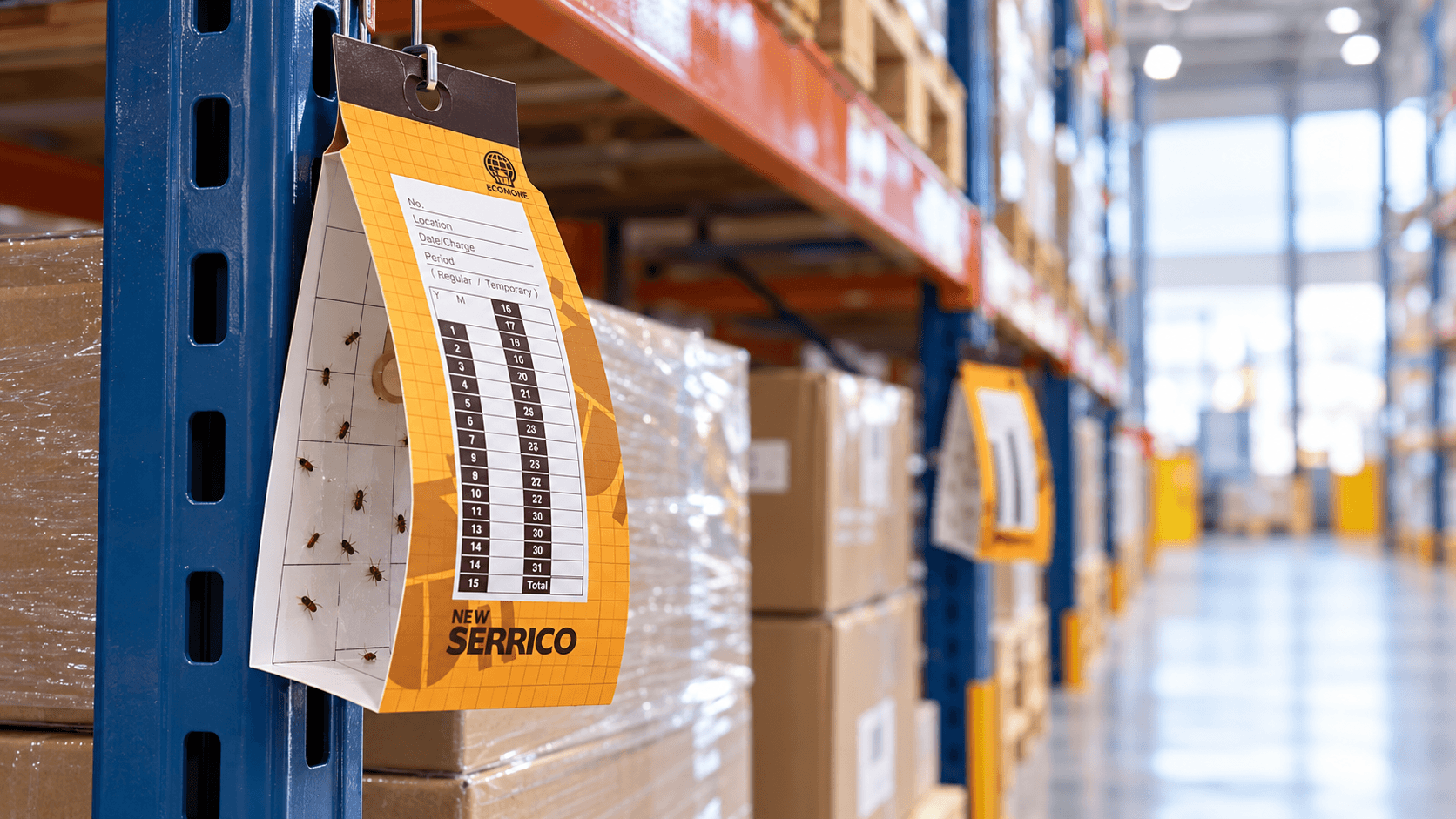
Pheromone traps: An insect monitoring solution for pest control
Pheromone traps are applied in pest control due to their ability to attract...
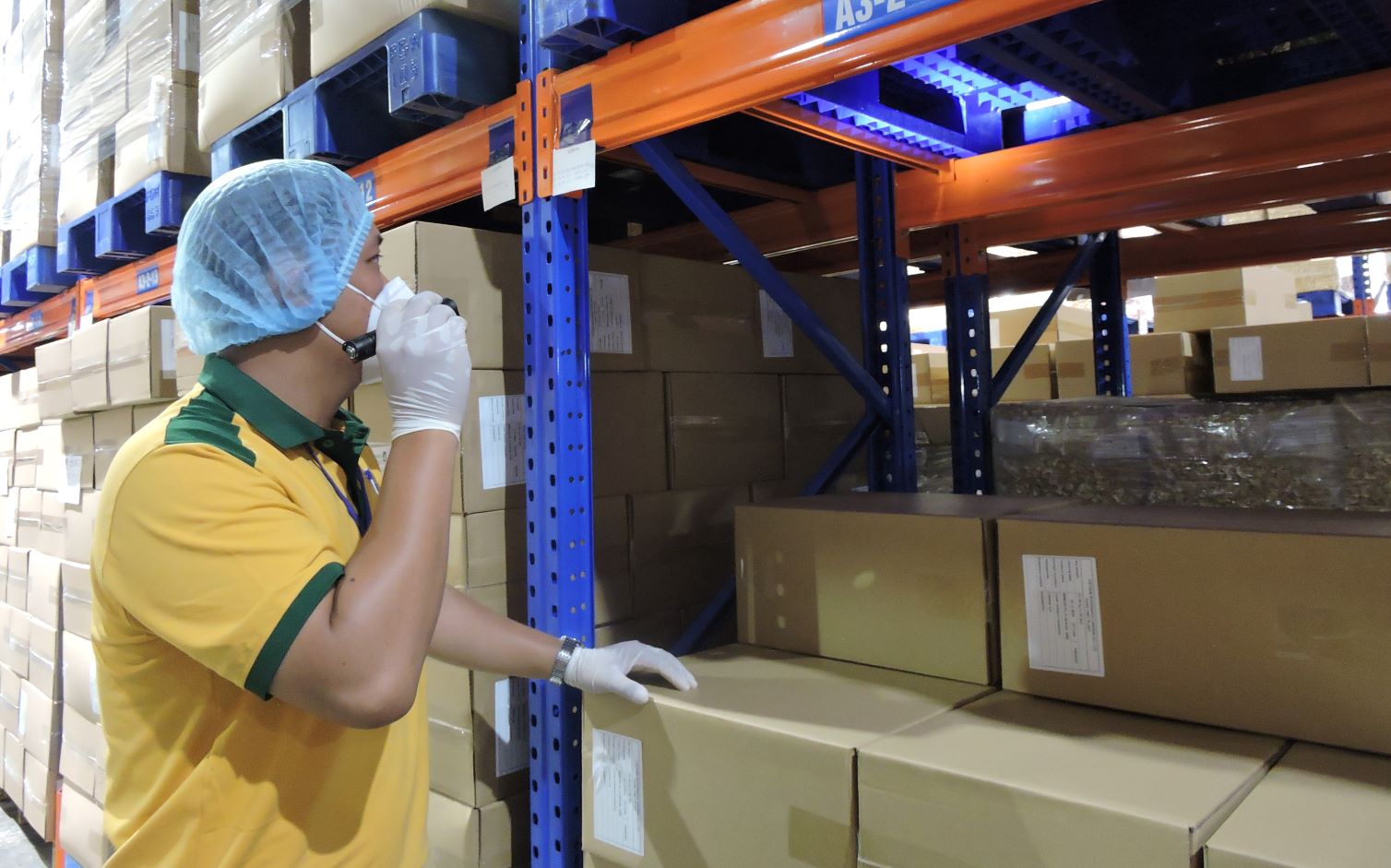
Effective methods and processes for warehouse pest control
Kho hàng là nơi tập trung nguyên liệu, thành phẩm, bao bì, pallet và lượng…


Related news


Ready to eliminate audit risks and proactively protect customer experience & brand reputation?





Dear Valued Visitor,
To protect our clients' interests, all materials here are copyrighted and may not be reproduced without permission.
We appreciate your cooperation. Should you need to use our content professionally, please contact us directly.