





By VFC PestMan | 09-10-2026
Pheromone traps are used in pest management because of their ability to selectively attract target insect species, helping detect their presence, record their numbers and monitor changes across inspection cycles.
Instead of taking action only after pests have appeared at high density, this solution helps businesses identify abnormal signs early, providing a basis for risk assessment and the selection of appropriate control measures.
1. What is a Pheromone trap?
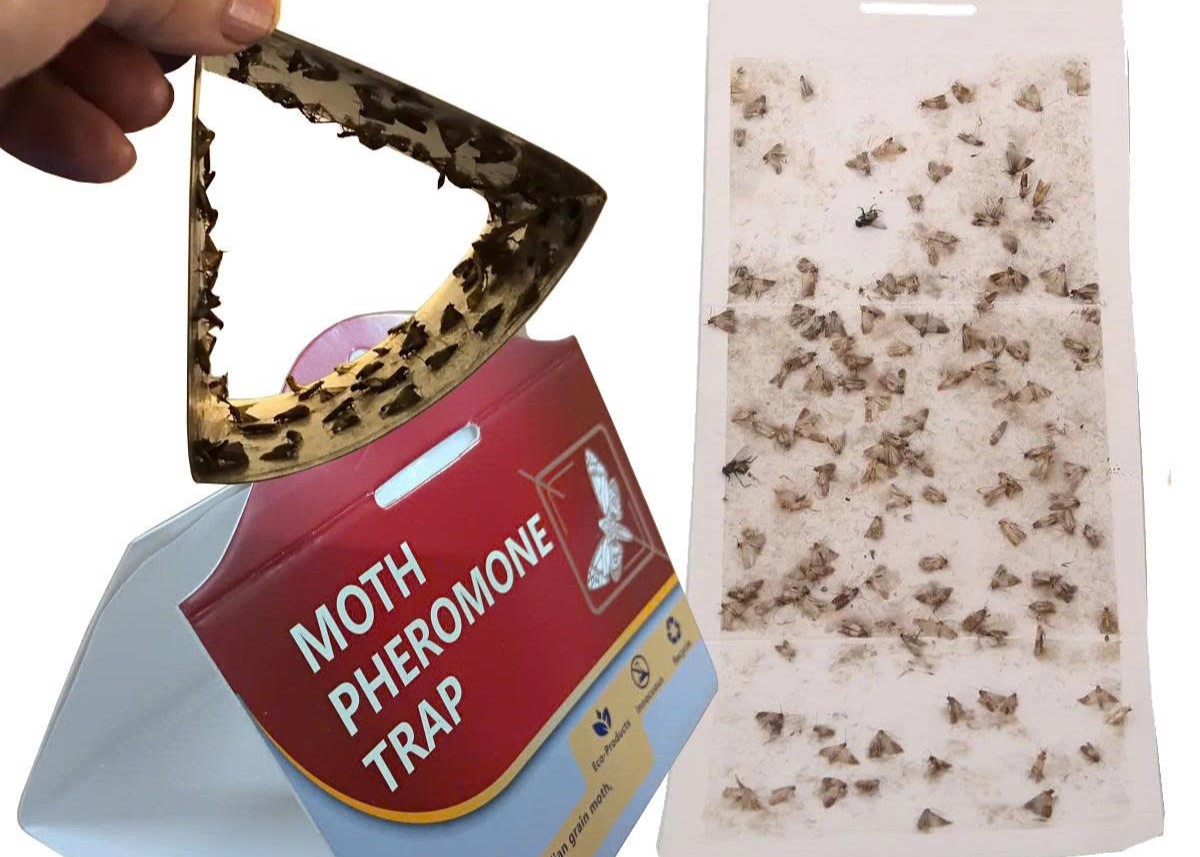
A Pheromone trap is a device that uses chemical attractants to attract and record the presence of specific insect species. This tool is used in Integrated Pest Management (IPM) programmes, particularly in manufacturing facilities, raw material warehouses and goods storage areas.
A pheromone is a chemical substance used by insects to communicate signals between individuals of the same species. Based on this characteristic, synthetic Pheromone lures have been developed to attract target insects being monitored to the trap location.
A Pheromone trap usually consists of two main components:
- Pheromone lure: Releases a chemical signal to attract the target insect.
- Adhesive surface: Retains insects that reach the trap, allowing them to be observed and counted.
Unlike measures that focus on eliminating pests, the primary function of a Pheromone trap is to collect information for monitoring purposes. The results recorded at each trap point help technicians assess the presence of insects and identify areas that require attention.
2. Advantages of Pheromone traps
Within an Integrated Pest Management (IPM) programme, Pheromone traps are an important monitoring tool that helps businesses proactively identify risks and provides data for assessing pest conditions in each area.
Targeted monitoring for specific insect groups
Each type of Pheromone lure is designed to attract specific insect species. This allows businesses to select the appropriate trap for the pest group that needs to be monitored, rather than relying solely on visual observation of insects appearing in the area.
Support early detection of pest presence
Insects may be present in storage areas before leaving clear signs of damage on raw materials or finished products. Through attraction, the traps help record the presence of target species, supporting technicians in narrowing down inspection areas and assessing actual conditions.
Provide data for monitoring insect trends
Through periodic inspection and counting, the number of insects captured in the traps can be compiled and compared across inspection cycles to identify increasing, decreasing or abnormal trends. This provides a basis for assessing pest conditions and reviewing the effectiveness of the control measures that have been implemented.
Support a proactive approach to pest management
Trap data provide businesses with an additional basis for deciding when inspections are needed, identifying areas that require attention and selecting appropriate control measures.
Instead of responding only when insects are found on products or goods, businesses can incorporate monitoring into their routine pest management process.
3. Pheromone traps are a common choice for many businesses
In food-processing facilities, raw material warehouses and agricultural-product storage facilities, beetles and moths may develop during product storage. Their presence is not always easy to detect through routine visual observation.
If pests are detected only after signs of product damage appear, the business may already have missed the opportunity to identify the risk at an early stage.
In addition to damage to raw materials and finished products, insects in production and storage areas may also lead to quality complaints, additional inspection and treatment activities, and impacts on the hygiene requirements of customers and partners.
In particular, at facilities applying food safety management systems such as HACCP, BRCGS, FSSC 22000 or ISO 22000, pest management activities need to be organised, monitored and documented in accordance with the applicable requirements.
A monitoring programme without continuous data may make it difficult for QA/QC teams to determine:
- Which areas are recording target insects.
- How the number of insects at each control point changes across inspection cycles.
- Which locations require investigation into the cause of pest occurrence.
- Whether the measures implemented are accompanied by improvement in pest conditions.
In this context, Pheromone traps serve as information-collection points within the monitoring system, giving businesses an additional basis for assessing risk instead of responding only after an incident has occurred.
However, these traps do not replace product inspection, environmental sanitation or other control methods. The value of this tool is realised when the trap is selected for the correct target pest, positioned appropriately and inspected regularly within an integrated IPM programme.
4. Three types of Pheromone traps currently used by VFC PestMan
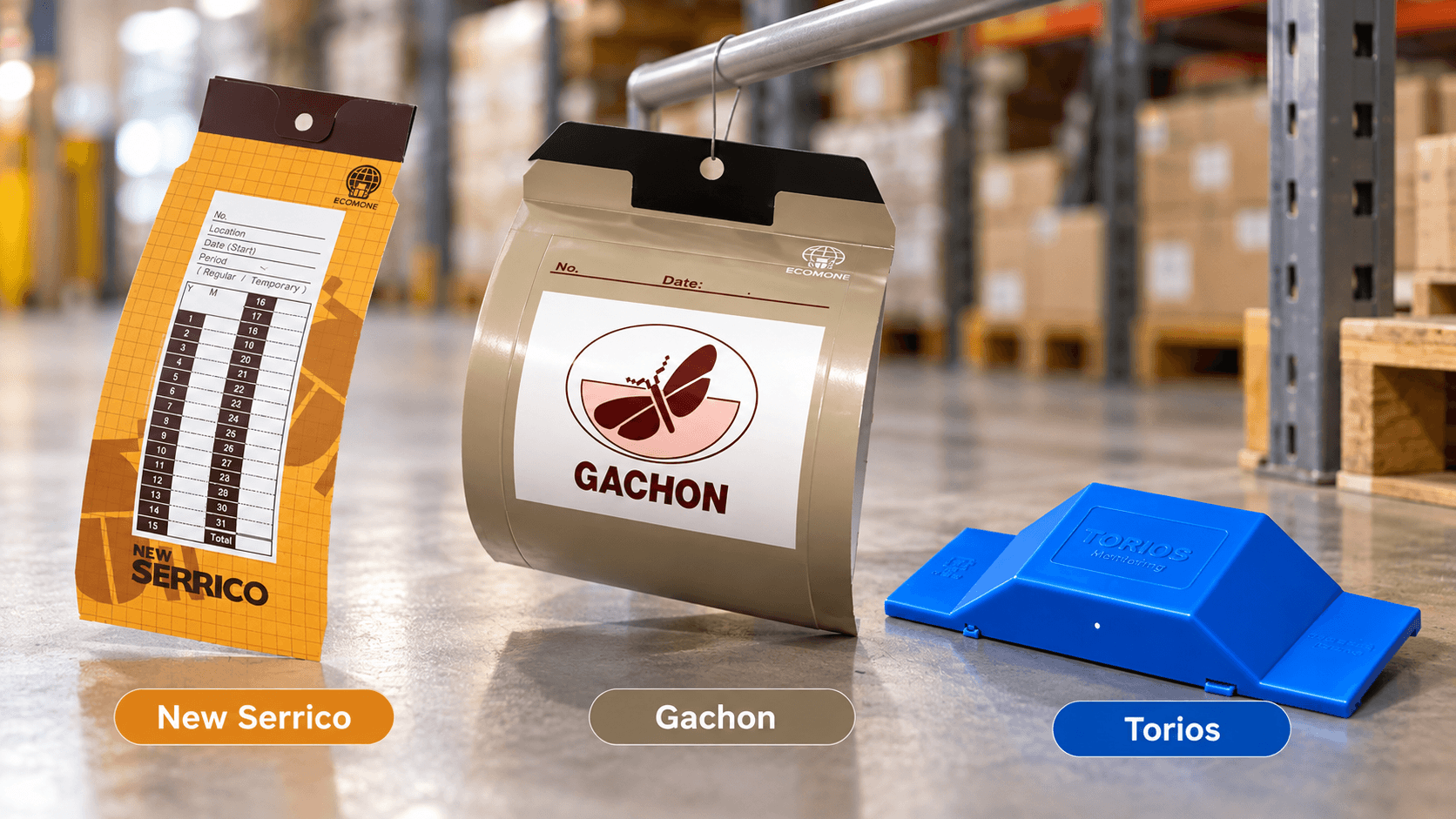
Each insect group has different biological characteristics and behavioural patterns. Therefore, trap selection needs to be based on the target pest, the characteristics of the area and the requirements of the monitoring programme.
With more than 50 years of experience, VFC PestMan is a professional pest control service brand under Vietnam Fumigation Joint Stock Company (VFC). VFC PestMan provides IPM solutions for factories, warehouses and various types of businesses with stringent requirements for safety, hygiene and risk management.
You may also be interested in: VFC PestMan’s professional pest control services for factories, warehouses and manufacturing facilities.
For monitoring stored-product insects, VFC PestMan currently uses three Pheromone trap lines from Fuji Flavor (Japan): New Serrico, Gachon and Torios.
| Trap type | Target insects | Trap placement |
| New Serrico | Cigarette Beetle | Wall-mounted, approximately 1.5 m above the floor |
| Gachon | Certain stored-product moth species | Hanging trap |
| Torios | Certain stored-product beetle species | Placed directly on the floor |
4.1. New Serrico - Cigarette Beetle monitoring trap
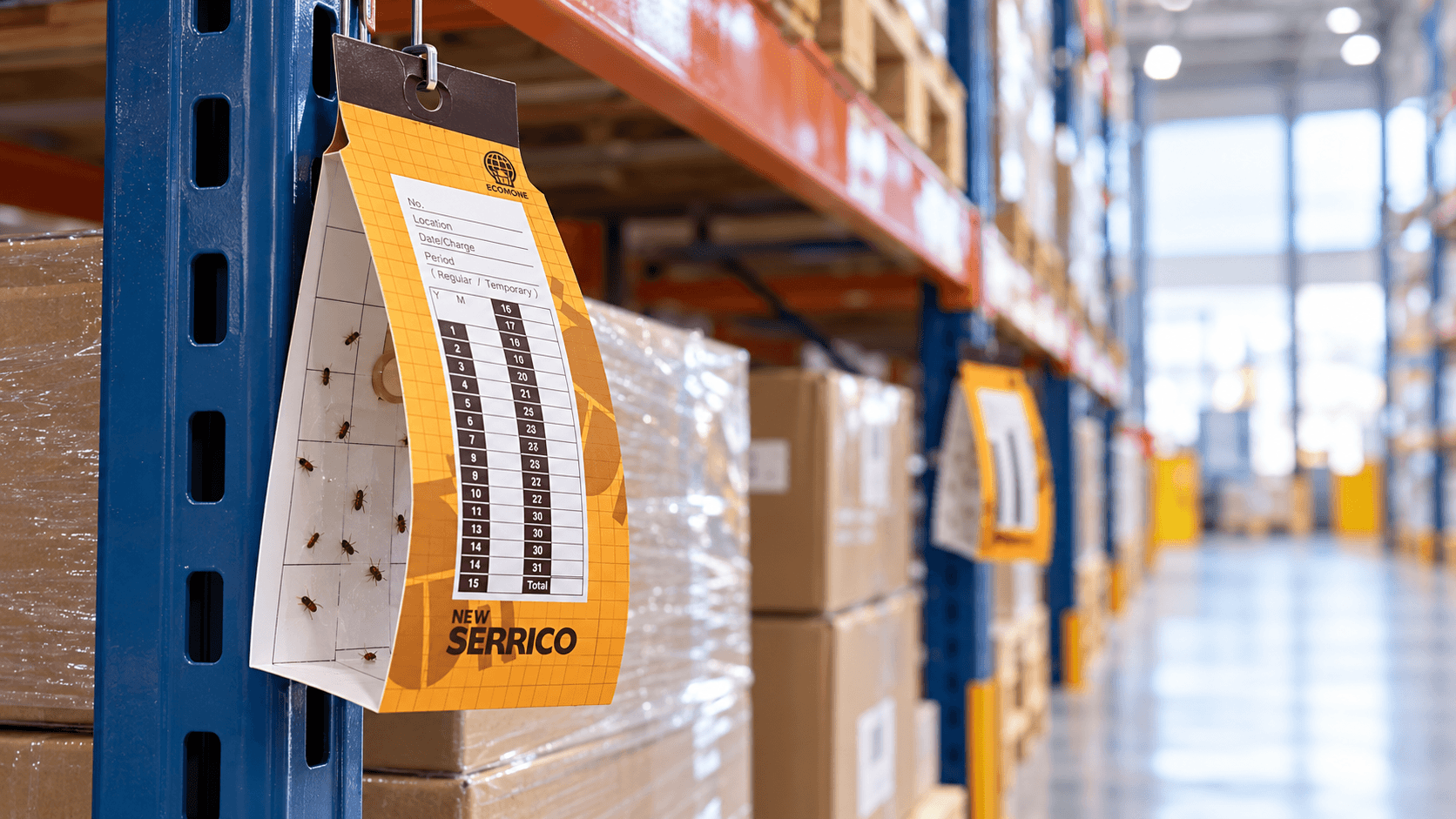
New Serrico is used to monitor the Cigarette Beetle (Lasioderma serricorne), an insect species that can damage stored dry products.
The trap uses a Pheromone lure to attract the target insects to an adhesive surface. When installed, the trap is mounted on the wall at a height of approximately 1.5 m above the floor. The number of beetles recorded across inspections helps assess their presence and changes in beetle numbers within the monitored area.
4.2. Gachon - Monitoring trap for stored-product moths
Gachon is used to monitor several groups of stored-product moths, including the Indian Meal Moth, Tobacco Moth and Rice Moth.
The trap is designed as a hanging trap, with the Pheromone lure positioned at the specified location on the adhesive sheet. When target insects are attracted to the trap, they are retained for observation and counting.
The data collected help technicians monitor the presence of target moth groups and identify changes in their numbers across inspection cycles.
4.3. Torios - Monitoring trap for stored-product beetles
Torios is used for several stored-product beetle species, including the Red Flour Beetle, Confused Flour Beetle, Lesser Grain Borer, Sawtoothed Grain Beetle and Khapra Beetle.
Unlike the two trap lines above, Torios is placed directly on the floor, making it suitable for the movement patterns of crawling insects.
The device helps record the presence of target species at the monitoring point, providing information to support risk assessment within the warehouse.
4.4. Trap placement and inspection within the monitoring system
Using the correct trap type needs to be accompanied by an appropriate placement plan and inspection procedure so that the data collected remain valuable for long-term monitoring.
During implementation, trap points are numbered and shown on the location map, helping technicians identify the exact inspection area and compare results across inspection cycles.
The typical spacing is 5–10 m, depending on the trap type, spatial characteristics and the target pest being monitored. Locations that may be affected by forklifts, doors, windows or ventilation fans need to be considered to minimise interference with monitoring activities.
In addition, trap locations and quantities need to remain consistent. Any changes made during use must be updated to ensure data continuity.
During each inspection cycle, technicians count the insects, record the results and assess changes that require attention. This provides a basis for identifying areas that require further inspection or recommending corresponding control measures.
5. Integrating insect monitoring with the PestMan Dashboard
Within an IPM programme, trap inspections help collect information from the field. However, to use these data effectively, businesses need to consolidate results across multiple inspection cycles, compare monitoring points and track changes over time.
Alongside specialised monitoring devices, VFC PestMan uses the PestMan App and PestMan Dashboard to manage pest control data, supporting the recording, consolidation and analysis of information for management purposes.
Through the Dashboard, businesses can:
- Monitor pest trends: Observe changes across inspection cycles.
- Identify abnormal areas: Identify control points showing increases that require attention.
- Manage the monitoring system: Track the locations of control points on the map.
- Retrieve inspection history: Review site information, recorded results and data used for assessment.
For QA/QC and operations management teams, centralised information management helps reduce fragmented documentation and makes it easier to evaluate the effectiveness of the pest management programme and prepare data for relevant audits.
See more: 4 misconceptions about insect control and the Facts from VFC PestMan experts
The combination of on-site monitoring and a data-management platform helps businesses turn individual inspection results into valuable information for assessment and decision-making.
Pheromone traps are therefore a useful tool within an IPM programme, particularly for facilities that need to monitor beetles, moths and other stored-product insects.
If your workshop, factory or warehouse is experiencing a high number of stored-product beetles, contact VFC PestMan for a site assessment and consultation on an appropriate solution.
Hotline: 0932 669 883
Email: contact@pestman.vn


Pheromone traps: An insect monitoring solution for pest control
Bẫy Pheromone được ứng dụng trong kiểm soát dịch hại nhờ khả năng dẫn dụ…
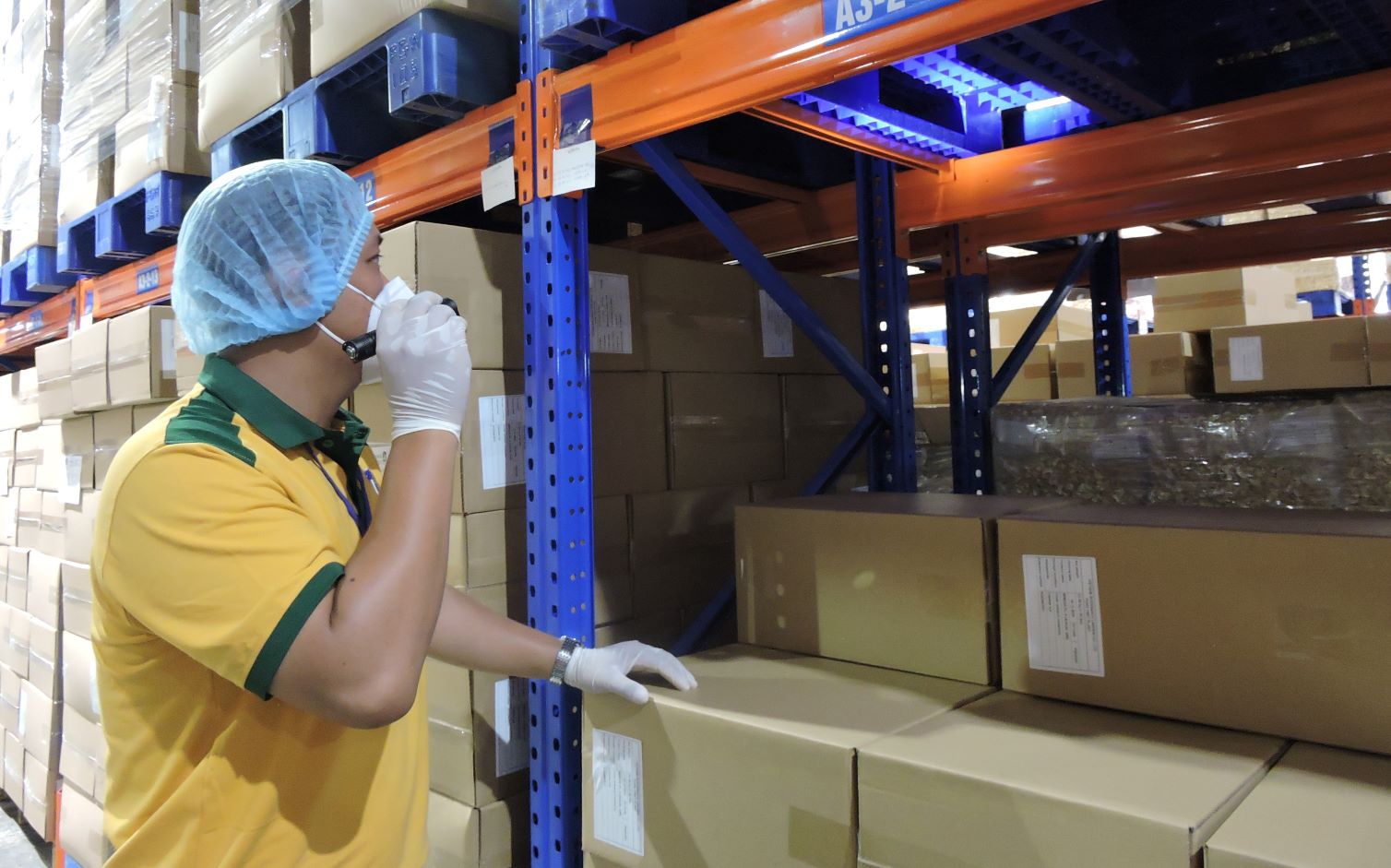
Phương pháp và quy trình kiểm soát côn trùng trong kho hàng hiệu quả
Kho hàng là nơi tập trung nguyên liệu, thành phẩm, bao bì, pallet và lượng…


Related news



Ready to eliminate audit risks and proactively protect customer experience & brand reputation?





Dear Valued Visitor,
To protect our clients' interests, all materials here are copyrighted and may not be reproduced without permission.
We appreciate your cooperation. Should you need to use our content professionally, please contact us directly.