







 PART
01
By VFC PestMan | 30-09-2026
Pest control in food warehouses: Risks, procedures, and IPM solutions
Food storage warehouses play an important role in preserving supply-chain value before products reach consumers. Pest control in food warehouses helps protect packaging integrity, prevent harmful microorganisms and maintain strict compliance with international food-safety standards.
Article content
1. Potential pest risks in food warehouse systems
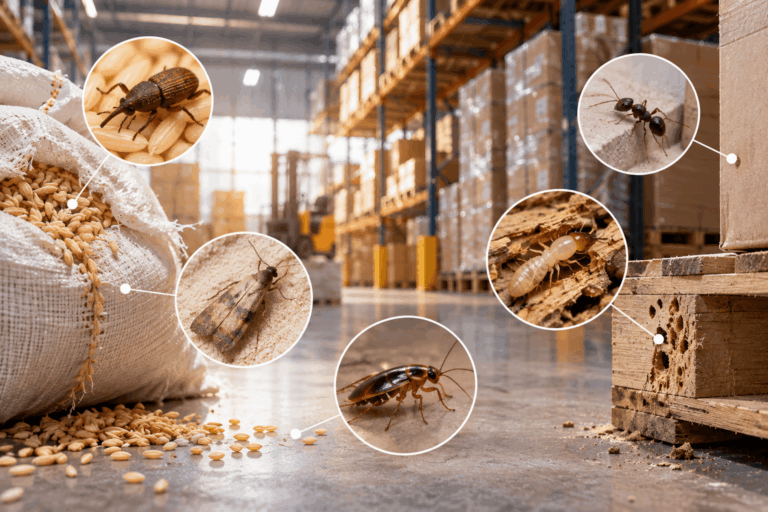
Warehouse systems concentrate food sources that are attractive to pests, including starch, sugar, grains and fats. The presence of pests directly creates a risk of cross-contamination by pathogenic microorganisms and biological foreign matter. Rodents such as rats and mice can damage cardboard packaging and wooden pallets and may even gnaw electrical wiring, causing short circuits, fires and operational disruption.
Beetles, stored-product moths and grain weevils can damage packaged materials and reduce the quality grade of stored agricultural products. Cockroaches and flies can carry pathogens from external drainage areas into goods-sorting areas.
The economic consequences of a pest incident can far exceed the value of the rejected goods. Businesses may face administrative penalties, suspension of shipment circulation or non-conformance findings during periodic audits.
Under stringent standards such as BRCGS, AIB International, IFS Food or ISO 22000, signs such as rodent droppings, insect carcasses or stored-product beetles remaining in the warehouse may result in the facility being assessed as non-compliant. Damage to brand reputation and the risk of losing global supply contracts can create significant losses for warehouse operators.
2. Pest hotspots in storage warehouses
Goods receiving and dispatch areas
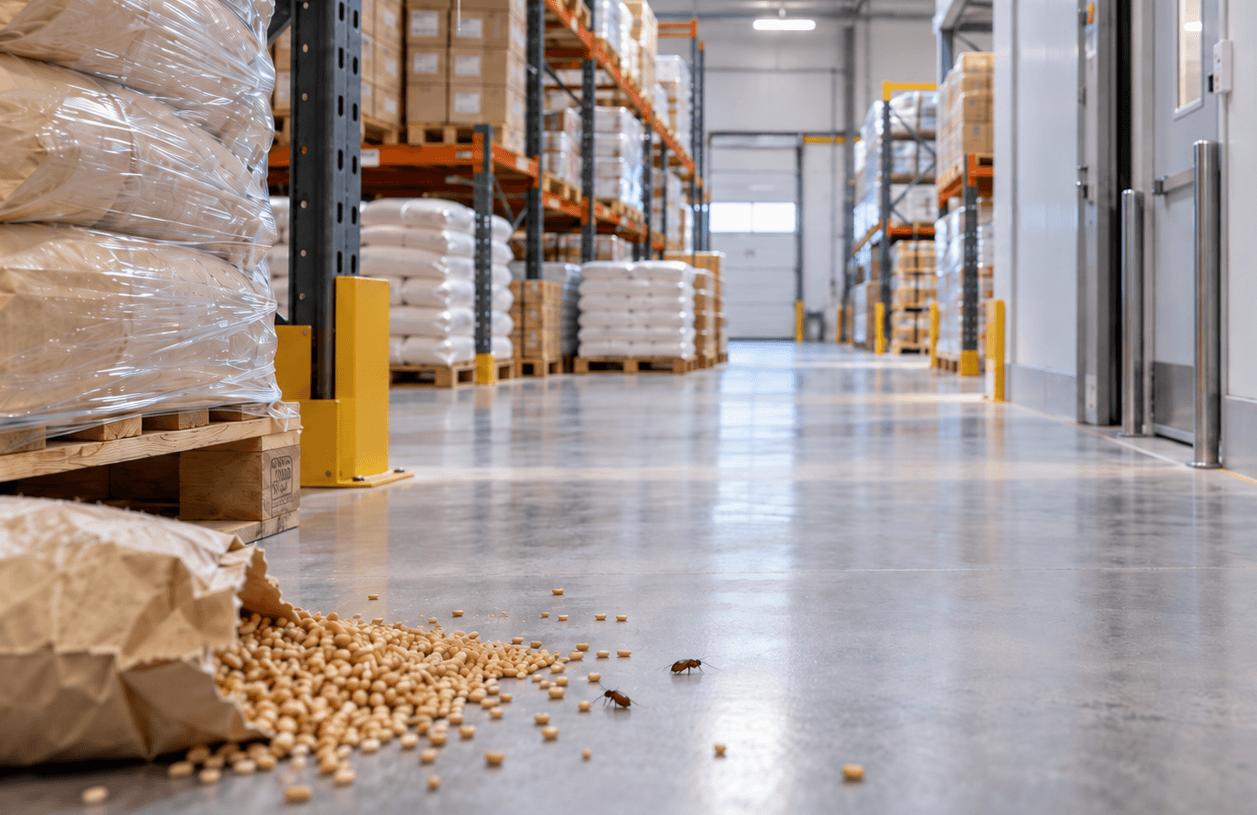
Warehouse doors that remain open frequently during receiving and dispatch periods create opportunities for pests to enter from the surrounding environment. Incoming goods, damp wooden pallets and cardboard packages may carry beetle eggs or larvae from outside deeper into the warehouse. Businesses can refer to the warehouse insect control process to review risks from goods receiving through dispatch.
Grain-material and cardboard-packaging storage areas
When storage racks are positioned too close to walls, the narrow spaces can become sanitation blind spots. Spilled flour, sugar and grains accumulating in floor cracks provide abundant food sources that sustain crawling insect populations.
Empty pallet and packaging-waste storage areas
Wooden pallets stored for long periods in damp outdoor conditions can provide shelter for termites, Oriental cockroaches and carpenter bees. Torn plastic stretch film and piles of discarded cardboard create protected nesting environments where rodents can breed. If insects repeatedly appear around pallet areas, businesses should also review the mistakes that cause insects to recur in warehouses.
Technical rooms, drainage areas and perimeter boundaries
Electrical utility boxes, plasterboard ceilings in warehouse offices and high-moisture floor drains can attract cockroaches and mosquitoes. Dense vegetation and organic waste around external perimeter fences can create conditions that allow rodents to approach the warehouse and enter through small gaps.
3. Standardised food warehouse pest control process
A professional pest management process requires close integration of infrastructure assessment, data analysis and continuous prevention.
| Implementation step | Detailed activities | Objective |
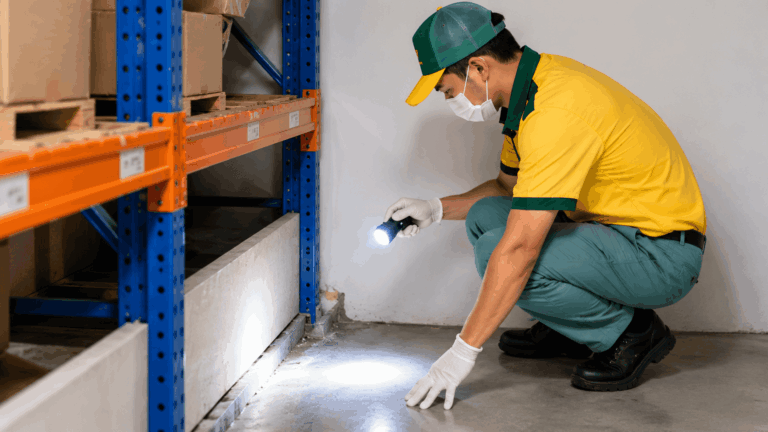
| 1. Site assessment and risk evaluation | Conduct a comprehensive inspection of the building envelope, cracks at wall-floor junctions, roller-door sealing and current pest density. | Accurately identify target pest species and map high-risk locations. |
| 2. Establish a pest map | Position and assign identification codes to all glue-board insect light traps, mechanical rodent traps and pheromone traps. | Standardise device locations and prevent traps from being misplaced during audits. |
| 3. Mechanical entry prevention | Reinforce insulated plastic curtains, maintain air curtains at entrances and install stainless-steel insect screens at ventilation openings. | Block natural pest movement routes from the perimeter into the facility. |
| 4. Monitoring and trend analysis | Record the number of individuals captured by inspection cycle, update on-site data and analyse changes in density. | Detect abnormal increases early and implement timely treatment measures. |
| 5. Record keeping and continuous improvement | Complete inspection logs, Safety Data Sheets (SDS), pest maps and corrective and preventive action reports. | Ensure data transparency and maintain readiness for food-safety standard audits. |
Learn more: 5 pest-control documentation errors that are easily detected during audits
4. Comprehensive IPM solutions from VFC PestMan
The Integrated Pest Management (IPM) programme provided by VFC PestMan shifts the focus from reactive chemical spraying to a proactive prevention model based on multiple layers of exclusion and control.
Establish physical exclusion barriers at the perimeter
VFC PestMan provides recommendations for sealing structural openings, addressing gaps beneath doors wider than 6 mm and reinforcing screens at drainage channels. The technical team positions fixed perimeter rodent stations close to warehouse boundary walls to intercept rodents before they reach warehouse entrances.
Control flying insects with specialised devices
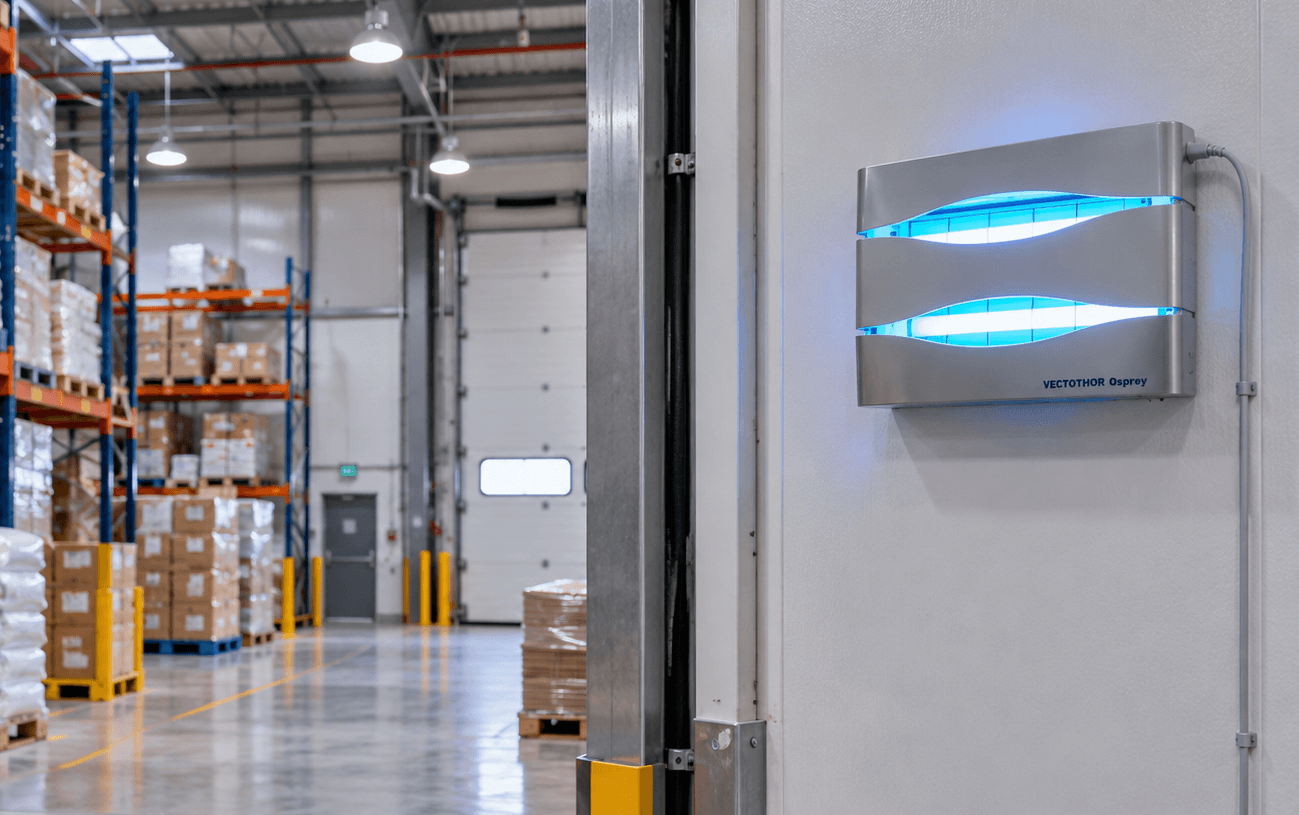
Electric-grid insect killers are prohibited inside food warehouses to eliminate the risk of insect fragments being scattered onto packaging. VFC PestMan deploys UV-A LED insect light-trap systems using specialised glue boards that retain flying insects intact and provide a basis for accurate species identification.
Mechanical traps and safe biological monitoring
Toxic chemical bait must not be scattered in food-storage areas. VFC PestMan uses specialised mechanical traps for rodents, odourless biological gel bait for German cockroaches and specialised pheromone glue traps to control grain beetles on high storage racks.
Real-time digital data management
All inspection results are updated directly by VFC PestMan technicians through the digital platform. The Dashboard automatically analyses pest-density trends by week and by storage area. Transparent reports on pest types, supporting images and corrective recommendations help QA/QC teams monitor warehouse conditions 24/7 and remain ready for quality audits.
Implementing a food warehouse pest control programme based on a systematic IPM approach helps protect product safety and the supply chain. VFC PestMan supports businesses in building sustainable pest-prevention barriers, reducing dependence on chemicals and maintaining storage quality.
If businesses are looking for a pest control company for businesses, need to survey the current pest situation or build a control program suitable for a factory, warehouse, hotel, or building, VFC PestMan can assist with on-site evaluation and propose solutions based on actual risks.
Hotline: (+84) 932669883
Email: contact@pestman.vn
PART
01
 PART
02
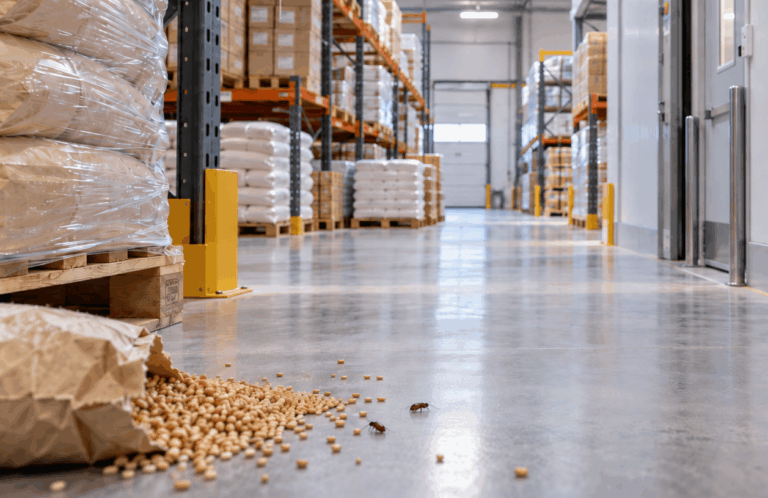
Mistakes that cause insects to recur in warehouses
 PART
03
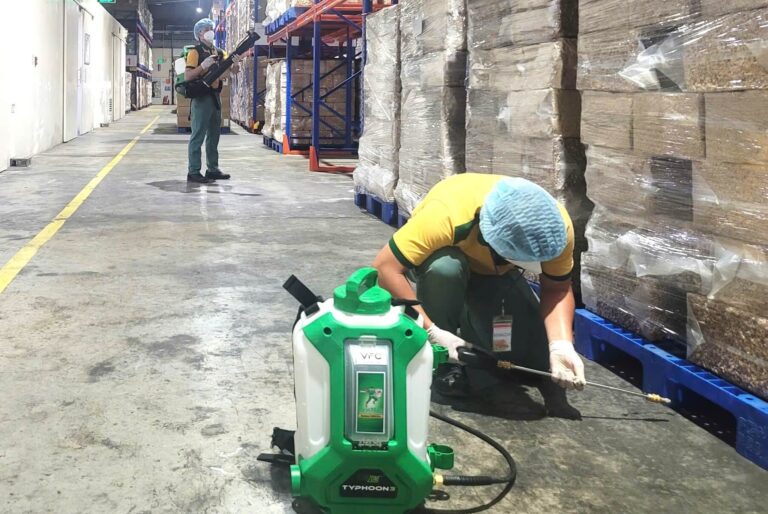
Pest control in food warehouses: Risks, procedures, and IPM solutions
 PART
04
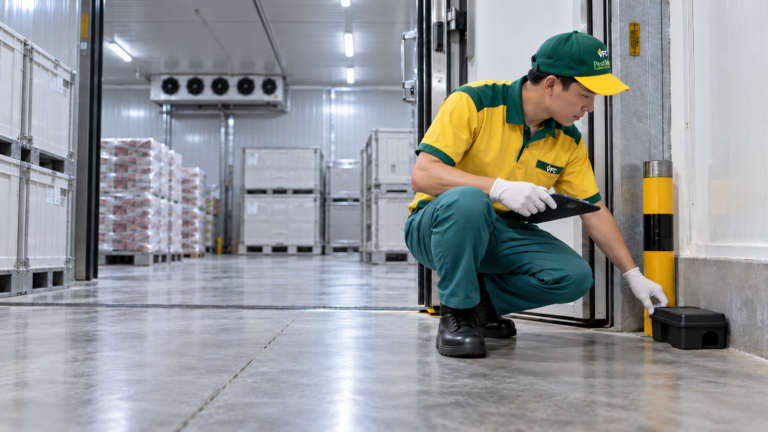
Comprehensive insect control strategy for food logistics warehouses and F&B supply chain
 PART
05
Pest control in cold storage facilities: 5 blind spots businesses often overlook

Ready to eliminate audit risks and proactively protect customer experience & brand reputation?






Dear Valued Visitor,
To protect our clients' interests, all materials here are copyrighted and may not be reproduced without permission.
We appreciate your cooperation. Should you need to use our content professionally, please contact us directly.