





By VFC PestMan | 28-07-2026
In the food industry, insects not only create hygiene concerns but may also directly affect product quality, food safety and a company’s reputation. Flies, cockroaches, ants, stored-product insects and other flying insects may enter production areas, raw material warehouses, packaging areas or ancillary facilities when an appropriate control programme is not in place.
Therefore, insect control in food manufacturing facilities should not be understood simply as routine pesticide spraying. It is a risk management programme that must be systematically developed, monitored, documented and continually improved to meet standards such as GMP, HACCP, ISO 22000, FSSC 22000, BRCGS and AIB.
1. Why do food manufacturing facilities need insect control?
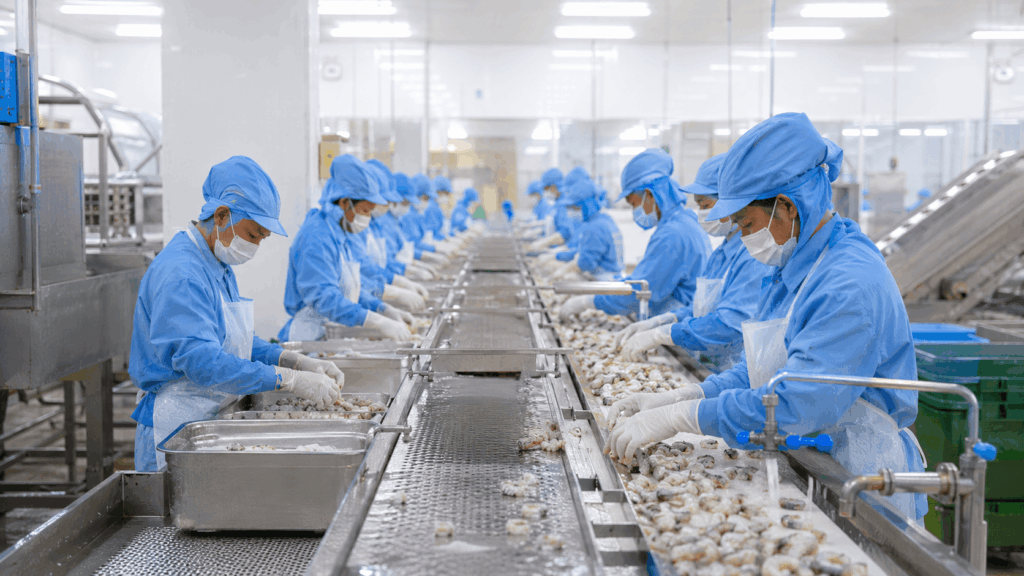
Food manufacturing facilities contain many factors that attract insects, including raw materials, moisture, wastewater, organic matter, packaging materials and storage areas. Without effective control, insects may carry microorganisms and contaminate raw materials, packaging or finished products during production.
In addition to food safety risks, insect activity may lead to customer complaints, negatively affect facility audit results and damage brand reputation. For exporters or suppliers to major retail chains, this risk should be controlled proactively rather than addressed only after an incident occurs. An effective control programme should help the facility reduce insect-related incidents while maintaining complete documentation and audit readiness.
2. Common insects found in food manufacturing facilities
The insect risk profile varies depending on the type of production. Flies commonly occur around waste areas, raw material receiving zones and locations where organic matter accumulates. Cockroaches often harbour in damp areas, drainage systems, cracks, crevices and ancillary facilities.
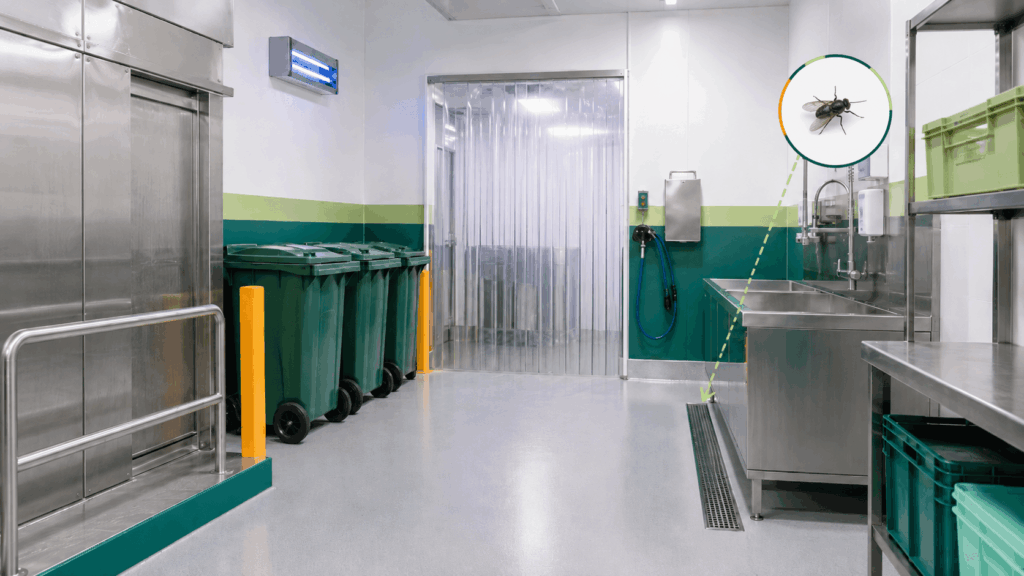
Ants may enter areas containing sugar-based ingredients, oils, grease or food residues. In warehouses storing dry materials such as flour, grains, seeds or animal feed, stored-product beetles and warehouse moths require regular monitoring because infestations may develop directly within stored commodities.
You may also be interested in: Mistakes that cause insects to recur in warehouses
3. Why insects appear in manufacturing facilities
Insects may enter a facility through loading and unloading doors, gaps beneath doors, wall penetrations, drainage systems, incoming raw materials or transport packaging. When these points are not properly controlled, they can become recurring entry routes for insects from outside.
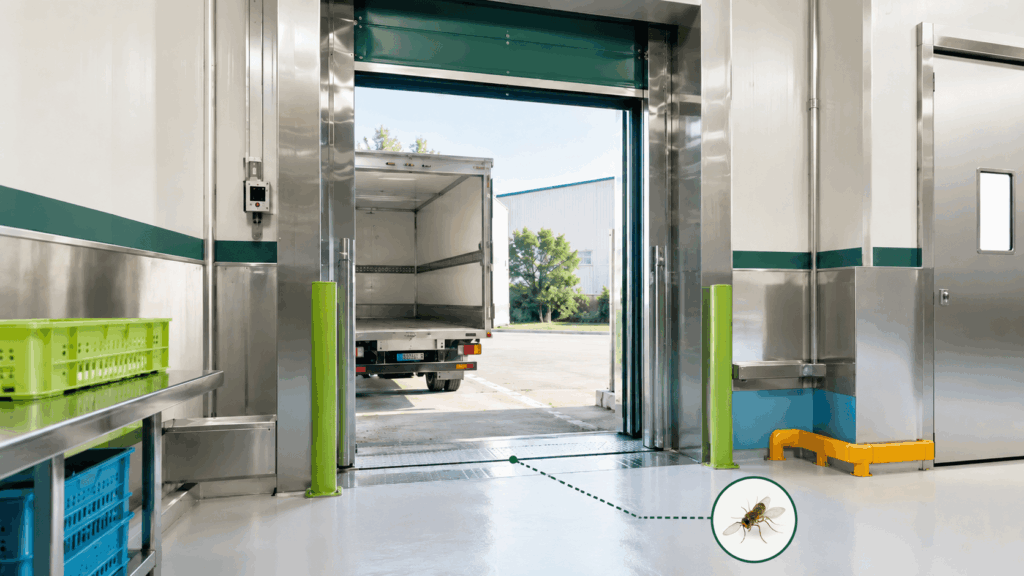
In addition to structural conditions, sanitation is also an important factor. Spilled raw materials, standing water, improperly managed waste, damp warehouse areas and difficult-to-clean equipment may all create favourable conditions for insect development. This is why an insect control programme must be integrated with sanitation, maintenance and operational management.
4. Insect control process in food manufacturing facilities
An effective insect control programme usually begins with a site survey. Pest management specialists should assess production areas, raw material warehouses, finished-product warehouses, loading and unloading points, waste management areas, drainage systems and other high-risk locations to identify infestation sources and entry routes.
Following the survey, the facility should establish an integrated pest management programme, commonly known as IPM. The programme includes the placement of monitoring devices, scheduled inspections, data recording, trend analysis and corrective actions when risks are identified. This approach allows the facility to make control decisions based on actual data rather than relying solely on fixed treatment schedules. For flies and other flying insects, LED UV-A insect light traps may be installed at locations selected and positioned following a proper site assessment.
5. Required documentation for an insect control programme
Documentation is a critical component of an insect control programme in food manufacturing facilities. Companies should maintain monitoring device location maps, scheduled inspection plans, site service reports, treatment histories, pesticide records, safety data sheets, technician certificates and corrective action records.
These documents help the facility monitor programme effectiveness, demonstrate compliance during audits and support traceability when an incident occurs. Under standards such as HACCP, ISO 22000, FSSC 22000, BRCGS and AIB, complete documentation is often just as important as on-site treatment activities.

Read more: Food Testing in 2026: Mandatory Testing Parameters and Compliance Procedures for Food Businesses
6. The role of IPM in food manufacturing facilities
IPM is an integrated pest management approach that combines prevention, monitoring and targeted treatment. In food manufacturing facilities, IPM helps reduce reliance on pesticides, minimise unnecessary treatments and focus on controlling root causes such as structural deficiencies, sanitation issues, entry points and environmental conditions.
A well-designed IPM programme not only helps reduce insect activity but also enables the facility to maintain audit readiness. Monitoring data, trend analyses and corrective actions demonstrate that the company is managing risks proactively and systematically.

7. Common mistakes in insect control
One of the most common mistakes is relying only on scheduled pesticide spraying without investigating the cause of the infestation. This approach may eliminate insects that are currently visible, but it is unlikely to prevent recurrence if structural gaps, food sources, moisture or sanitation issues remain uncorrected.
Another common mistake is the lack of monitoring data. When a facility only has treatment reports without trend analysis, it becomes difficult to determine which areas are experiencing increasing risk, when insect activity is most likely to occur and where the source originates. This is also a common area of concern during food safety audits.
8. How does VFC PestMan support food manufacturing facilities?
VFC PestMan implements insect control programmes for food manufacturing facilities using an IPM-based approach. The process begins with a site survey, risk assessment, monitoring system design and the development of an inspection plan suited to each area. Every programme is designed around the facility’s actual operating conditions rather than applying the same model to every site.
In addition to on-site services, VFC PestMan supports companies in maintaining documentation systems, periodic reports, monitoring data, trend analyses and corrective action records. This approach helps facilities improve insect control performance, reduce operational risks and better meet the requirements of GMP, HACCP, ISO 22000, FSSC 22000, BRCGS and AIB.
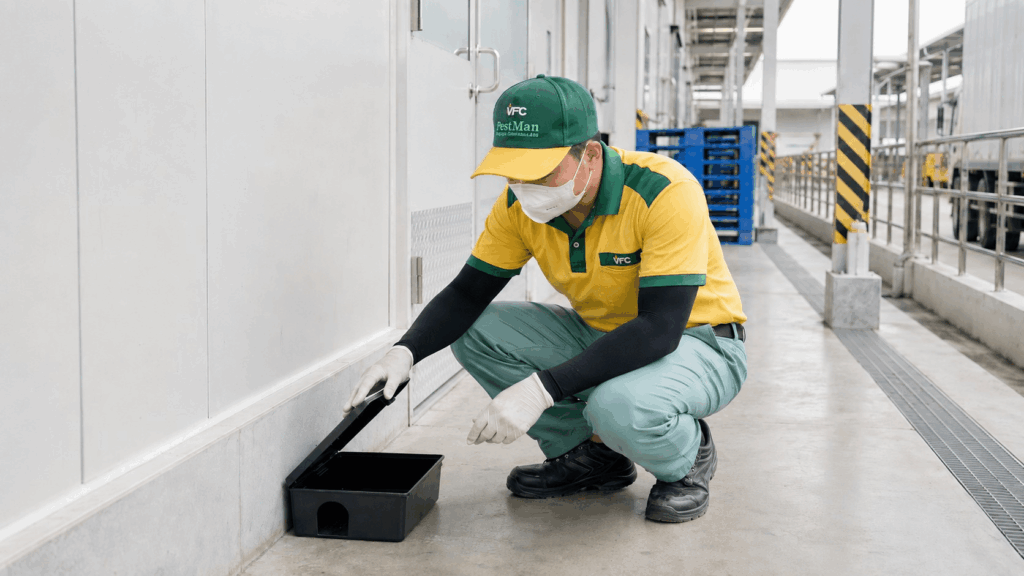
Insect control in food manufacturing facilities is an important component of the food safety management system. Companies should not treat it merely as a routine insect treatment activity. Instead, they should establish a structured risk management programme that includes site surveys, monitoring, documentation and continual improvement.
When implemented through an IPM approach, an insect control programme enables facilities to take preventive action, reduce contamination risks, protect product quality and remain prepared for audits conducted by customers, certification bodies and international partners.
If your company is looking for a professional insect control solution that complies with stringent audit requirements, contact VFC PestMan for a site survey, risk assessment and an IPM programme tailored to your facility’s actual operating conditions.
- Hotline: (+84) 932669883
- Email: contact@pestman.vn
Learn more: Comprehensive pest and insect control services for manufacturing facilities


Các loại côn trùng trong kho hàng: Nhận diện và giải pháp kiểm soát toàn diện
Khu vực lưu trữ hàng hóa và kho nguyên liệu tập trung mật độ cao…

Kiểm soát dịch hại trong kho lạnh: 5 điểm mù doanh nghiệp thường bỏ qua
Kho lạnh giữ vai trò quan trọng trong chuỗi cung ứng thực phẩm, dược phẩm…


Related news





Ready to eliminate audit risks and proactively protect customer experience & brand reputation?





Dear Valued Visitor,
To protect our clients' interests, all materials here are copyrighted and may not be reproduced without permission.
We appreciate your cooperation. Should you need to use our content professionally, please contact us directly.