





By VFC PestMan | 23-07-2026
Pest control should not begin only when a factory starts operating; it needs to be considered from the design and construction stages. An Integrated Pest Management (IPM) programme implemented early can help businesses reduce the risk of pest entry, lower future corrective costs and establish a foundation for meeting standards such as AIB, BRCGS, FSSC 22000 and GMP.
1. Why does the construction stage determine pest control effectiveness?
Many businesses only approach a pest control provider once the factory has been completed or is preparing to start operations. However, many risks are created during the design and construction process itself. Gaps at wall bases, pipes passing through floors, receiving and dispatch doors or drainage systems that are not properly addressed can become entry routes for rodents, termites and many insects from the first days of operation.
These points are also among the pest entry routes that need to be controlled in food factories from the stage of designing the layout and operational flow.
Once the factory has entered production, modifying these locations is often more time-consuming and costly than addressing them from the beginning. Businesses may need to stop part of the production line, remove equipment or modify structural elements to correct entry points. In addition to repair costs, these changes can also affect production plans and delivery schedules.
Based on experience implementing IPM programmes for many food, beverage, pharmaceutical and logistics facilities, VFC PestMan has found that investing in prevention from the construction stage consistently delivers greater long-term effectiveness than treating pests after they have already appeared. This is also an approach increasingly adopted by businesses to reduce operational risks and prepare more effectively for international audits.
2. Pest control begins with eliminating entry points
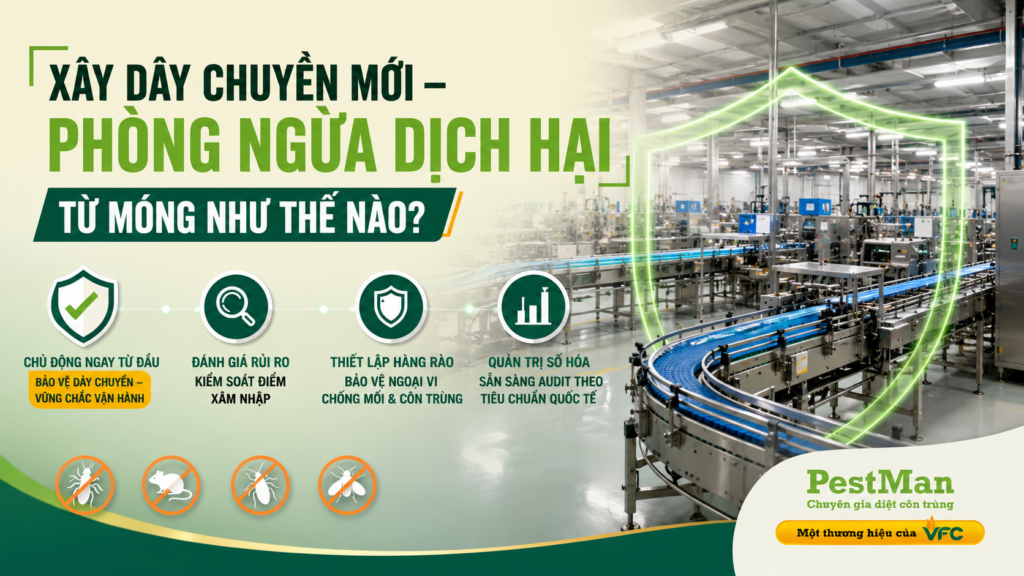
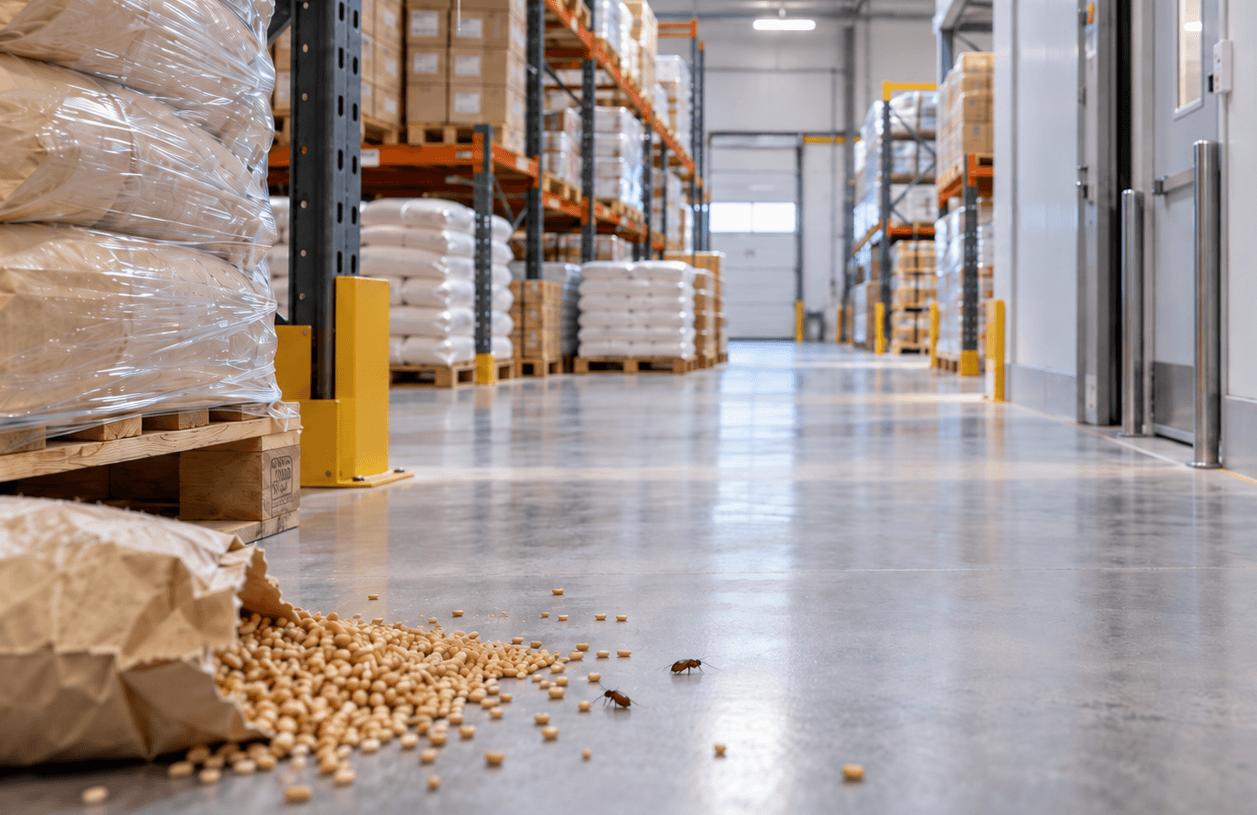
Pests do not appear randomly; they are always attracted to places that provide favourable conditions for survival and development. A new facility with technical gaps, standing water, unprotected drainage systems or poorly sealed receiving and dispatch doors can quickly become an attractive environment for rodents, cockroaches and insects.
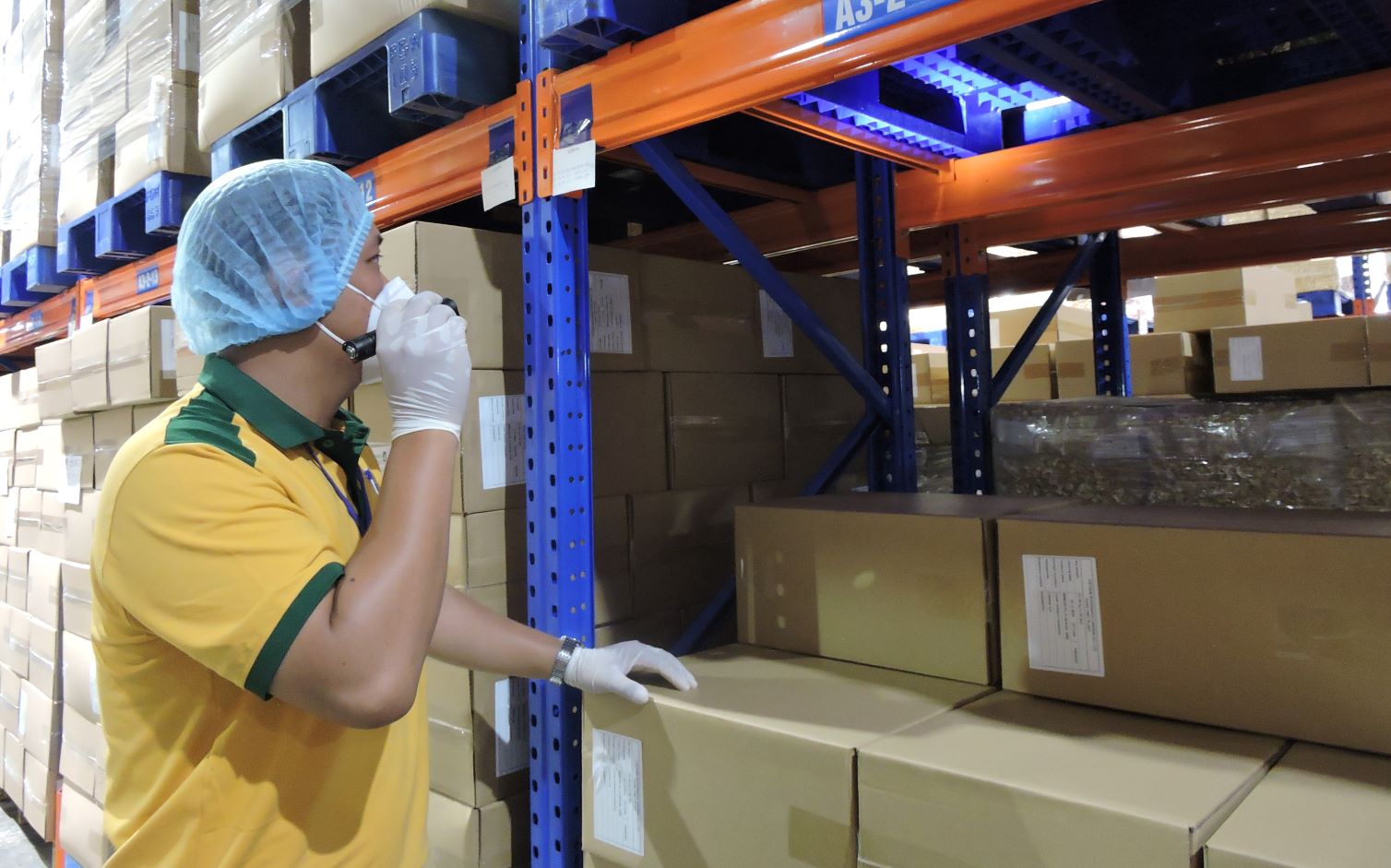
Therefore, the first step of an IPM programme is not spraying chemicals or placing traps, but surveying the entire facility to identify risks. Specialists assess drainage systems, technical pipe routes, ventilation openings, gaps around doors, waste collection areas and the surrounding landscape to determine which locations need to be addressed before the factory begins operating.
For new factory projects, risk assessment and the development of a pest control programme based on drawings, infrastructure and actual site conditions should be carried out before completing elements that will be difficult to modify later.
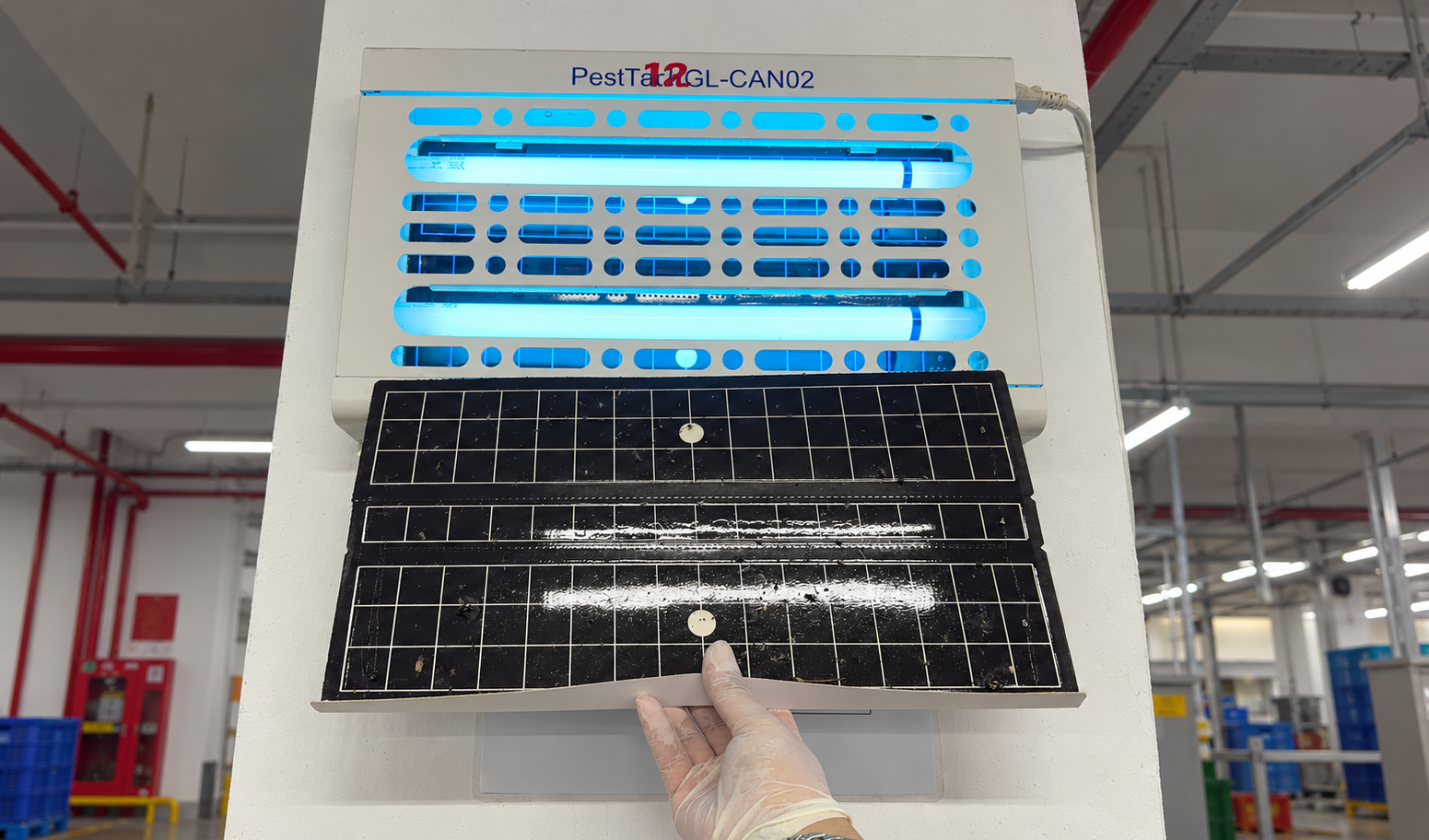
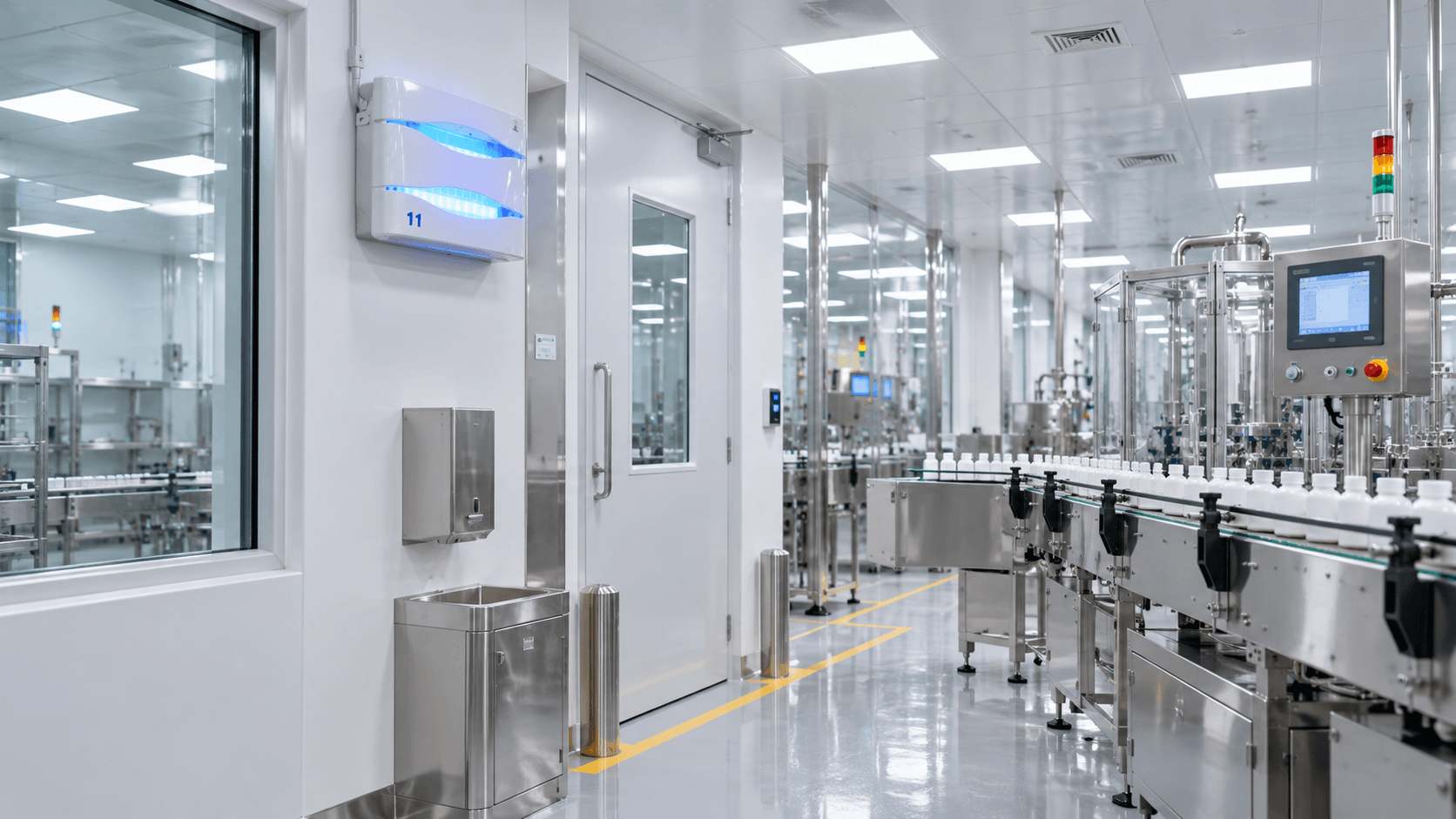
Once the assessment is complete, businesses can implement physical exclusion measures such as sealing gaps, installing insect screens, air curtains, self-closing doors or positioning insect light traps at appropriate locations. These solutions help block pest entry routes from the outset while reducing dependence on chemicals during operations.
3. Establish a protective “barrier” around the factory from the perimeter
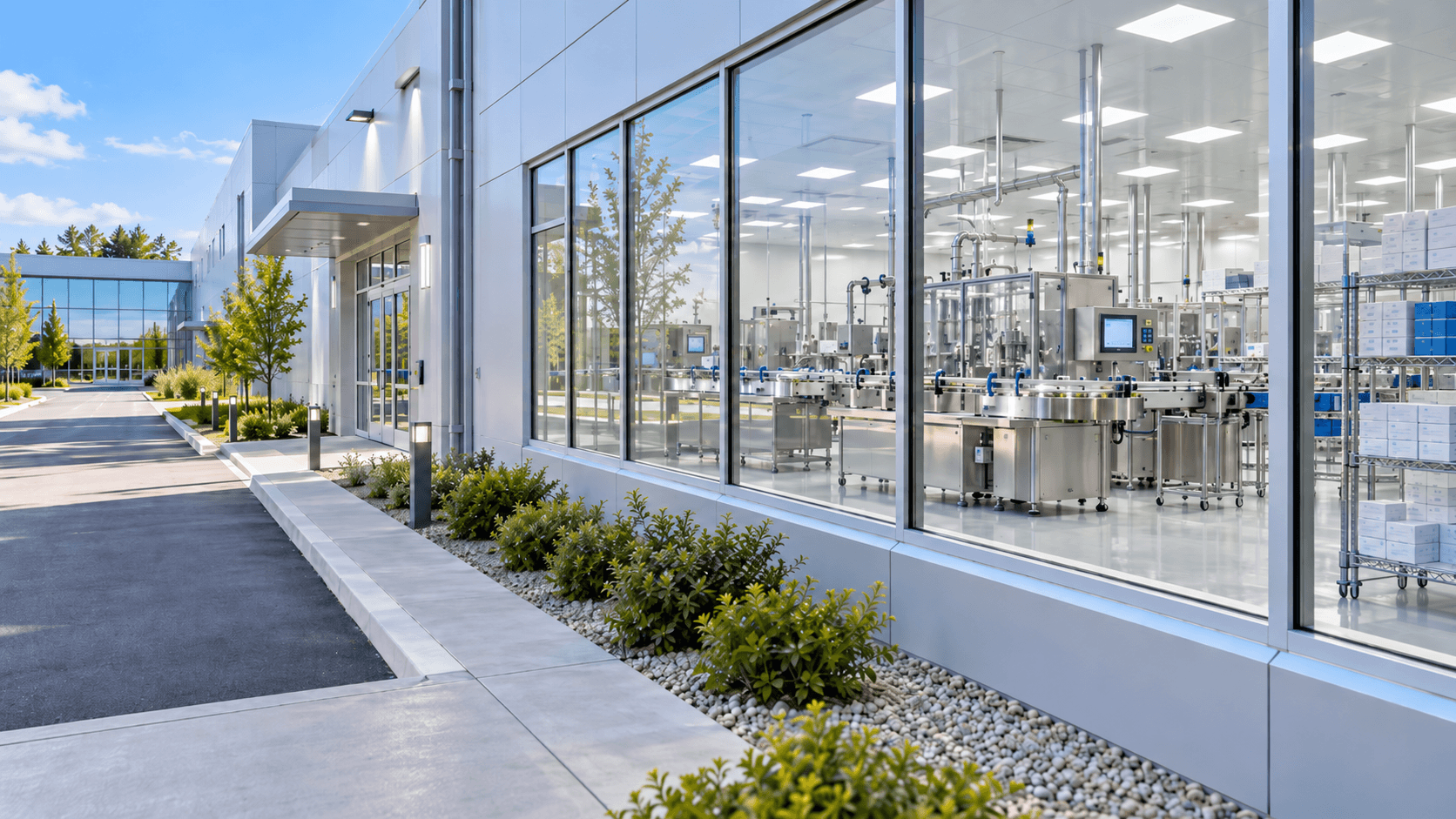
One of the important principles of an IPM programme is to prevent pests before they reach production areas. If rodents, termites or insects have already entered the factory, the business will need to devote more resources to treatment while facing a greater risk of impact on products and operations. Therefore, establishing a protective “barrier” from the perimeter is always considered an important step during factory construction.
For rodents and insects, specialists advise on suitable locations for insect screens, air curtains, blowers, self-closing doors and monitoring devices based on the movement flow of people and goods. Correct placement from the beginning improves prevention effectiveness and avoids structural modifications after production lines are already operating.
For termites specifically, VFC PestMan implements the EXTERRA biological bait station system around the factory perimeter to create an external protective barrier. The system works by attracting termites and eliminating the colony before termites reach the foundation or structural components of the building.
Compared with treatment after termites have already entered the facility, establishing this protective layer from the outset helps businesses significantly reduce the risk of structural damage and limit treatment costs over many years of operation.
4. Build the control system with an “Audit-ready” mindset
For food and beverage factories, a pest control programme is not only intended to prevent pests but must also demonstrate effectiveness through records and data. Many businesses maintain clean site conditions yet still receive findings during audits because they lack evidence showing that the programme is being continuously managed and improved.
For this reason, VFC PestMan recommends that businesses adopt an Audit-ready mindset from the first day of operation. Every inspection, monitoring and treatment activity needs to be fully recorded with photographs, implementation times, device locations and follow-up results. When data are continuously stored from the beginning, businesses can demonstrate programme effectiveness to auditors more easily without spending excessive time preparing records. These data need to be consolidated into pest control reports to track density, trends and corrective actions by area.
Through the PestMan App, all pest control activities are digitised on one unified platform. QA/QC teams can track device locations, inspection history, site photographs, GPS coordinates and Trend Analysis reports to identify high-risk areas early. This also provides a basis for businesses to make data-driven decisions instead of responding only after incidents have occurred.
Practical application at an F&B factory: PestMan implemented a risk-based IPM programme, standardised records and reporting to support a factory in meeting BRC requirements.
5. IPM helps businesses reduce costs throughout the factory lifecycle
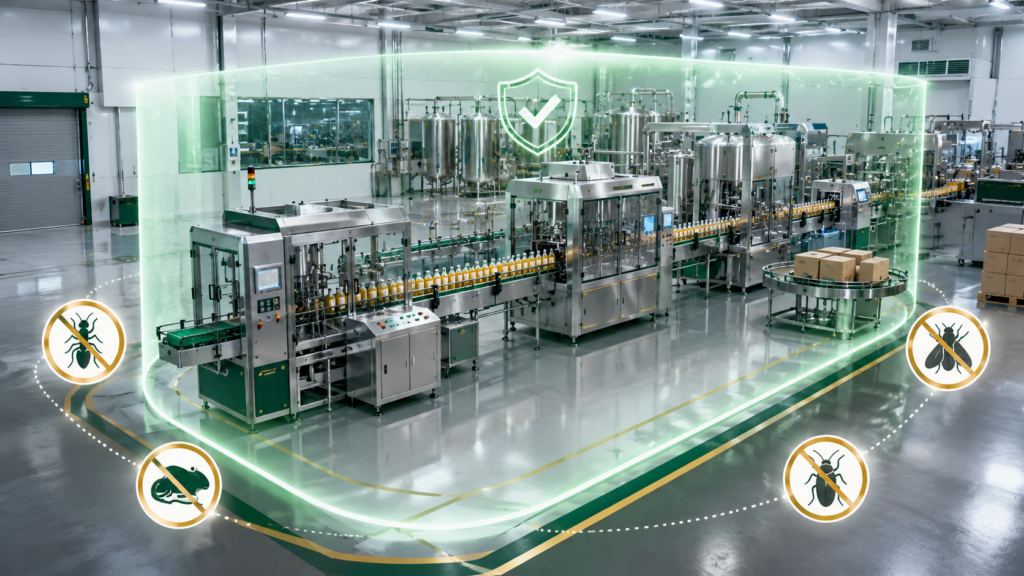
Many businesses evaluate pest control costs based on the value of the annual service contract. However, this expense represents only a small proportion of the total costs that may arise if pests affect production activities. Stopping a production line for treatment, replacing damaged packaging, disposing of raw materials, modifying infrastructure or carrying out corrective actions after an audit can all significantly increase operating costs.
When an IPM programme is implemented from the construction stage, businesses can proactively eliminate many risks before the factory begins operating. This helps reduce the frequency of emergency treatments, limit chemical use and maintain a more stable production environment over the long term. This is also an approach adopted by many large manufacturing corporations to protect assets, manage quality and reduce risk across their operations.
Pest control should not begin only after rodents, termites or insects have appeared in the factory; it needs to be considered part of the design and construction process. An Integrated Pest Management (IPM) programme implemented from the foundation stage helps businesses eliminate entry points, protect production lines and proactively meet the requirements of international standards such as AIB, BRCGS, FSSC 22000 and GMP.
With more than 50 years of experience in pest control, VFC PestMan supports businesses from the survey and infrastructure-consulting stages through preventive-system setup and data management for audits. Investing correctly from the construction stage not only helps reduce future treatment costs but also creates the foundation for a factory to operate safely, consistently and sustainably for many years.
For factories in the design, construction or pre-operation stage, businesses can refer to PestMan’s comprehensive pest risk assessment and pest control programme development service to review infrastructure and establish a preventive system from the outset.


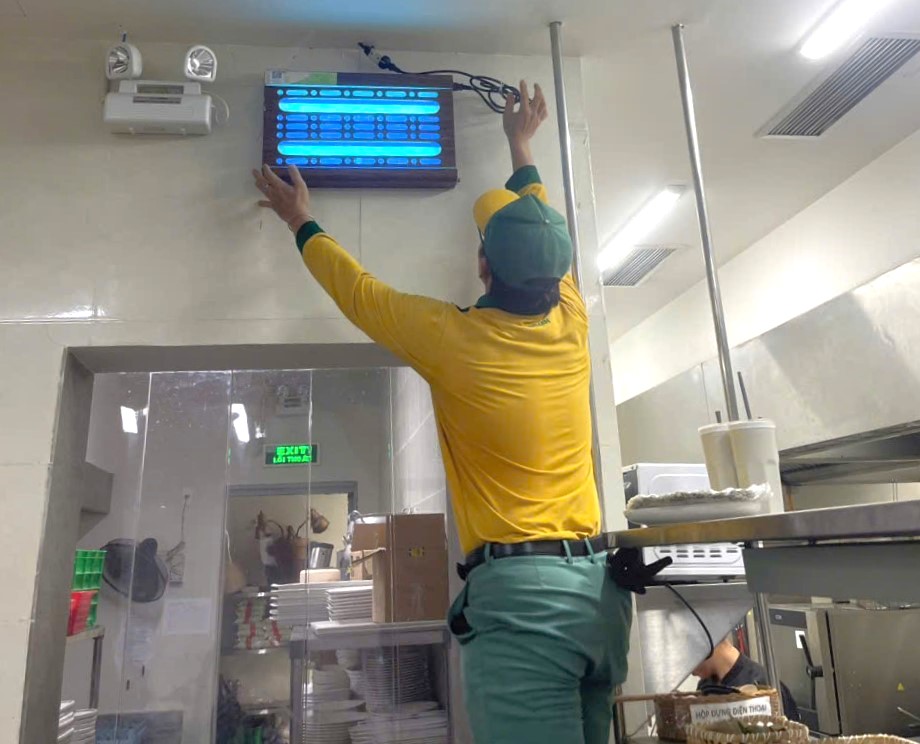
Các loại bẫy và thiết bị giám sát dịch hại trong nhà máy
Bẫy và thiết bị giám sát là một phần quan trọng trong chương trình kiểm…
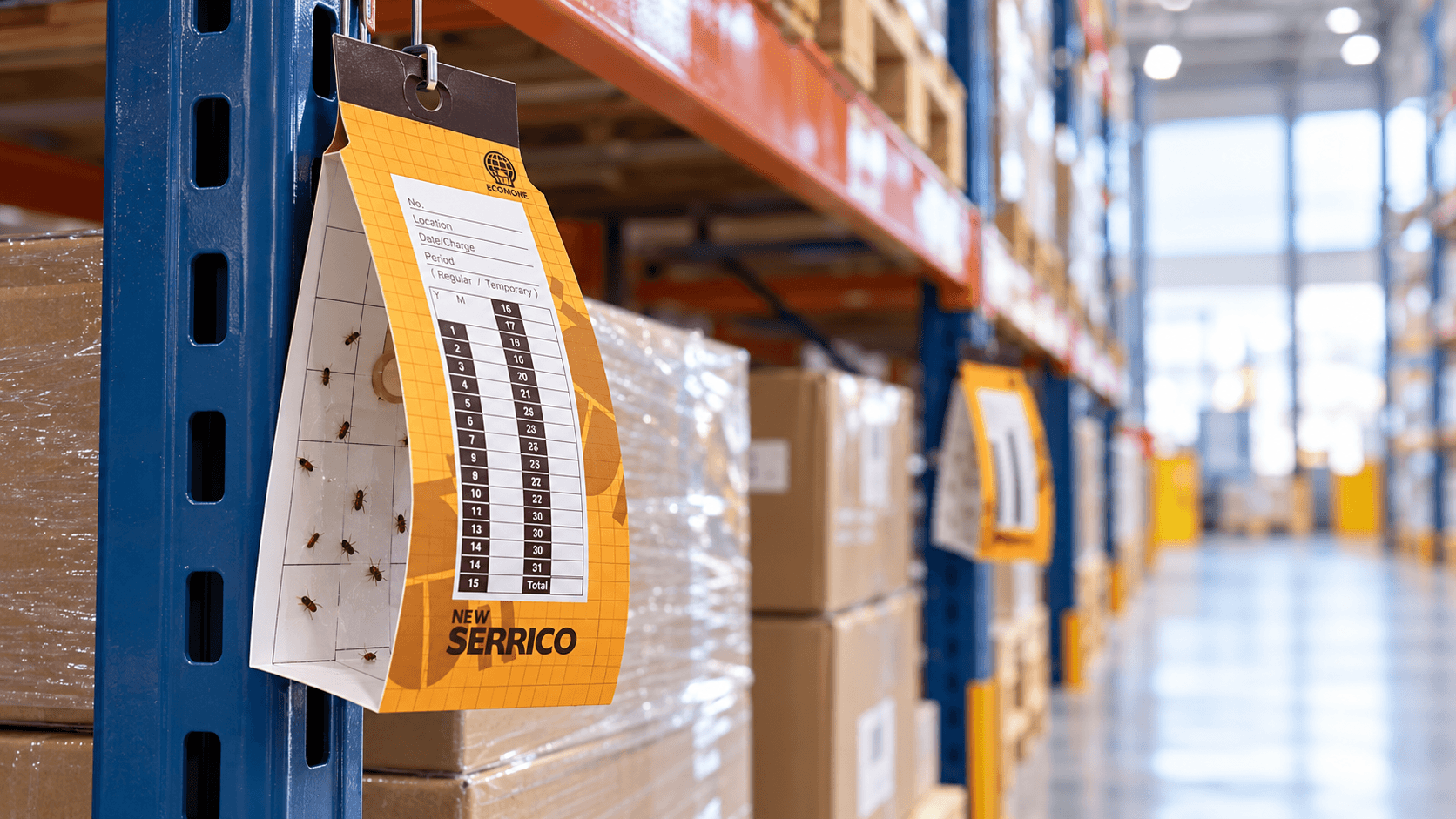
Pheromone traps: An insect monitoring solution for pest control
Pheromone traps are applied in pest control due to their ability to attract...
Related news

Ready to eliminate audit risks and proactively protect customer experience & brand reputation?





Dear Valued Visitor,
To protect our clients' interests, all materials here are copyrighted and may not be reproduced without permission.
We appreciate your cooperation. Should you need to use our content professionally, please contact us directly.