





By VFC PestMan | 23-07-2026
Pest control is one of the important programmes that helps factories maintain a safe production environment and meet quality standards. However, many businesses still wonder whether pesticide spraying is required every month or whether inspections need to follow a fixed schedule. In practice, pest control frequency is not the same for every factory and needs to be developed based on the risk level, production characteristics and actual monitoring data of each facility.
1. Are there any regulations on pest control frequency in factories?

One of the questions VFC PestMan frequently receives from businesses is whether there is a mandatory requirement to carry out pest control weekly, monthly or at another fixed interval. The answer is that there is no single frequency that applies to every factory. Standards such as HACCP, ISO 22000, FSSC 22000, BRCGS and AIB all require businesses to develop a pest management programme appropriate to the level of risk, but they do not require mandatory spraying or treatment according to a fixed cycle.
Each system has its own interpretation and level of requirements. Businesses can refer to a summary of nine common pest and insect control standards applied in factories to determine the requirements relevant to the programme they are using.
What these standards focus on is not how many treatment visits a business carries out each month, but whether the pest management programme is built on a risk assessment. Businesses need to demonstrate that the system is continuously monitored, records are maintained, pest-occurrence trends are analysed and treatment measures are implemented when necessary. This is also the core principle of Integrated Pest Management (IPM), an approach currently applied in many food, beverage, pharmaceutical and logistics facilities.
Therefore, maintaining a fixed monthly spraying schedule is not necessarily an effective solution. If insect density remains well controlled, the business may only need to inspect devices, replace traps, update data and continue monitoring without using chemicals. Conversely, when abnormal signs appear or risks increase, the programme needs to be adjusted immediately to ensure that the production environment remains safe.
2. Factors that determine pest control frequency in factories
No two factories are exactly alike, so pest control plans also need to be designed specifically for each business. Before developing a periodic inspection schedule, the PCO evaluates multiple factors to determine the level of risk and select an appropriate frequency.
The first factor is the type of production. Food, beverage, pharmaceutical and animal-feed factories often have stricter requirements because products may be directly affected by insects and other pests. Meanwhile, electronics factories, packaging plants and logistics warehouses still require pest control but may focus on different risks, such as rodents damaging cables, insects entering warehouses or pests affecting product quality.
In addition, the risk level of each area also determines inspection frequency. Locations such as production areas, raw material warehouses, waste collection areas, loading docks and drainage systems generally have higher risks and need more frequent monitoring. In contrast, offices or meeting rooms may maintain a lower frequency if monitoring data show that conditions remain stable. The risk level of these areas also depends on pest species, food sources, moisture and entry routes.
>> See also: Pest control procedures by area in food factories.
In addition to current conditions, the pest control provider also reviews the factory’s pest history. An area that repeatedly records increasing insect numbers over several inspection cycles needs closer monitoring and adjustments to control measures. Meanwhile, areas that remain stable for long periods may allow resources to be optimised while still maintaining effectiveness.
The final factor is customer requirements and management standards. Some businesses manufacturing for international brands or exporting to markets with strict requirements need to maintain a pest control programme with more frequent inspections to meet customer requirements and prepare for periodic audits.
3. How often do factories usually carry out pest control?
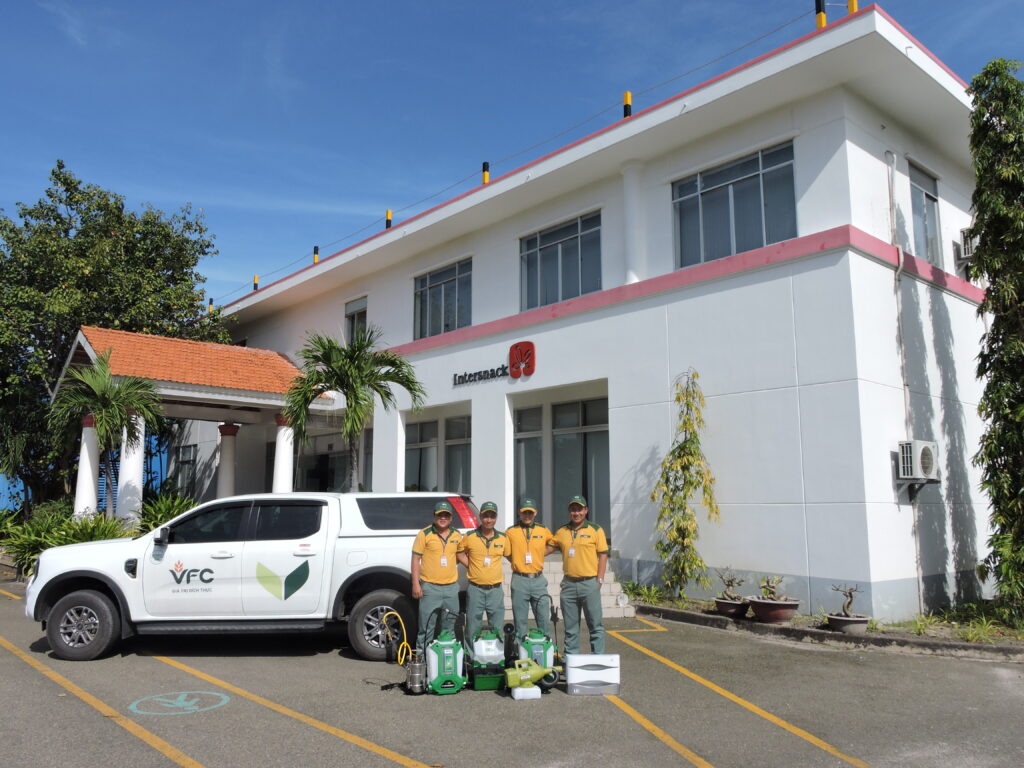
Although there is no mandatory rule on the number of inspections per month, in practice many businesses still develop periodic plans based on the risk level of each area. This approach helps allocate resources more efficiently while maintaining the ability to detect abnormal signs early.
For high-risk areas such as production lines, raw material warehouses, waste collection areas, canteens or drainage systems, businesses often schedule inspections every 7–14 days. These locations are more likely to attract insects because they contain food sources, moisture or high volumes of people and goods movement.
Lower-risk areas such as finished-goods warehouses, administrative areas or offices may be inspected monthly if monitoring data show that insect density remains within the control threshold. However, this frequency still needs to be adjusted when abnormal signs appear, during peak pest seasons or before customer audits.
4. When should businesses increase pest control frequency?
In addition to periodic inspection plans, businesses need to flexibly adjust control frequency when operating conditions change or pest risks increase. An effective IPM programme does not operate according to a fixed schedule but relies on actual monitoring data to make appropriate decisions.
The first period when inspections should be increased is during the rainy season or seasonal transitions. Higher humidity and more standing water create favourable conditions for flies, mosquitoes, cockroaches and many other insects to develop. For factories with large grounds or located near canals, fields and residential areas, the risk of pest entry during these periods is often higher than at other times of the year.
Businesses should also increase inspection frequency before internal audits, customer assessments or audits against standards such as FSSC 22000, BRCGS or AIB. Early review helps identify non-conformities, address them promptly and complete documentation before the auditor begins the assessment. This is how many factories maintain an audit-ready status instead of focusing only on corrective work immediately before the audit date.
For audits that focus on both documentation and actual site conditions, businesses need to pay particular attention to how the IPM programme is evaluated through data, monitoring points and factory conditions.
In addition, when monitoring data show an abnormal increase in insect numbers, a new pest species appears, or the business expands the factory, renovates production lines or changes raw material and waste collection areas, the pest control programme also needs to be updated accordingly. Timely adjustment helps reduce the risk of the issue developing into a major infestation and lowers future treatment costs.
5. Why is monthly spraying not necessarily the best solution?
Many businesses still believe that monthly spraying is the simplest way to control insects. However, this approach is no longer consistent with modern management practices and is not a requirement of international food-safety standards.
Chemicals are only one of many tools within an Integrated Pest Management programme. If root causes such as technical gaps, standing water, residual food sources or inadequate sanitation are not corrected, insects will continue to return after the chemical loses its effect. The business may then increase treatment frequency without achieving significant improvement.
Overuse of chemicals may also increase the risk of insects developing resistance to active ingredients, making future treatments less effective. In food, beverage and pharmaceutical factories, unnecessary chemical use also increases safety-control requirements during production and may affect operating plans if large-scale treatment is required.
For this reason, IPM programmes prioritise preventive measures such as improving infrastructure, removing attractants, strengthening monitoring and applying chemical treatment only when data show that pest density has exceeded the control threshold. This approach improves control effectiveness while reducing the impact on production operations.
6. How does an IPM programme help businesses determine control frequency?
The biggest difference between IPM and traditional pest control lies in the fact that decisions are based on data. Instead of following a fixed spraying schedule, IPM continuously collects information from monitoring devices to assess pest-occurrence trends in each factory area. When there are many monitoring points, businesses can track density changes, hotspots and pest trends on the PestMan Dashboard to determine which areas need increased or reduced inspection frequency.
During each inspection, technicians not only record insect numbers but also assess device condition, sanitation conditions, potential entry points and changes in the production environment. All data are consolidated for trend analysis, helping the business identify which areas are stable, which require closer inspection and which need additional treatment measures.
This management approach allows businesses to allocate resources more effectively, focusing on high-risk locations instead of applying the same frequency throughout the factory. This is also why IPM has become the foundation of many pest control programmes in food, beverage, pharmaceutical, food-packaging and logistics facilities.
For businesses using digital management systems, data from inspections can also be used to develop trend-analysis reports, helping QA/QC evaluate programme effectiveness and provide transparent evidence during audits. Decisions to increase or reduce control frequency are then based on actual data rather than subjective judgement or individual experience.
In summary, pest control frequency in factories needs to be determined according to the production characteristics, risk level and operating conditions of each business. Maintaining periodic inspections, monitoring data and adjusting the plan appropriately helps businesses control pests effectively while meeting food-safety requirements and audit expectations.
See a practical application: An F&B factory implemented an IPM programme based on risk levels, standardised data and audit-supporting reports instead of simply treating insects according to a fixed schedule.
With more than 50 years of experience in pest control, VFC PestMan develops Integrated Pest Management (IPM) programmes tailored to each factory, from site surveys and risk assessment to monitoring-system setup, data analysis and optimisation of inspection frequency. This solution helps businesses proactively prevent pests, reduce chemical use and maintain a safe production environment that is ready to meet domestic and international standards and audit requirements.
For factories that need to implement or maintain a periodic programme, PestMan provides insect and rodent control services under an IPM programme, with frequency adjusted according to area, monitoring data and actual risk level.


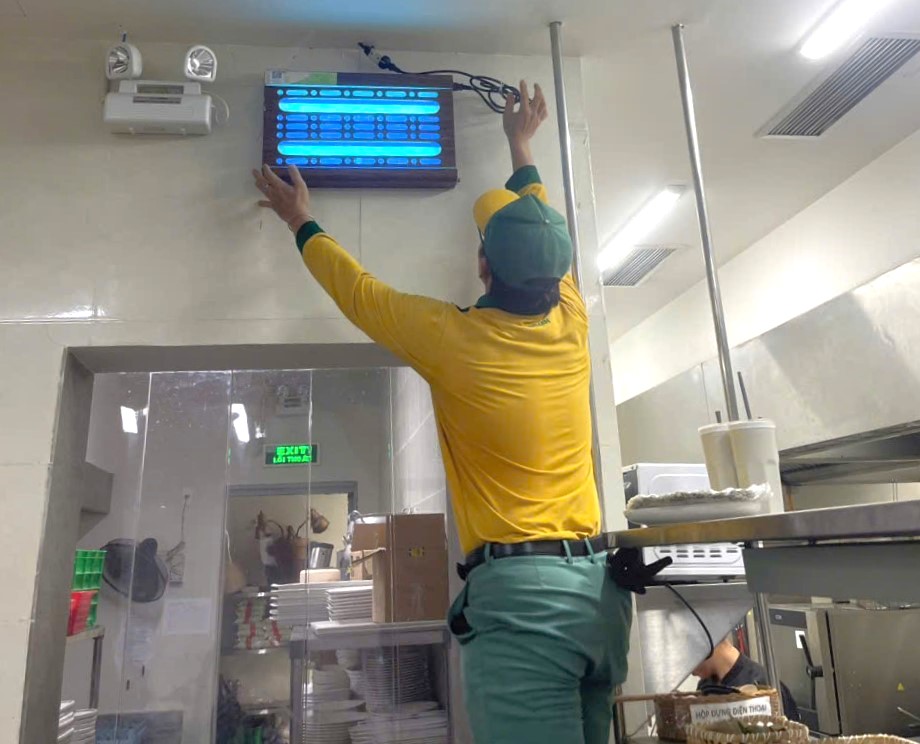
Các loại bẫy và thiết bị giám sát dịch hại trong nhà máy
Bẫy và thiết bị giám sát là một phần quan trọng trong chương trình kiểm…

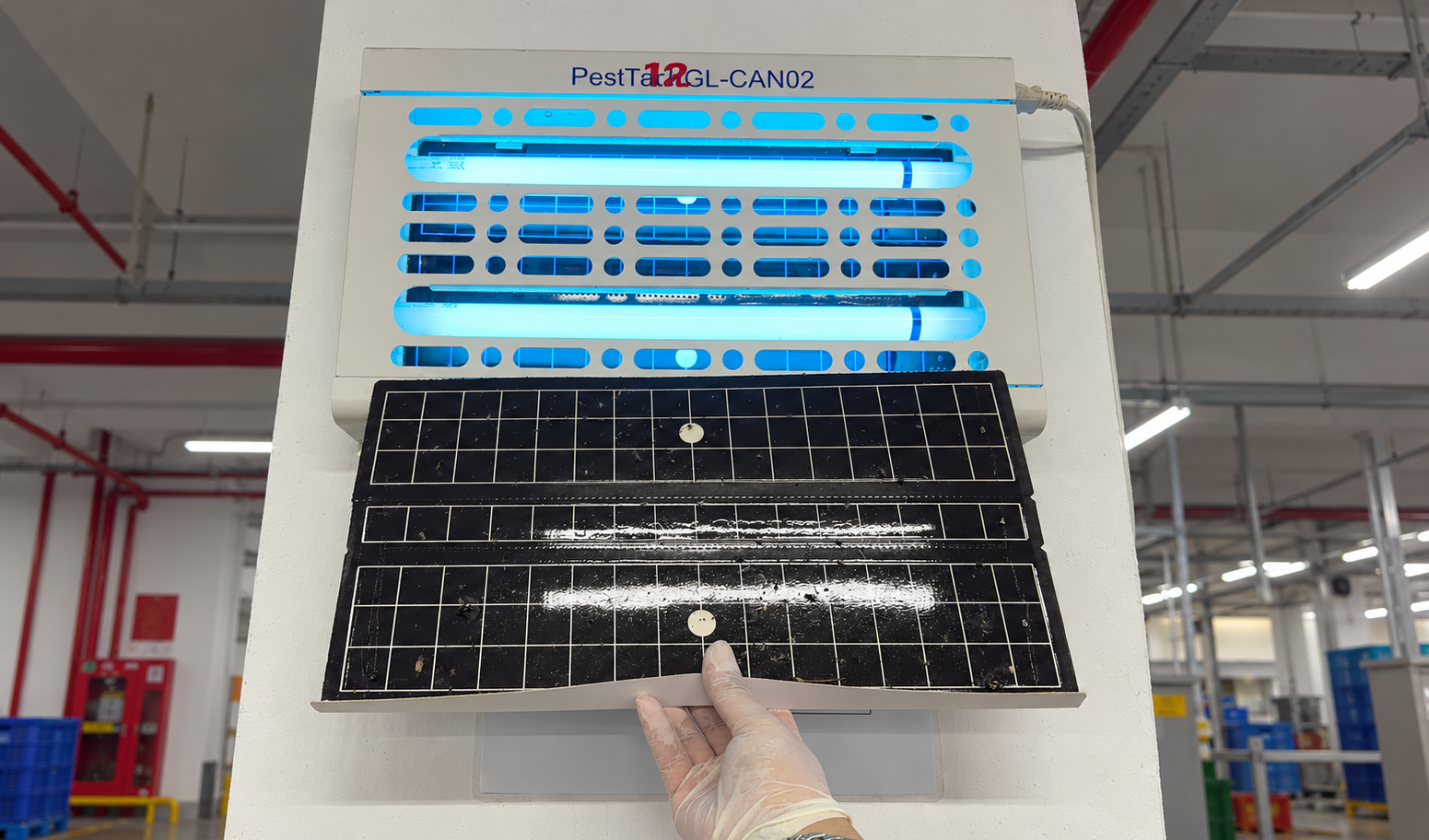
Pheromone traps: An insect monitoring solution for pest control
Pheromone traps are applied in pest control due to their ability to attract...
Related news




Ready to eliminate audit risks and proactively protect customer experience & brand reputation?






Dear Valued Visitor,
To protect our clients' interests, all materials here are copyrighted and may not be reproduced without permission.
We appreciate your cooperation. Should you need to use our content professionally, please contact us directly.