





By VFC PestMan | 30-08-2026
Raw materials, water, heat, humidity, organic matter and continuous receiving and dispatch activities create many conditions that attract pests in food and beverage manufacturing facilities. A fly near a mixing tank, a stored-product insect in a raw material warehouse or rodent signs at a dispatch door each have different implications for product safety. This guide helps businesses correctly identify pest groups, understand their sources, assess risk levels and organise a pest management programme in F&B manufacturing facilities based on prevention, monitoring and traceable data.
1. Why should pest identification and management be carried out together?

Identification tells the business which species it is dealing with, how it behaves and where the source may be located. Management turns that information into actions related to sanitation, maintenance, storage, monitoring or professional treatment. The two activities need to work together so that the factory does not apply the same response to every species and every area.
The presence of a fruit fly around a filling machine often leads to inspection of syrup residues, seals, drip trays and drainage lines. A house fly at the same location may instead suggest pressure from doors, waste areas or external by-products. The two may look similar to an untrained observer, but their sources and investigation routes can differ significantly.
The location of a detection also determines the level of response. An insect found at the perimeter, one individual inside a sealed-packaging warehouse and one individual in an exposed-product area represent three different levels of risk. Businesses need to consider species, area, product status, quantity and trend together before deciding on action.
The FDA requires food facilities to take effective measures to prevent pests from entering production, processing, packaging and storage areas while protecting food from contamination. The regulation also identifies birds, rodents, flies and larvae as pests that need to be managed. (FDA, 21 CFR Part 117)
2. How should an F&B manufacturing facility be zoned by risk?
Risk zoning helps businesses understand where pests may come from, which routes they may use and where they may reach products. The risk map needs to follow the flow of raw materials, packaging, people, waste and water. Each zone is linked to target species, attracting conditions and an appropriate response level.
2.1. Perimeter and building boundary
Fences, vegetation, drains, vacant land, roofs, wall bases and material-staging areas form the first layer of pest pressure. Rodents may burrow or move along fences; birds perch on roofs and beams; mosquitoes develop in standing water; ants nest in soil or vegetation; and flies are attracted to waste and organic matter.
The management objective at the perimeter is to reduce food, water, shelter and access to the building. Overgrown grass, materials stacked against walls, blocked drains, fallen fruit or equipment left outdoors all need to be included in the survey scope. Perimeter data also help the factory anticipate pest pressure before pests enter internal areas.
2.2. Raw material receiving area and warehouse doors
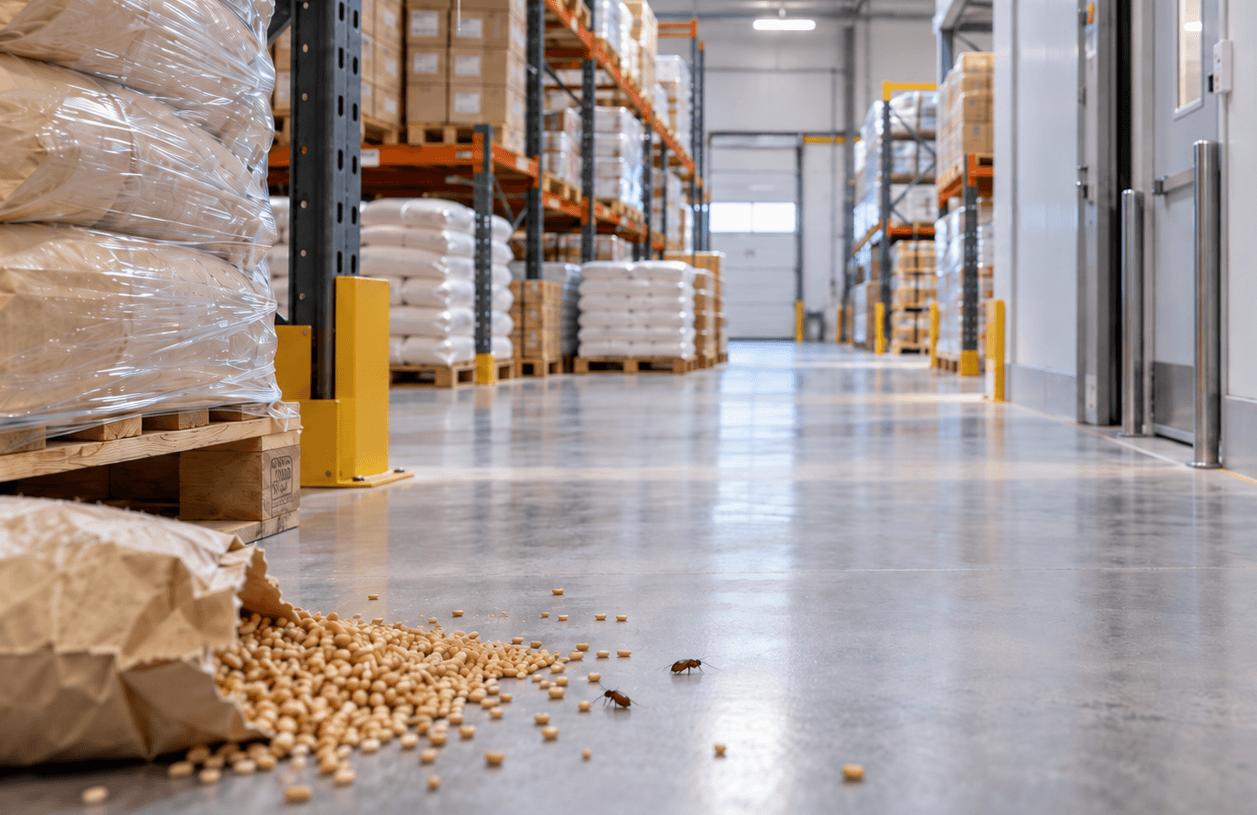
The receiving area is the interface between the outside environment and the production system. Raw materials, pallets, cardboard boxes, vehicles and rented equipment may carry stored-product insects, cockroaches or rodent signs. Doors left open for long periods, dock gaps and openings around loading bridges create additional entry routes. For dry raw materials, businesses should identify in greater detail the groups of weevils, beetles and stored-product moths that may enter with raw materials or packaging, because the infestation source may already be inside the shipment rather than originating from the factory environment.
Receiving activities need to include inspection of packaging condition, gnaw marks, live insects, webbing, cocoons, fine powder and vehicle cleanliness. Lots showing signs need to be isolated for assessment before being moved into storage. Supplier information and lot codes help trace the source when the same species recurs.
2.3. Dry raw material warehouse
Warehouses storing grains, flour, seeds, spices, dried fruit and additives are at high risk from weevils, beetles, stored-product moths and rodents. Long-stored goods, spilled materials, accumulated dust and areas that are difficult to clean can allow populations to develop unnoticed.
Goods should be arranged to provide inspection clearance along walls, floors and racking. First-in, first-out principles, storage-time control, cleaning beneath racks and packaging inspection help reduce risk. Stored-product insect trap data need to be cross-checked with lot locations rather than treated as an isolated indicator.
2.4. Production and exposed-product areas
Areas containing exposed raw materials or products require the highest level of protection because pests may come into direct contact with food or food-contact surfaces. Mixing tanks, conveyors, filling machines, cooling areas and packaging areas before the package is sealed are sensitive points.
Monitoring devices in these areas must support early detection while remaining suitable for hygiene and physical-safety requirements. A detection needs to trigger product assessment, an evaluation of the affected scope and a review of line conditions. Treating the individual pest is only an immediate action; source investigation and post-corrective verification determine whether the risk has truly been controlled.
2.5. Wet-processing areas, CIP systems and drainage
CIP systems, washing rooms, floor drains, manholes, collection tanks and water-treatment areas provide moisture and organic matter. Drain flies may develop in biofilm; cockroaches shelter around damp gaps and pipes; and fruit flies are associated with sugar residues or fermenting materials.
A visibly clean surface does not necessarily reflect conditions inside drains, seals, undersides of machinery or return lines. Sanitation plans need to include difficult-to-access areas and verification methods. Water leaks at valves, tanks or equipment bases need to become maintenance actions with defined completion deadlines.
2.6. Packaging areas, finished-goods warehouses and dispatch
Packaging materials, cardboard and pallets create many harbourage gaps for crawling insects and rodents. Frequently opened dispatch doors increase pressure from outside. Sealed finished products have less direct exposure than exposed products, but gnaw marks, droppings or damaged packaging can still lead to product holds and investigation of the affected scope.
This area needs monitoring at both floor level and overhead structures. Roof rats may move along beams and cable trays, while birds may enter through roofs or dock doors. The monitoring map needs to reflect actual movement routes rather than focusing only on wall bases.
2.7. Waste, by-product and utility areas
Organic waste, by-products, wastewater and containers strongly attract flies, cockroaches and rodents. The distance, transport routes and holding time of waste directly affect pest pressure on the facility. Open containers, leachate and floors that are difficult to clean can sustain pest sources over time.
Waste areas need to be treated as part of the food-safety system. Collection frequency, bin sanitation, lid condition, drainage and connecting doors need to be managed together. Insect data from waste areas should also be compared with trap data near production entrances.
3. Which signs are used to identify the main pest groups?

Identification at the facility should be based on specimens, morphology, location, life-cycle stage and associated signs. Common names may cover multiple species with different behaviours. When specimens are damaged or images lack detail, reports should identify the pest at group level and continue collecting samples rather than reaching a premature conclusion.
3.1. Flies and flying insects
The house fly (Musca domestica) is grey with four dark stripes on the thorax and is commonly associated with waste, by-products or organic matter. Blow flies in the family Calliphoridae have metallic bodies and often indicate sources such as meat, seafood, animal waste or carcasses. Both groups may fly into the factory from outside through doors and receiving activities.
Fruit flies in the genus Drosophila are small and attracted to sugar and fermenting materials. Sources are often found in syrup residues, filling nozzles, seals, drip trays, equipment bases or drains. A high concentration around one machine often provides more useful information for source location than the total number in the room.
Drain flies in the family Psychodidae are hairy, broad-winged insects commonly found near drains or damp surfaces. Their larvae live in organic biofilm inside drainage lines, manholes and collection tanks. Flushing with water or surface spraying provides only short-term results if the biofilm remains inside the pipe.
Large flesh flies in the family Sarcophagidae have grey bodies, dark thoracic stripes and patterned abdomens. A sudden appearance may be associated with animal waste or carcasses in roofs, service cavities or perimeter areas. Investigation needs to extend beyond the location where adults are observed.
Correctly distinguishing these groups is particularly important in factories because each fly group has different sources and requires a different investigation approach.
3.2. Cockroaches
The German cockroach (Blattella germanica) is small, yellowish-brown and has two dark stripes on the pronotum. It commonly shelters around motors, electrical cabinets, kitchens, beverage-preparation rooms and the backs of equipment. Large numbers of nymphs on traps indicate that a breeding site is close to the detection point.
The American cockroach (Periplaneta americana) is large, reddish-brown and commonly associated with drains, manholes, basements and technical rooms. The Oriental cockroach (Blatta orientalis) is dark-coloured and tends to concentrate in cool, dark and damp areas near floor level. When these groups appear indoors, the survey needs to connect detection points with drainage and utility maps.
Common signs include spot-like droppings, egg cases, shed skins, carcasses, odour and live individuals. Glue traps support identification of movement direction and population structure. Traps need to be positioned along wall edges, equipment corners and movement routes rather than in open spaces.
3.3. Stored-product insects
The rice weevil (Sitophilus oryzae) and related species develop inside grains. Round holes in kernels, fine powder, live insects and localised heat in the product mass are signs requiring attention. A detection needs to be linked to the lot, supplier, receiving date and storage conditions.
Flour beetles in the genus Tribolium feed on flour, bran, broken grains and material dust. Sources are often found around machine bases, beneath conveyors, in return lines or difficult-to-clean gaps. Recurrence after warehouse cleaning may indicate that the source remains inside equipment.
The drugstore beetle (Stegobium paniceum), cigarette beetle (Lasioderma serricorne) and sawtoothed grain beetle (Oryzaephilus surinamensis) may be associated with spices, herbs, seeds, flour or dried fruit. Adults of some species can fly, so the location where they are found may be far from the source product.
Stored-product moths such as Plodia interpunctella leave webbing, cocoons, droppings and clumping in raw materials. Larvae often crawl away from the food source to pupate on walls, ceilings or elevated structures. Therefore, cocoons on ceilings are clues for tracing the source, not the only areas requiring treatment.
3.4. Rodents
The Norway rat (Rattus norvegicus) commonly burrows and is active around drains, soil banks, waste areas and basements. The roof rat (Rattus rattus) climbs well and commonly leaves signs on roofs, beams, cables and ceilings. The house mouse (Mus musculus) is small and may shelter inside racks, walls, pallets and equipment cavities. After identifying the rodent group, the next step is to trace possible entry routes through drains, door gaps, utility routes, roofs and perimeter areas.
Signs include droppings, gnaw marks, grease marks, footprints, odour, nesting materials and sounds. CDC notes that rodent droppings, urine and saliva can contaminate food or the environment. Waste materials need to be handled according to safe sanitation procedures rather than dry sweeping or allowing them to become airborne.
Dropping size and location provide clues but need to be interpreted together with other signs. Fresh droppings appearing after the area has been safely cleaned indicate ongoing activity. The monitoring-station system needs to cover the perimeter, doors, warehouses and routes leading into sensitive areas.
3.5. Ants, birds, mosquitoes and termites
Ants move along wall edges, floor gaps, cables and pipes to reach sugar, grease or protein. “Black ant” is a common name for many species, so morphology, movement routes and food preferences need to be recorded before selecting bait. Fire ants around the perimeter also create a stinging risk for personnel.
Birds commonly perch or nest on roofs, beams, signs and dock doors. Droppings, feathers and nesting materials may fall onto goods or equipment. Spilled food, water and perching points need to be managed together with suitable access-prevention measures.
Mosquitoes develop in standing water in drains, trays, roofs, technical pits and water-treatment areas. Increasing density affects working conditions and may be linked to mosquito-borne disease risk. Larval surveys together with standing-water management form the foundation of the programme.
Termites damage pallets, cartons, records and structures containing cellulose. Mud tubes, hollow wood, termite wings and swollen surfaces are common signs. Suspected infested materials need to be isolated and assessed before being moved further within the facility.
4. How should a pest detection be interpreted?
Insect-risk assessment cannot be based on numbers alone; it depends directly on species characteristics and the location of detection. For example, a house fly found at the perimeter may only indicate pressure that needs monitoring, while a single individual in an exposed-product area may be enough to trigger product isolation and assessment. Therefore, businesses should not apply one rigid action limit across the entire factory.
Life-cycle stage helps estimate the distance to the source. Cockroach nymphs, fly larvae or newly emerged stored-product insects often indicate that the development source is close to the detection point. Flying adults may travel farther, so the investigation area needs to be broader.
Frequency and trend show whether a problem is increasing, decreasing or recurring. A trap that increases continuously over several inspection cycles is different from a one-time detection. Several traps increasing at the same time may be related to a raw material lot, weather, sanitation changes or construction activity. When there are many monitoring points, data should be consolidated to track trends over time, compare areas and identify hotspots rather than interpreting each trap individually.
Product status determines the required level of protection. Exposed raw materials, cooling products and food-contact surfaces need stricter assessment than secondary-packaging areas. Conclusions need to clearly state the potential for contact, affected scope and supporting data.
Monitoring-device condition also needs to be considered. A trap that is poorly positioned, no longer sticky, covered by dust or moved from its intended location can produce meaningless zero data. Each inspection needs to confirm both device condition and pest count.
5. How should a pest monitoring system be developed?
The system begins with risk assessment and the facility map. Each device needs an identification code, type, location, target species and inspection frequency. Placement needs to suit pest behaviour, product flow and maintenance access.
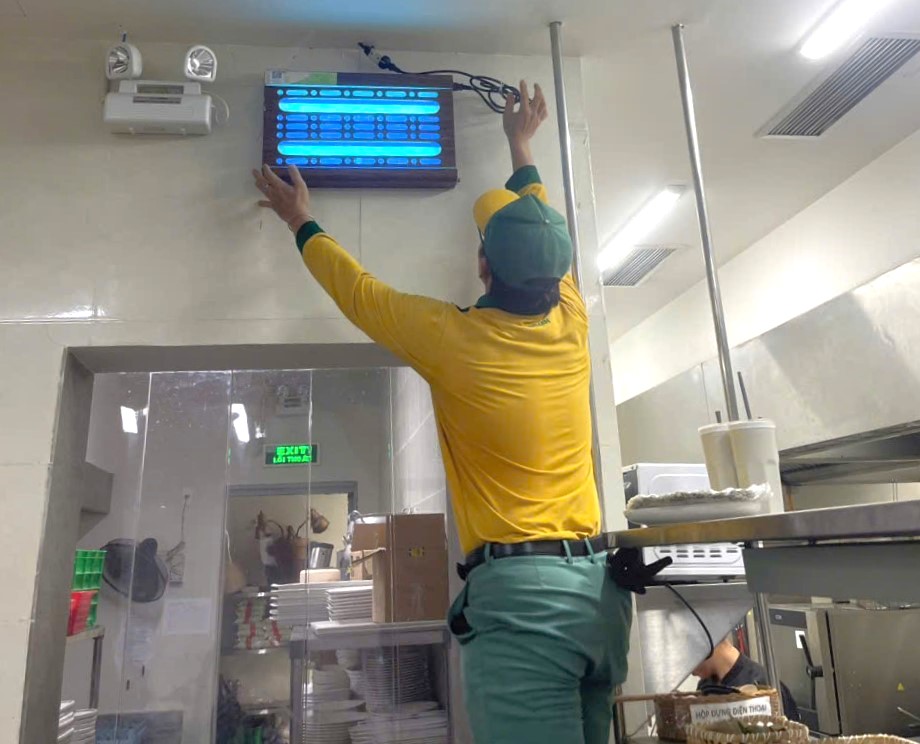
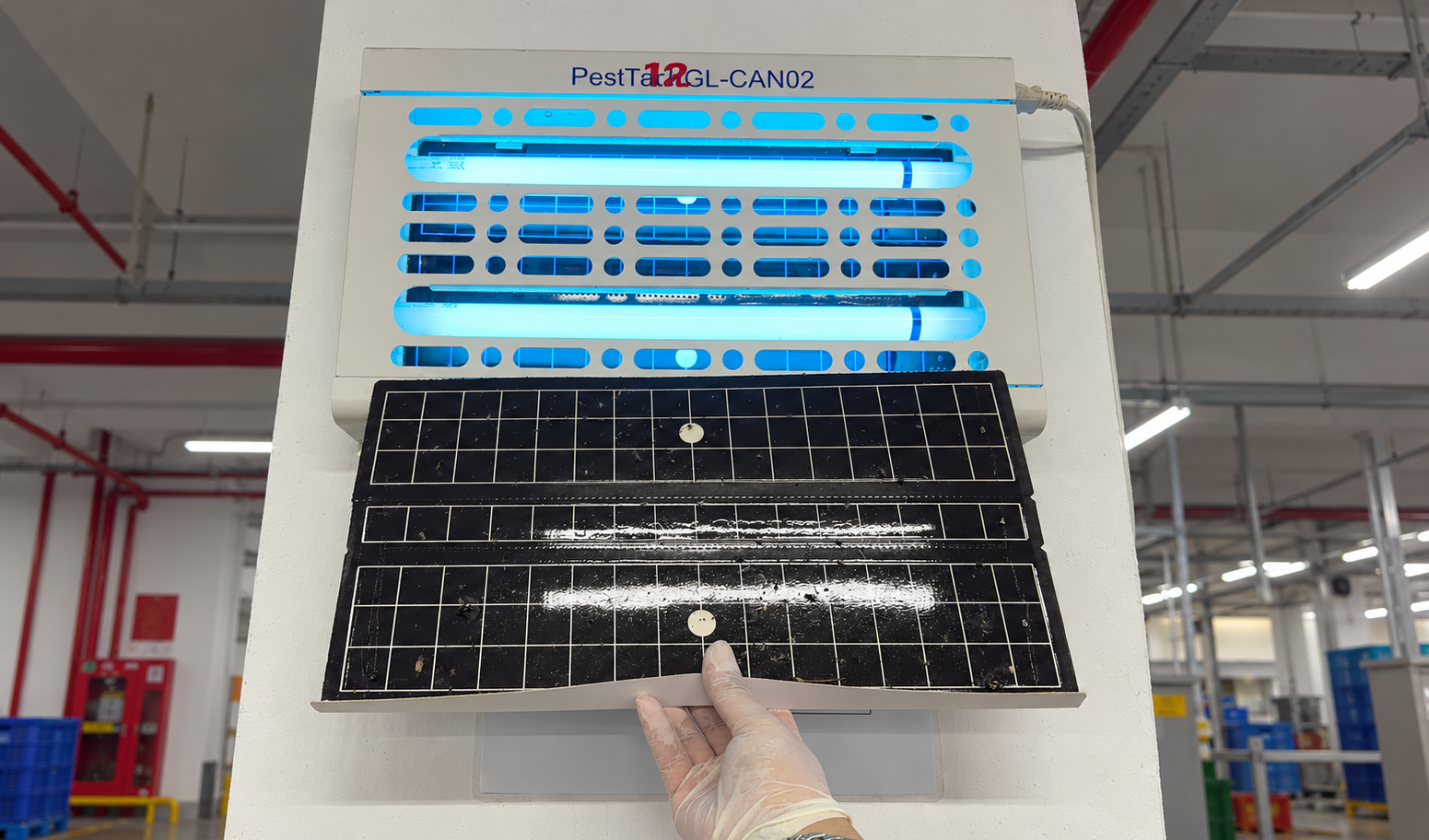
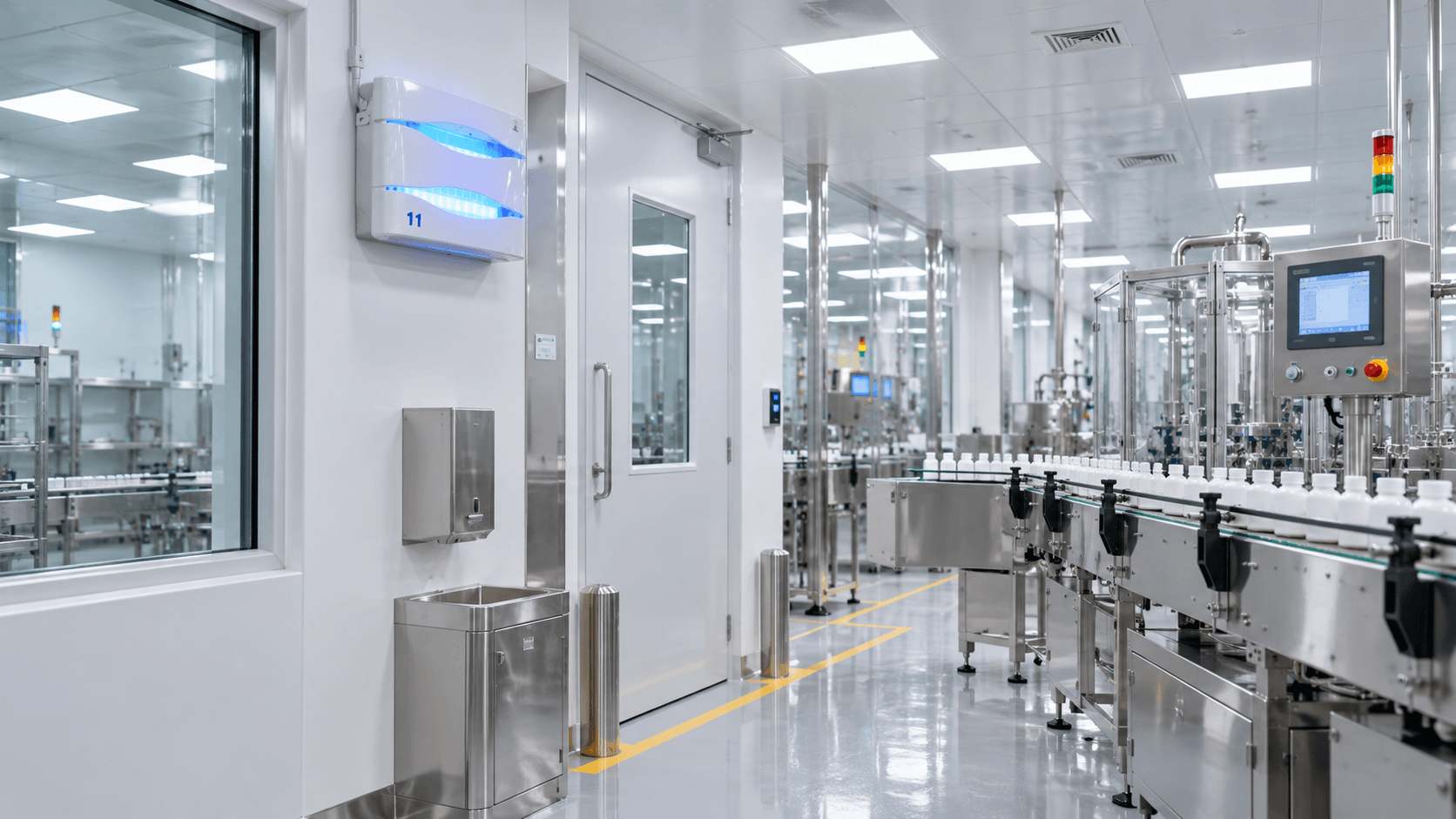
External rodent stations monitor pressure around the perimeter, while internal devices support early detection before rodents reach product areas. Crawling-insect glue traps are placed along edges, corners and hotspots. Insect light traps need to avoid attracting insects from outside into the facility or being positioned above exposed products. In addition to installation location, ILT performance also depends on UV-A intensity, light-source age, glue-board condition and competing light sources in the environment.
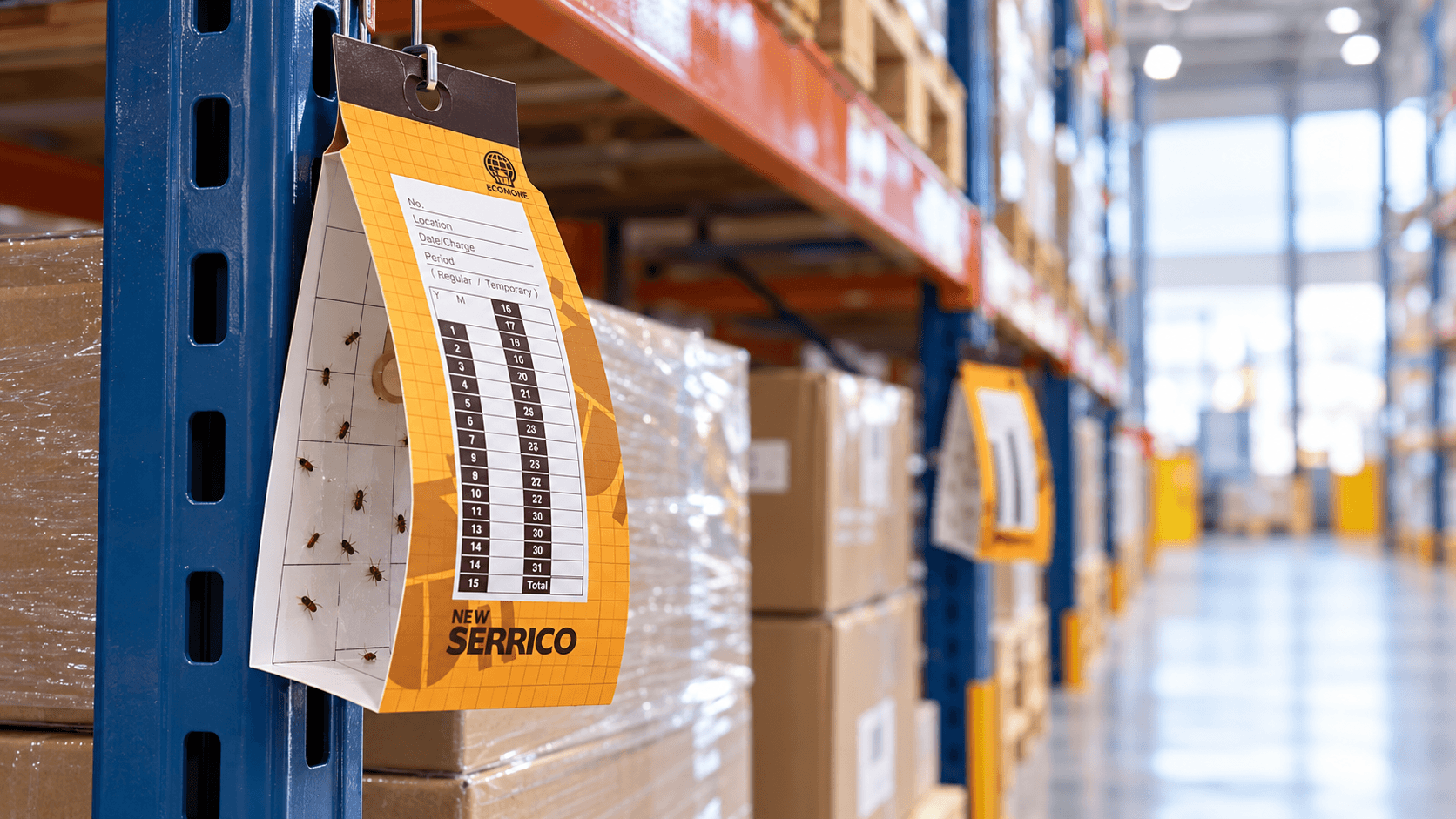
Pheromone traps and specialised stored-product insect traps support species identification and trend analysis. Locations need to be linked to warehouses, silos, transport routes and raw material lots. Trap data become more valuable when compared with technical sanitation, receiving schedules and production shutdown periods.
Action limits should be developed according to species, zone and facility history. Sensitive areas may require immediate response from the first detection, while perimeter areas may need trend and seasonal-pressure assessment. Every action limit needs to lead to a defined action rather than ending with a colour-coded warning.
6. What steps are included in pest management for F&B manufacturing facilities?
6.1. Site survey and risk assessment6.1. Site survey and risk assessment
The survey records target species, food sources, water, harbourage, entry routes and product sensitivity. Results need to cover the perimeter, receiving, warehouses, production, packaging, waste and utility areas. This provides the basis for defining programme scope and frequency.
6.2. Prevention through sanitation and infrastructure
Sanitation removes spilled raw materials, dust, grease, organic residues and waste. Maintenance addresses door gaps, screens, pipes, water leaks and damaged building structures. Warehouse management controls storage time, clearance around goods and packaging condition.
Preventive actions need a responsible person and a deadline. A recommendation such as “maintain good sanitation” is too broad to verify, while “remove syrup residue beneath filling machine No. 2 before [date]” creates a specific and verifiable action.
6.3. Monitoring and trend analysis
Each inspection cycle needs to record quantity, species, location, device condition and on-site evidence. Data are compared over time, by area and by season. Changes in production, suppliers, weather or construction need to be reviewed alongside trend charts to identify possible causes.
6.4. Action when limits are exceeded or abnormal findings occur
The factory needs to protect products, retain specimens or images, determine the affected scope and investigate the cause. Measures may include technical sanitation, holding a lot, repairing infrastructure, changing storage practices, increasing monitoring devices or professional treatment. Species and location determine the required response level.
6.5. Verify effectiveness and close actions
After corrective action, the area needs to be rechecked using observation, trap data or another suitable method. An action should only be closed when the cause has been addressed and evidence shows that activity has decreased or returned to an acceptable limit. Completing one spraying treatment does not by itself provide evidence of long-term effectiveness. This is also >an important difference between an IPM programme based on causes and data and an approach that depends mainly on periodic spraying.
7. What role do chemicals play in an IPM programme?
Integrated Pest Management combines identification, monitoring, prevention and multiple control methods. Chemicals are selected when data and risk assessment confirm the need for intervention. The location, active ingredient, product form and application method need to be appropriate for the pest species and facility conditions.
Food areas need measures to protect raw materials, food-contact surfaces, packaging and people. Records need to show the product used, dosage or concentration according to the label, method, time, location and person carrying out the treatment. Re-entry plans also need to be communicated to relevant departments.
Scheduled broad-area spraying can conceal root causes such as organic residue, structural gaps, infested goods or water leaks. Targeted intervention helps the factory focus on the correct area and reduce chemical dependence. Post-treatment data provide the basis for deciding whether to maintain, adjust or stop the measure.
8. How should departments within the factory coordinate?
The quality department manages the programme, assesses product risk, reviews trends and verifies actions. The warehouse team controls raw materials, packaging, inventory and lot-related signs. Production records observations around equipment, products and operating times.
Sanitation is responsible for residues, waste and difficult-to-clean areas according to the sanitation plan. Maintenance addresses gaps, doors, screens, drains, water leaks and structural damage. Safety or administration teams may coordinate perimeter areas, canteens, changing rooms and staff communication.
The pest control provider performs identification, surveys, device placement, trend analysis and professional recommendations. Each recommendation needs to be assigned to the correct department. Periodic meetings should focus on increasing points, causes, progress and verification evidence.
Front-line employees need to know how to retain specimens, take photographs, record locations and report early. Spraying independently or cleaning away signs before they are recorded may reduce the ability to investigate. A short, clear reporting procedure helps information reach the correct contact faster.
9. Which records help keep the programme audit-ready?
Core records include the service scope, risk assessment, device map, target-species list, response standards, inspection records and trend data. Chemical records need to include complete product information, labels, Safety Data Sheets and usage history as required.
Reports need to show the connection between findings and actions. An increasing trend chart has limited value if it lacks the cause, responsible person and deadline. Likewise, completed actions need verification evidence. Therefore, pest-control reports should allow QA to track density, trends, causes, corrective actions and verification of effectiveness rather than simply recording the number of inspections.
The competency of personnel, training schedules and meeting records with the factory also support programme reliability. AIB International emphasises five components of IPM: monitoring, prevention, training, control and record keeping.
For HACCP, ISO 22000, FSSC 22000, BRCGS, AIB or customer requirements, the scope of documentation may differ. The factory needs to check the applicable version of each standard and specific certification requirements rather than using one generic documentation set for every audit.
10. Which issues commonly reduce programme effectiveness?
The first issue is overly broad identification. Reporting all flying insects under one general name mixes the sources of fruit flies, drain flies and house flies. Data without sufficient classification are less likely to lead to action addressing the true cause.
Another issue is installing many devices without evaluating their placement. Traps blocked by pallets, positioned away from movement routes or located in strong airflow may produce falsely low readings. The map needs to be updated whenever the layout or production line changes.
Another problem is recommendations repeated for months without a responsible person. Water leaks, door gaps and residue beneath machinery continue to sustain pest sources even when pest-control services are performed regularly. An effective programme needs to convert recommendations into time-bound actions with verification.
Reviewing each inspection cycle in isolation also causes information loss. Pests are affected by seasons, raw materials, weather and production schedules. Trend analysis helps distinguish short-term variation from recurring problems that require system changes. When the same point repeatedly recurs, a new species appears or data change following production changes, businesses should consider reassessing the pest management programme rather than simply increasing treatment frequency.
11. How does VFC PestMan support F&B manufacturing facilities?
VFC PestMan is a professional pest control service brand of Vietnam Fumigation Joint Stock Company. Backed by more than 50 years of VFC experience and a broad operating network, VFC PestMan implements programmes for food and beverage factories, raw material warehouses and facilities with high requirements for safety, data and operational continuity.
The programme begins with a current-condition survey, species identification and risk zoning based on the flow of raw materials, products, people and waste. Monitoring systems are developed for rodents, crawling insects, flying insects, stored-product insects and specialised pest groups according to facility characteristics.
Data from each inspection cycle are consolidated to identify trends, recurring points and items requiring coordinated corrective action. VFC PestMan works with quality, warehouse, production, sanitation and maintenance teams to convert findings into specific actions. Service plans are arranged according to production schedules and the sensitivity of each area.
Businesses receive device maps, inspection logs, finding reports, trend data and action recommendations. This structure helps the factory understand which species are creating pressure, where the source may be located, which products need assessment and which actions must be completed before an inspection or audit. Once the scope and risk level have been determined, PestMan can implement an IPM-based insect and rodent control programme for the factory, combining prevention, monitoring, source control and targeted intervention.
12. Frequently asked questions
Is species-level identification always necessary?
The required level of identification depends on the decision that needs to be made. Some situations can be managed at group level, while flies, cockroaches or stored-product insects often require more detailed identification to determine the source and control measure. Reports should state the level of certainty and the basis for identification.
Is one individual on a trap a serious incident?
The level of seriousness depends on the species, zone, product status and previous trend. One individual at the perimeter and one individual in an exposed-product area have different meanings. A first detection in a sensitive area is still important data that requires investigation.
Why do stored-product insects still appear after cleaning?
The source may be inside a raw material lot, silo, conveying equipment, structural gap or elevated area. Cleaning only accessible surfaces addresses part of the problem. Investigation needs to combine product sampling, equipment inspection and analysis of trap distribution.
Should factories spray chemicals on a fixed schedule?
IPM selects measures according to species, location and risk data. Sanitation, maintenance, raw material management, exclusion and monitoring are the main preventive layers. Chemicals are used at specific targets when professional assessment confirms the need.
How often should trend data be reviewed?
Data need to be reviewed during each inspection cycle and consolidated at intervals appropriate to the facility. Sensitive points or increasing data need immediate review. Monthly, quarterly or seasonal reports help businesses identify recurrence and evaluate long-term effectiveness.
Who has final responsibility for the pest management programme?
The factory is responsible for maintaining safe conditions at the facility, while the service provider supplies technical expertise within the agreed scope. An internal contact needs to coordinate quality, warehouse, production, sanitation and maintenance teams. Clear responsibilities help ensure that recommendations are completed on time.
Correct identification is the starting point for pest management in F&B manufacturing facilities. Species, location, life-cycle stage, product status and data trends help businesses determine sources and the appropriate response level. This approach moves the programme beyond treating individual pests and toward managing underlying causes.
An effective programme needs to connect the perimeter, receiving areas, warehouses, production lines, packaging, waste areas and drainage systems through unified data. VFC PestMan supports businesses in surveys, identification, monitoring, trend analysis and the development of traceable records, working toward a safe, proactive production environment that is ready for audit requirements.


Các loại bẫy và thiết bị giám sát dịch hại trong nhà máy
Bẫy và thiết bị giám sát là một phần quan trọng trong chương trình kiểm…
Pheromone traps: An insect monitoring solution for pest control
Pheromone traps are applied in pest control due to their ability to attract...
Related news

Ready to eliminate audit risks and proactively protect customer experience & brand reputation?






Dear Valued Visitor,
To protect our clients' interests, all materials here are copyrighted and may not be reproduced without permission.
We appreciate your cooperation. Should you need to use our content professionally, please contact us directly.