







 PART
01
By VFC PestMan | 30-08-2026
Pest and insect control in schools and educational facilities
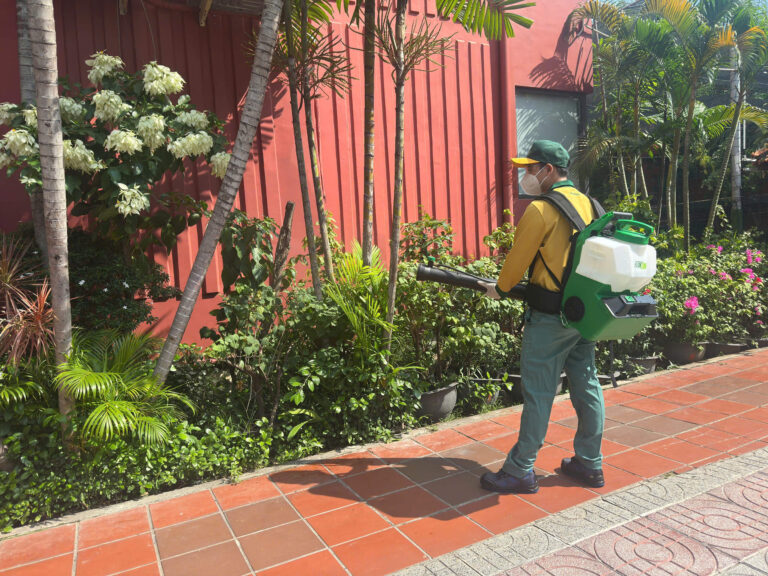
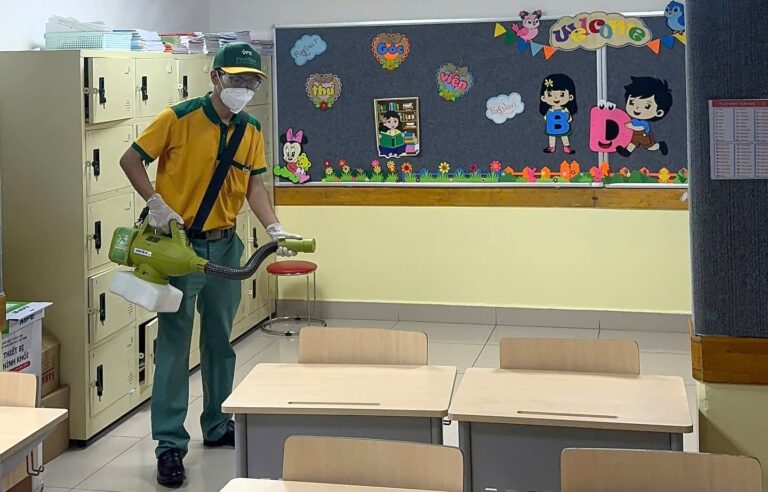
Pest and insect control in schools and educational facilities needs to be implemented as an ongoing preventive programme across classrooms, kitchens, canteens, dormitories, toilets, schoolyards and surrounding grounds. Educational environments have high occupancy, multiple food and water sources and interconnected activity areas, so an appropriate programme should prioritise prevention, monitoring and controlled treatment to maintain a safe learning environment.
Article content
1. Why do schools need pest and insect control?

Schools are unique environments because many different types of spaces are concentrated within the same facility. In addition to classrooms and offices, there may be school kitchens, canteens, toilets, food storage areas, waste collection points, playgrounds, landscaped areas, drainage systems and, at some facilities, dormitories. Each area creates different conditions for insects and pests to find food, water or shelter.
Flies, mosquitoes, cockroaches, ants and rodents are among the pests commonly associated with educational environments. Depending on the location, schools may also encounter termites, stored-product insects, light-attracted insects or other pests originating from the surrounding landscape. If not detected early, pests can move between the grounds, living areas and sensitive areas such as kitchens.
School environments also need to consider how pesticides and pest control products are used. The U.S. Environmental Protection Agency (EPA) recommends Integrated Pest Management (IPM) in schools, combining monitoring, removal of conditions favourable to pests, sanitation, structural maintenance and appropriate control methods. This approach aims for long-term management while reducing the need for frequent pesticide use.
Therefore, pest and insect control in schools should be viewed as an environmental management programme rather than a one-off spraying activity. The more proactive the programme, the better the school can detect risks before pests develop and affect learning and daily activities.
2. Common insects and pests in schools
2.1. Mosquitoes
Schoolyards, planters, drainage channels, outdoor equipment-storage areas and items capable of holding water can all provide breeding conditions for mosquitoes. Risk often increases during the rainy season, especially when the grounds contain extensive vegetation or hidden standing-water points.
Mosquito control should therefore begin with surveys and removal of breeding sites. Standing water needs to be checked regularly, drainage systems need to remain clear and landscaping should be appropriately managed. When additional treatment is required, the scope and timing need to be selected according to the school’s operating conditions.
2.2. Flies
Flies are commonly associated with areas containing food and organic waste, such as kitchens, canteens, waste bins and waste collection areas. Food transport, frequently opened doors and inadequate waste management can create further opportunities for flies to enter indoor areas.
For school kitchens, fly control needs to combine sanitation, waste management, entry prevention and monitoring. If only the visible flies are treated while attractants remain, fly density may quickly increase again. Therefore, flies in kitchens should be assessed together with cockroaches, ants, rodents and stored-product insects within a dedicated programme covering the entire chain from receiving and storage to processing, washing and waste collection..
2.3. Cockroaches
Cockroaches tend to seek damp, dark areas with available food sources. Kitchens, food storage areas, toilets, drains and gaps around equipment are locations that need attention during inspections.
Because cockroaches can hide in very small gaps, detection needs to rely on both site surveys and monitoring traps. Data from these points help identify areas with higher activity so that appropriate measures can be selected, while also allowing conditions such as moisture, sanitation and structural features that provide harbourage to be checked.
2.4. Rodents
Rodents may reach schools from drains, residential areas, vacant land, waste areas or surrounding buildings. Gaps beneath doors, technical pipes and food-receiving areas can become entry routes into the facility.
In addition to damaging food and materials, rodents can gnaw wiring and create hygiene concerns. The control programme needs to combine perimeter surveys, entry prevention, food-source management and an appropriate monitoring system.
2.5. Ants and crawling insects
Ants commonly appear in classrooms, staff rooms, canteens and areas where food is present. Sweets, beverages or food left after school hours may become attractants, particularly in classrooms where snacks are consumed.
Sanitation and food management play an important role in controlling this group. When ants repeatedly appear in the same area, their movement route and nest source need to be identified rather than treating only the location where they are seen.
2.6. Termites
Educational facilities with wooden structures, libraries, document storage areas, vegetation or older buildings may face termite risks. Because termite activity can remain hidden, early signs may only become visible after part of the material has already been affected. If winged termites, discarded wings, mud tubes or hollow-sounding wood are found, it is necessary to determine whether termite activity is within the structure or whether the individuals have simply dispersed from outside before selecting a treatment approach.
Periodic inspection of soil-contact areas, wooden structures, wall bases and high-moisture locations helps detect signs early. For new buildings, termite-prevention measures should also be considered during construction rather than waiting until signs appear.
3. Which areas in schools have higher pest risks?

3.1. School kitchens and canteens
The kitchen is one of the areas that should be prioritised when developing a school pest control programme. Food, water, heat and continuous processing activities can create favourable conditions for flies, cockroaches, ants and rodents if sanitation and entry prevention are not well maintained.
Inspection activities need to cover food receiving, raw material storage, preparation, processing, washing areas, drains and waste collection points. The connections between these areas also need to be considered because pests may move through goods, equipment or technical routes.
3.2. Classrooms and functional rooms
Classrooms are generally considered lower risk than kitchens, but snacks, beverages, waste bins and long-stored items can still attract ants, cockroaches or rodents. Areas that are rarely used, such as equipment stores, storage rooms or concealed corners, may also become harbourage sites.
The IPM programme needs to combine sanitation with reporting of unusual signs by teachers and staff. A simple reporting system helps the responsible team inspect quickly when rodent droppings, gnaw marks, insects or other suspicious signs are detected.
3.3. Toilets and drainage systems
High humidity makes toilets, drains and water-related technical areas important locations to monitor for cockroaches, drain flies and other insects. Water leaks or slow drainage can further increase conditions favourable to pests. If small flies continue to appear around drains even after surfaces have been cleaned, organic matter and biofilm inside the drainage system need to be checked, as drain flies may continue to develop there.
Facility maintenance is therefore part of the pest management programme. Repairing leaks, cleaning drains and keeping surfaces dry can deliver longer-term results than repeatedly treating insects at the same point.
3.4. Dormitories and boarding areas
Dormitories combine characteristics of accommodation and educational environments. High occupancy, luggage, personal food and all-day living activities create different risks from classroom areas.
Pest control in dormitories needs to cover bedrooms, laundry areas, toilets, dining areas and waste collection points. Communication with students and staff is also important because food-storage habits and waste disposal directly affect control effectiveness.
3.5. Schoolyards, landscaped areas and perimeter zones
Pest activity often begins outside before reaching buildings. Dense vegetation, standing water, organic waste, drainage systems and adjacent vacant land can provide environments for mosquitoes, rodents, ants and many other pests to develop.
Therefore, the scope of school pest and insect control needs to include perimeter areas. Maintaining landscaping, managing water and waste and inspecting points where outside areas connect with buildings create the first preventive layer for the entire facility.
4. Does pest control in schools require periodic spraying?
Spraying may be used in some situations, but it should not be the only measure of a pest control programme. EPA describes school IPM as an ongoing process that includes understanding target pests, setting action thresholds, monitoring locations and populations, removing favourable conditions and then selecting appropriate control methods.
This approach is particularly suitable for educational environments. Instead of building the programme mainly around the number of spraying visits, schools can prioritise sanitation, food and waste management, standing-water control, sealing entry routes and using monitoring devices. Chemical use is considered according to the pest, activity level, location and actual conditions.
EPA also notes that schools implementing IPM have reported the ability to maintain long-term pest control while reducing pesticide use and potentially improving cost effectiveness. This provides an important basis for educational facilities to move from a “periodic insect spraying” mindset toward systematic pest-risk management.
5. What is IPM in schools?
Integrated Pest Management (IPM) is a comprehensive pest-management approach that combines multiple types of solutions to control pests while reducing risks to people and the environment. According to the definition used by EPA, IPM combines biological, cultural, physical and chemical tools in ways that minimise economic, health and environmental risks.
For schools, IPM is particularly suitable because the programme places strong emphasis on prevention. Pest attractants are identified and removed, entry routes are controlled, monitoring devices are used to track activity and intervention measures are selected according to actual need.
An IPM programme also requires coordination between multiple parties. School management, teachers, sanitation staff, kitchen teams, maintenance personnel and pest control service providers each have their own role. EPA also emphasises the participation of school administrators, staff, parents and pest management professionals in maintaining a long-term IPM programme.
For larger facilities, the role of each department should be standardised through training procedures, checklists and IPM monitoring mechanisms so that teachers, sanitation teams, kitchen staff, maintenance personnel and pest control providers coordinate consistently.
6. How should a school pest control programme be implemented?
6.1. Site survey and risk assessment6.1. Site survey and risk assessment
The first step is to survey the entire facility to identify pest species that may occur, entry routes and areas with favourable conditions. Historical data on rodents, flies, mosquitoes, cockroaches or termites should also be reviewed if the school has previously used pest control services.
Survey results help classify areas by risk level. Kitchens and waste areas may require a different level of monitoring from classrooms, while dormitories and schoolyards need their own approaches suited to activities in each area.
6.2. Remove food, water and harbourage
Food, water and shelter are three basic conditions that allow many pests to maintain populations. Good management of these factors can significantly reduce pest pressure before other treatment measures are required.
EPA also considers proper waste management part of school IPM because it reduces conditions that attract pests. Schools need to pay attention to waste bins, waste collection areas, food residues, standing water and sanitation in eating areas.
6.3. Prevent entry routes
Doors, windows, wall gaps, drains, pipes and structural penetrations need to be checked periodically. Small gaps can provide routes for cockroaches, ants and rodents, while frequently opened doors create opportunities for flying insects to enter.
Physical exclusion measures need to be selected according to the location, such as screens, gap sealing or door adjustments. Maintaining structures in good condition supports pest control and reduces the need for future treatment.
6.4. Establish a monitoring system
Traps and monitoring devices help detect pest activity before the problem becomes obvious. Data need to be recorded by location and time to determine which areas show increasing trends. For facilities with multiple buildings or monitoring points, data can be digitised to track trends over time, identify hotspots and retrieve the history of each monitoring point.
Schools can also use pest sighting logs so that teachers and staff can report detected signs. EPA includes pest sighting logs among the tools supporting school IPM implementation, together with canteen inspection checklists and other management resources.
6.5. Treatment and effectiveness evaluation
When data exceed the action threshold or a risk requiring intervention appears, the treatment approach is selected according to the pest and the area. Sanitation, structural repairs, removal of pest sources and physical controls can be combined with chemical methods when appropriate.
After treatment, the area needs to remain under monitoring to verify effectiveness. If the same issue repeatedly returns, the programme needs to return to cause assessment rather than simply repeating the same treatment.
7. When should schools strengthen pest control?
Before the new school year is one of the appropriate times to conduct a full facility inspection, especially after summer holidays when many classrooms, dormitories or functional rooms may have been used less frequently for an extended period. The school can review standing-water points, rodent signs, cockroaches, termites, drainage conditions and areas requiring cleaning before students return.
The rainy season is also a period when monitoring needs to be increased. Standing water and humidity may change the risk of mosquitoes, cockroaches and some insect groups, while heavy rain may affect outdoor rodent harbourage and alter their movement routes.
In addition to seasonal factors, schools should reassess the programme when facilities are renovated, new kitchens or dormitories are opened, waste collection areas are changed, pests are repeatedly detected in the same location or monitoring data show an increasing trend. The programme needs to adapt to actual conditions rather than maintaining one fixed plan throughout the year.
8. What should be considered when controlling pests in school kitchens?
School kitchens are areas where pest control and food hygiene are directly connected. From receiving and storage to preparation, processing and waste collection, attractants can develop if sanitation and storage procedures are not appropriate.
Inspections need to focus on areas beneath equipment, wall gaps, drains, washing areas, food stores and waste-bin locations. Ingredients need to be stored appropriately, food spills need to be cleaned promptly and waste needs to be removed according to schedule.
In these areas, monitoring-trap data are particularly useful for identifying activity from cockroaches, ants and food-related insect groups. When an increasing trend is detected, the school can investigate the cause and implement measures early before the issue affects kitchen operations.
See also: Pest control in school kitchens before the new school year
9. What should be considered for pest control in dormitories?
Dormitories contain many rooms, have high occupancy and support living activities over long periods. Personal food, stored belongings, waste and luggage can create additional risks from ants, cockroaches, rodents and other pests.
Pest control in boarding areas requires cooperation from occupants. Rules for food storage, waste disposal, room sanitation and reporting pest signs help significantly reduce conditions that support pest development.
When treatment is carried out in dormitories, the plan needs to consider daily routines and access to each area. Clear communication about timing, scope and related requirements before implementation also helps organise pest control safely and with minimal disruption.
10. How often should schools carry out pest control?
There is no single frequency suitable for every school and every area. Frequency needs to be determined based on pest type, history of activity, risk level, season, environmental conditions and data collected from the monitoring programme.
Kitchens, canteens, waste areas and other high-risk locations generally require closer monitoring than stable areas. When data show increasing density or unusual signs appear, inspection frequency can be increased to determine the cause and evaluate effectiveness after treatment.
Developing a risk-based schedule is consistent with IPM principles because resources are focused where they are genuinely needed. Schools also gain a clearer basis for evaluating programme effectiveness over time.
11. How does VFC PestMan implement pest and insect control in schools?

School pest and insect control programmes need to be designed according to the characteristics of each facility. Preschools, primary and secondary schools, international schools, universities, boarding schools and facilities with school kitchens all have different risk levels and operating requirements.
VFC PestMan follows IPM principles, beginning with surveys and risk assessment across classrooms, kitchens, dormitories, toilets, perimeter grounds and other functional areas. Based on these findings, prevention systems, monitoring systems and control approaches are developed according to each pest group and risk level.
Periodic inspections allow data to accumulate over time so that locations with recurring trends can be identified. When abnormalities occur, VFC PestMan can coordinate with facility management to determine the cause and recommend measures related to sanitation, infrastructure, entry prevention or professional treatment.
Pest and insect control in schools needs to be implemented continuously from prevention and monitoring through treatment and effectiveness evaluation. Managing classrooms, kitchens, dormitories, toilets and perimeter environments together helps educational facilities detect risks early, reduce favourable conditions for pests and maintain a safer learning and living environment.
With experience in implementing professional pest control programmes, VFC PestMan supports schools and educational facilities in developing IPM programmes suited to actual conditions, with the aim of proactive control, reduced dependence on chemical treatment and long-term effectiveness. Once key areas and target pest groups have been identified, PestMan can implement span style="color: #008000;">an IPM-based insect and rodent control programme for classrooms, kitchens, dormitories, toilets and school grounds.

Ready to eliminate audit risks and proactively protect customer experience & brand reputation?





Dear Valued Visitor,
To protect our clients' interests, all materials here are copyrighted and may not be reproduced without permission.
We appreciate your cooperation. Should you need to use our content professionally, please contact us directly.