







 PART
01
By VFC PestMan | 11-09-2026
Types of insects in warehouses: identification and comprehensive control solutions
Goods storage areas and raw material warehouses contain high concentrations of organic nutrient sources, ranging from starch and cereal grains to paper packaging. Accurate identification of the types of insects found in warehouses helps businesses proactively prevent damage to raw materials, protect infrastructure and better meet international quality-control standards.
Article content

1. Stored-product beetles and beetles that damage raw materials
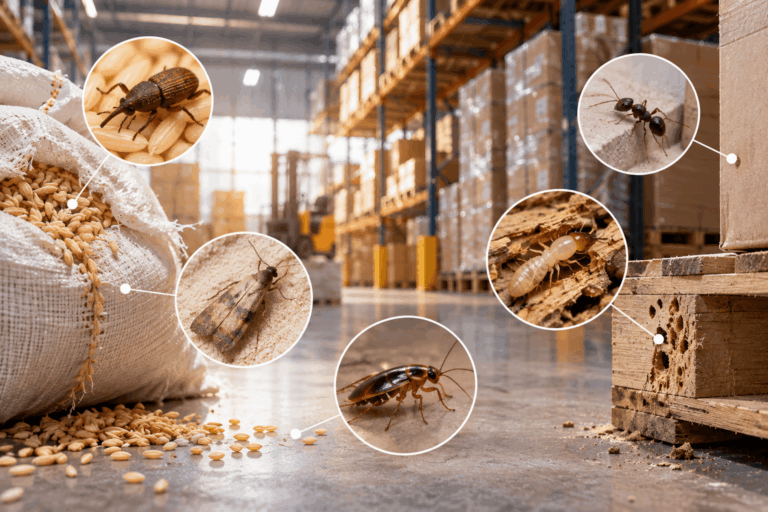
Beetle pests directly damage warehouses storing grains, animal feed, oilseeds and spices. Thai grain weevils, rice weevils and sawtoothed grain beetles have small bodies that allow them to pass through packaging seams and lay eggs deep inside stored grain.
During the larval stage, stored-product beetles feed directly on grain kernels, hollowing out agricultural products while generating heat and moisture that promote mould growth. The presence of stored-product beetles can seriously reduce the quality grade of incoming materials and introduce biological foreign matter that may cause shipments to be rejected during quality audits under BRCGS or ISO 22000 requirements.
For food-ingredient warehouses, beetle identification needs to be combined with the pest control process for food warehouses.
2. Stored-product moths and other scale-winged flying insects
Indianmeal moths and grain moths are common threats in warehouses storing flour, chocolate, cashew nuts and dried herbs. Adult moths disperse and fly at night, searching for openings in packaging folds where they can lay hundreds of eggs.
The greatest damage occurs during the web-producing larval stage. The webbing binds raw material particles together into large clumps, while shed skins and larval droppings accumulate and may obstruct pneumatic conveying systems or mechanical conveyors. Controlling moth populations requires a specialised monitoring system using biological attractants to disrupt the mating cycle.
3. Crawling insects and pathogen-carrying pests
German cockroaches, Oriental cockroaches and ants can enter warehouses through utility pipes, drainage systems and goods transported from outside. Cockroaches carry large numbers of bacteria and mould spores that can directly contaminate the surfaces of pallets and storage cartons. Businesses should also review 5 areas where cockroaches commonly occur in factories.
In addition to cockroaches, termites and carpenter bees can cause hidden damage to wooden pallets and long-stored cardboard packaging. These pests excavate networks of cavities inside wooden components, weakening load-bearing pallet supports and creating a risk of rack collapse and widespread damage to stored materials. If termite activity is suspected, businesses can learn more about PestMan’s termite and wood-boring insect control services
4. Quick identification table for insects in raw material warehouses
Businesses can compare the biological characteristics and risk areas of each insect group using the following technical table:
| Insect group | Typical species | Main areas of occurrence | Characteristic identification signs |
| Stored-product beetles | Grain weevils, rice weevils, sawtoothed grain beetles | Inside agricultural-product packaging, gaps in wooden pallets | Hollowed grains with bore holes, fine bran-like powder at the bottom of bags |
| Stored-product moths | Indianmeal moths, grain moths | Warehouse ceilings, upper rack corners, packaging folds | Webbing on grain surfaces, pupal cocoons attached to walls |
| Crawling insects | German cockroaches, American cockroaches, ants | Wall edges, beneath racks, floor drains | Secretion stains, empty cockroach egg cases, characteristic odour |
| Wood-damaging insects | Wood termites, carpenter bees, wood-boring beetles | Damp wooden pallets, wooden packages stored for long periods | Termite mud tubes, smooth round holes with fine wood dust |
5. Causes of insect occurrence and recurrence in warehouses
Inadequate control of incoming goods is one of the most common routes by which infestation sources enter a warehouse. Raw material shipments from external suppliers may already contain microscopic insect eggs or larvae inside the packaging.
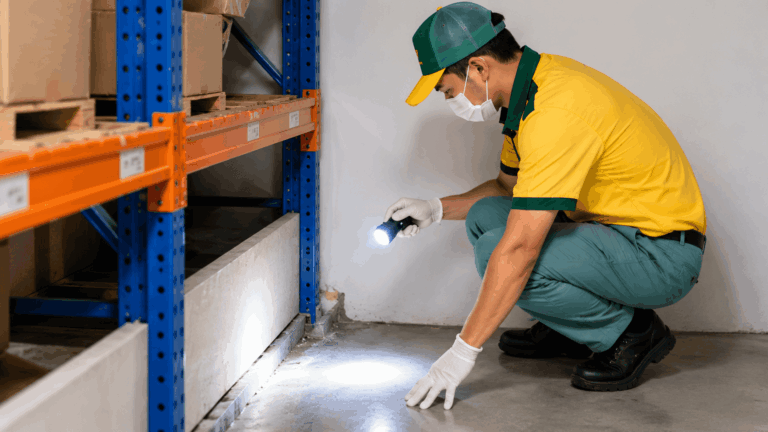
Deteriorating warehouse infrastructure and incomplete sanitation procedures create favourable conditions for pest populations to persist. Flour and grain particles accumulating over time in cracks in concrete floors, gaps along wall bases or beneath storage racks provide a stable food source. In addition, storing damp wooden pallets against walls restricts airflow and creates warm, humid zones that are favourable for insect eggs to hatch and complete their life cycle.
This is also one of the mistakes that cause insects to recur in warehouses.
6. Comprehensive insect control process based on VFC PestMan’s IPM approach
Integrated Pest Management (IPM) focuses on proactive prevention from the facility perimeter, combined with continuous monitoring data to reduce the use of hazardous chemicals in food and animal-feed storage environments:
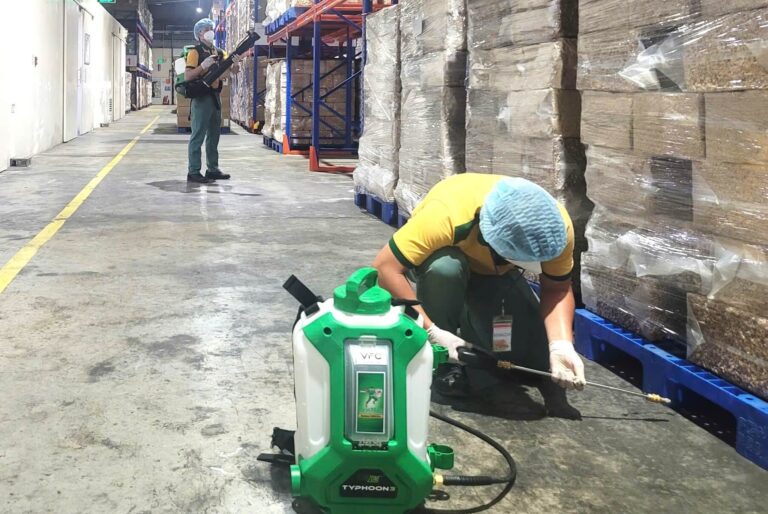
- Mechanical entry prevention: VFC PestMan conducts site assessments and provides recommendations for sealing structural gaps larger than 6 mm, installing insect-resistant plastic curtains at warehouse doors and positioning air curtains to achieve the required air velocity at floor level.
- Standardising storage practices: Maintain a minimum clearance of 30 cm between storage racks and walls and 15 cm above the floor, creating clear access for periodic dry cleaning using specialised vacuum equipment.
- Monitoring with specialised traps: Install UV-A LED insect light traps using glue boards that prevent insect fragments from scattering near entrances, while specialised pheromone traps are positioned to accurately monitor weekly moth and stored-product beetle density.
- Risk management through digital data: VFC PestMan’s real-time trap-data recording system supports analysis of pest-density trends, helping warehouse management teams detect outbreak risks early and maintain readiness for AIB, BRCGS or FSSC 22000 quality audits.
Understanding the characteristics of the types of insects found in warehouses helps businesses develop a proactive and systematic raw-material management plan. VFC PestMan provides integrated warehouse-protection solutions that address pest sources at their origin and help maintain the quality of goods during long-term storage.
If businesses are looking for a pest control company for businesses, need to survey the current pest situation or build a control program suitable for a factory, warehouse, hotel, or building, VFC PestMan can assist with on-site evaluation and propose solutions based on actual risks.
Hotline: (+84) 932669883
Email: contact@pestman.vn
PART
01
 PART
02
Mistakes that cause insects to recur in warehouses
 PART
03
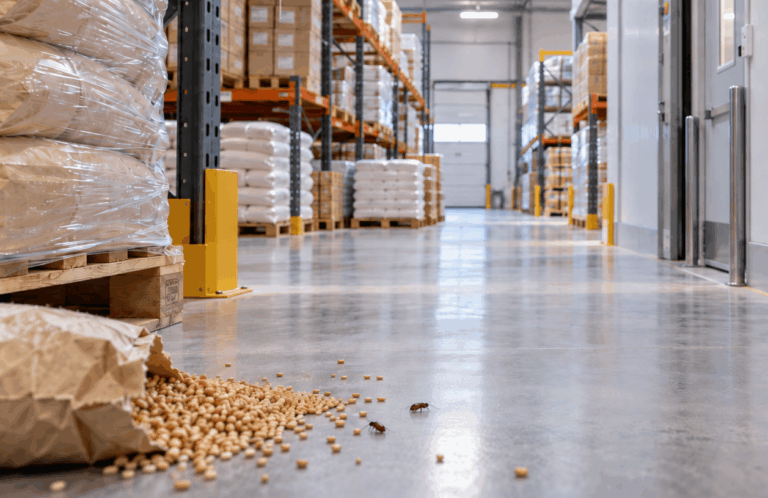
Pest control in food warehouses: Risks, procedures, and IPM solutions
 PART
04
Comprehensive insect control strategy for food logistics warehouses and F&B supply chain
 PART
05
Pest control in cold storage facilities: 5 blind spots businesses often overlook

Ready to eliminate audit risks and proactively protect customer experience & brand reputation?






Dear Valued Visitor,
To protect our clients' interests, all materials here are copyrighted and may not be reproduced without permission.
We appreciate your cooperation. Should you need to use our content professionally, please contact us directly.