




By pestman | 28-01-2026
Are you annoyed by black, moth-like round-winged flies constantly appearing around floor drains or bathroom walls? Those are drain flies—nuisance insects that carry numerous bacteria from waste pipes. This article will provide comprehensive information to help you easily identify them, understand their habits, and pocket root-cause control measures for these stubborn flies to protect your living space, keeping it clean and airy.
1. What are drain flies and why do they emerge from the drainage system?
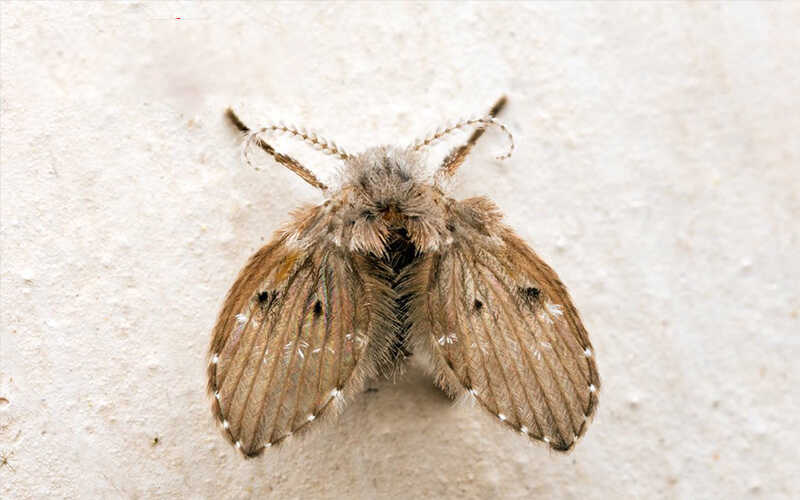
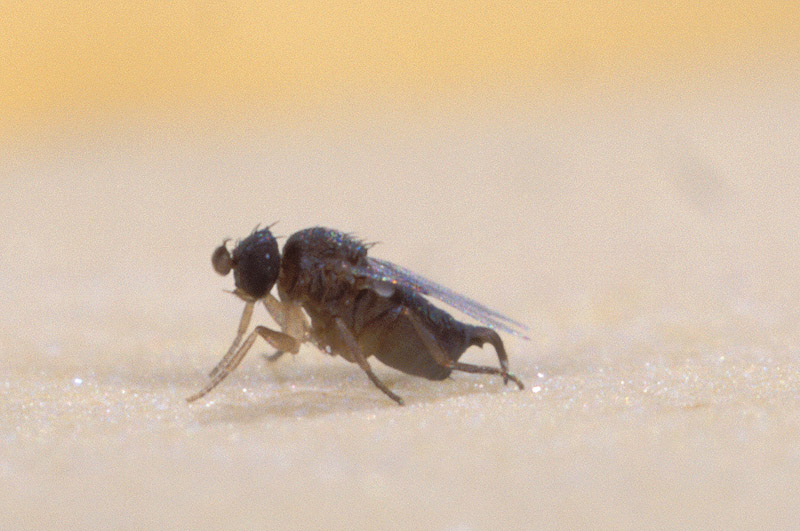
Drain flies (Clogmia albipunctata, belonging to the moth fly family Psychodidae) are holometabolous insects that develop directly from the accumulation of decomposing organic matter inside drainage systems.
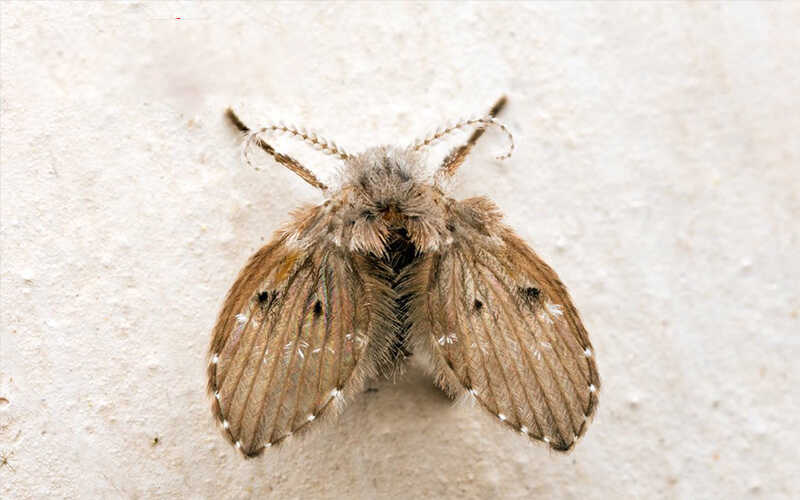
What are drain flies?
1.1. The role of drainage pipe structures regarding drain flies
Trap systems (P-traps or S-traps) are originally designed to prevent odors, but inadvertently become ideal reservoirs for fats, soap scum, and discarded hair. When the water flow is not strong enough to flush them away, these impurities settle, forming a perfect 100% humidity environment for fly pupae to develop.
1.2. Temperature impacts on population outbreaks
Within the ideal temperature range of 26°C to 30°C, the lifecycle of drain flies is minimized as eggs take less than 48 hours to hatch. This warm temperature also stimulates biofilms and bacteria inside the pipes to thrive. This provides an abundant food source that helps larvae grow rapidly and pupate within a few days, causing the population density beneath the drains to increase exponentially.
The transitional season in Vietnam acts as a trigger that activates hormonal signals within the puparia simultaneously. Instead of developing sporadically, mass numbers of fly pupae will metamorphose and emerge at the exact same time as soon as the weather warms up. This biological transformation phenomenon explains why restrooms can suddenly be swarmed by dozens of drain flies overnight.
2. Identification characteristics of drain flies
The most accurate way to identify drain flies is by their ash-gray bodies, small size of 2–5 mm, and heart-shaped wings covered with dense fine hairs. When resting on walls, they hold their wings flat in a triangular shape, giving them the appearance of miniature moths.
2.1. Detailed morphological analysis of Clogmia albipunctata
Unlike the majority of the order Diptera, drain flies possess a pair of long antennae consisting of multiple small segments with whorled hairs, functioning as an extremely sensitive moisture-sensing organ. The wings of this insect lack major veins but are structured with a system of fine hairs along the wing margins, making the flight path of drain flies very short with a tendency to hop.
2.2. Behavioral habits and characteristic movement reflexes
2.2.1. Behavioral habits
Due to limited flight capability, adult drain flies tend to rest stationary near the location where they have just emerged. This insect particularly favors surfaces with high humidity, darkness, and shelter from the wind inside restrooms, such as:
- Smooth ceramic tile walls around washbasins and showerheads.
- The underside of toilet seats, and crevices behind wall-mounted mirrors.
- Dark corners beneath kitchen sinks or wall cracks with water leaks.
When resting, the wings of drain flies always fold to form a characteristic roof-like shape to protect their bodies from water splashes.
2.2.2. Characteristic movement reflexes
Drain flies have a hairy body structure and large wings relative to their weight, but their muscles are very weak. This exact characteristic makes this species a very poor flier, unable to fly as high or as far as houseflies. The flight trajectory of drain flies consists mainly of short flights from a few dozen centimeters to one meter, combined with erratic hopping behavior on wet wall surfaces or floors. When there are strong winds or powerful airflow from fans, drain flies are usually blown away passively instead of controlling their flight direction autonomously.
>> Read more: Proper fly identification for effective root-cause treatment
3. Do drain flies bite and what harm do they cause to human health?
Drain flies do not bite, sting, or suck human blood, but this species is an extremely dangerous mechanical vector for infections. The danger of this creature lies in the millions of necrotizing bacteria clinging to their fine hairs after crawling up from septic tanks and wastewater pipes.
3.1. Mechanisms of bacterial transmission and cross-contamination in bathrooms
When drain flies fly sluggishly and land on personal care items such as toothbrushes, face towels, or showerheads, they immediately release parasitic microorganisms. Humans coming into direct contact with these contaminated surfaces will face risks of skin inflammation or intestinal infections.
3.2. Risks of respiratory irritation and asthma from fly carcasses
The carcasses of this insect after death will dry out, disintegrating into ultra-fine hair dust particles suspended in the air. For individuals with sensitive constitutions, inhaling these chitinous fragments will trigger the immune system, causing chronic asthma attacks or severe allergic rhinitis.
3.3. Myiasis (parasitic maggot infestation)—rare but real
Despite a very low incidence rate, parasitological studies have warned about the phenomenon of drain fly larvae parasitizing the human body at open wounds. If a person sleeps in an environment with high drain fly density and poor sanitation, the flies can deposit eggs directly on compromised skin areas, leading to dangerous myiasis syndrome.
4. How to eradicate drain flies and a 3-step protocol to prevent re-infestation
4.1. How to control and eradicate drain flies
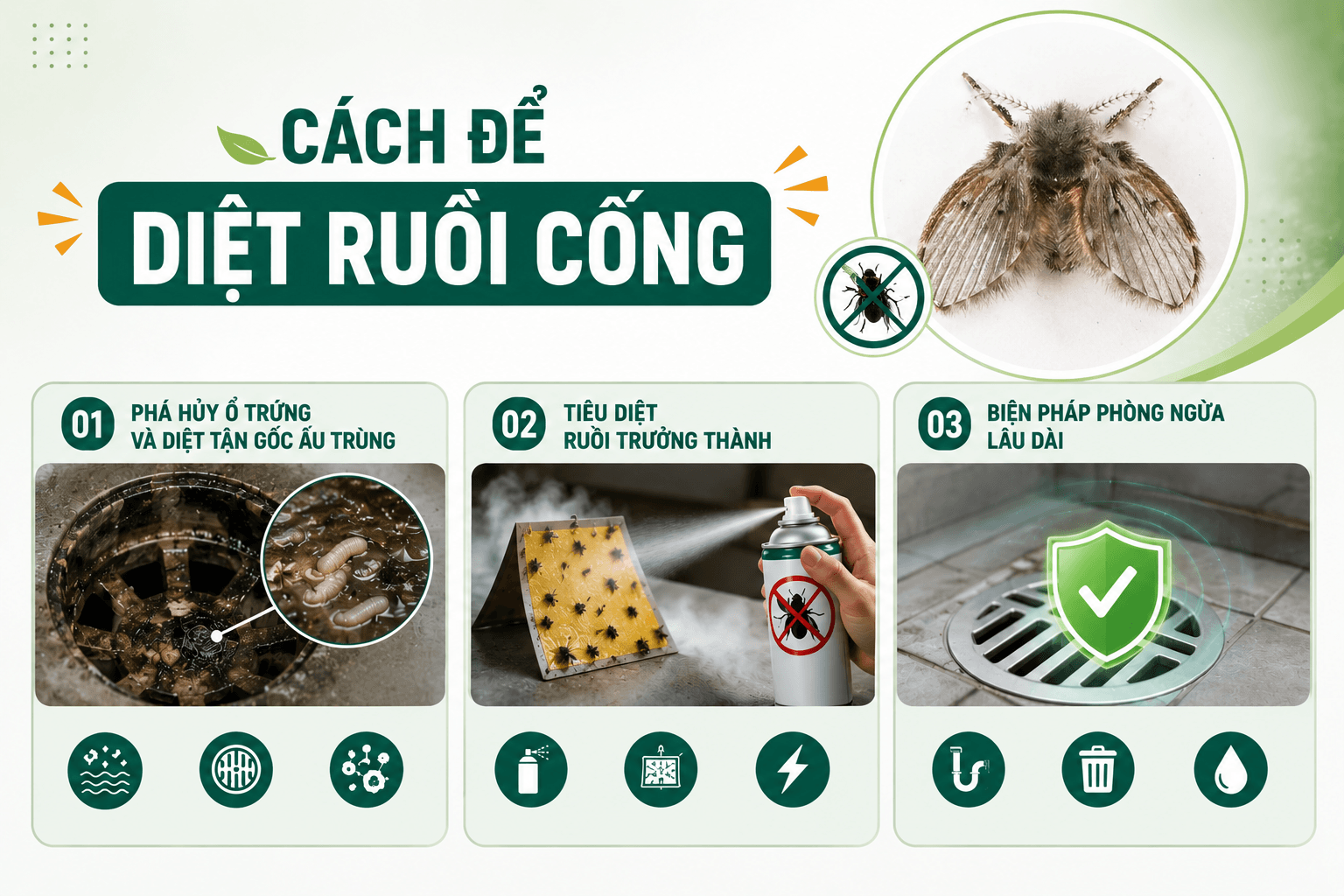
4.1.1. Destroying breeding sites and eradicating larvae at the source (beneath drains)
Drain fly larvae live inside the gelatinous slime layer adhering to drainage pipe walls. To eradicate drain flies, you must remove this slime layer:
- Baking soda and vinegar treatment: Pour 1 cup of baking soda into the floor drain, followed by 1 cup of vinegar. The foaming reaction helps break down the organic buildup. Leave it for 1–2 hours, then flush thoroughly with boiling water to kill larvae hidden deep inside the drain.
- Use biological powder treatments: Products such as grease-digesting microbes and drain-cleaning powders contain beneficial bacteria that feed on organic residue inside pipes. Once the organic film is removed, the larvae lose their food source and die off naturally in large numbers.
- Manual scrubbing: Use a curved pipe-cleaning brush to scrub the inner walls of the drain pipe and destroy larval hiding places.
4.1.2. Eliminating adult flies (above ground)
Since drain flies are very poor fliers with slow movement reflexes, you can apply the following clever tips:
- Black adhesive tape trap: Apply double-sided tape around floor drains or gaps while leaving small openings for airflow. When drain flies emerge from below, they become trapped on the adhesive surface.
- Apple cider vinegar and soap trap: Mix apple cider vinegar in a small bowl and add a few drops of dish soap, then stir gently. Place the bowl in a bathroom corner. The sweet-sour scent attracts flies, while the dish soap breaks the surface tension, causing the flies to sink and drown.
- Professional insect spray: Spray directly into dark wall corners and under sinks where drain flies commonly rest during the daytime for rapid elimination.
4.1.3. Long-term preventive measures
- Install odor-proof and insect-proof floor drains: Replace standard drain covers with floor drains equipped with water traps or mechanical flap covers that open only when water flows and seal tightly afterward, completely blocking flies from entering through the drainage system.
- Keep the bathroom dry: Drain flies dislike dry environments. Use a floor squeegee after showering and turn on ventilation fans to dry the bathroom quickly.
- Routine maintenance: Maintain the habit of pouring boiling water or vinegar into drainage pipes once a week to prevent biofilm from reforming.
How to get rid of drain flies
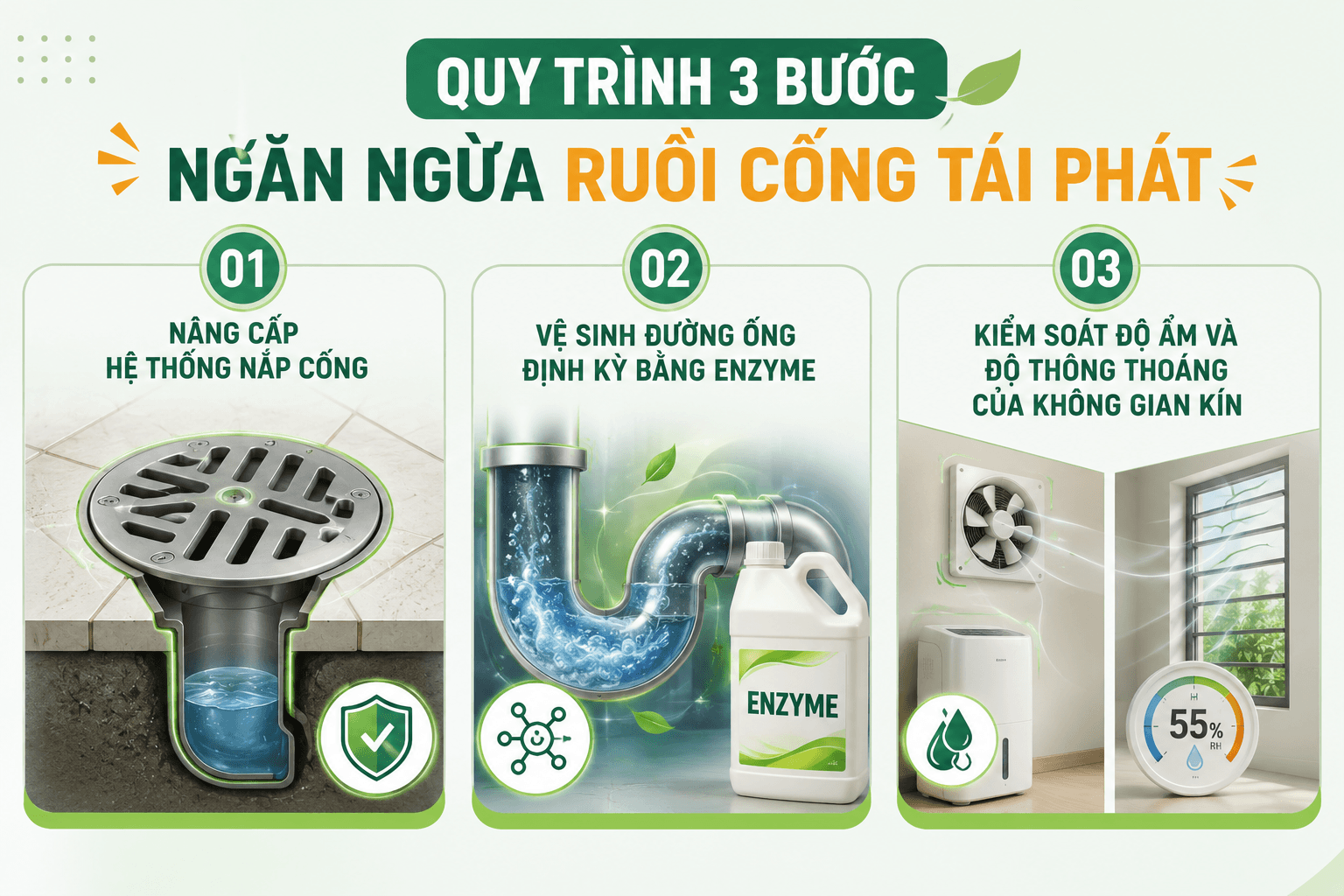
4.2. A 3-step protocol to prevent drain fly re-infestation
Step 1: Upgrade to insect-blocking drain cover systems
Replace all open floor drain covers with automatic odor-proof drain covers made of brass or silicone. Their self-sealing mechanism, activated when no water is flowing, creates a strong physical barrier that completely prevents adult flies from crawling up from underground drains into bathrooms.
Step 2: Establish a routine pipe cleaning habit using enzymes
Maintain a habit of pouring microbe-based organic decomposition solutions into drain openings once a week. This action completely eradicates any opportunity for biofilm formation, eliminating the sole egg-laying environment of the fly at its source.
Step 3: Control humidity and ventilation in enclosed spaces
Run the exhaust fan continuously for at least 30 minutes after showering to clear all accumulated water vapor on the walls. A dry space with a humidity level below 60% creates an adverse environment where drain flies cannot survive or mate and reproduce.
Procedures to prevent fly recurrence
5. What technology does VFC PestMan use for pest control and insect eradication?
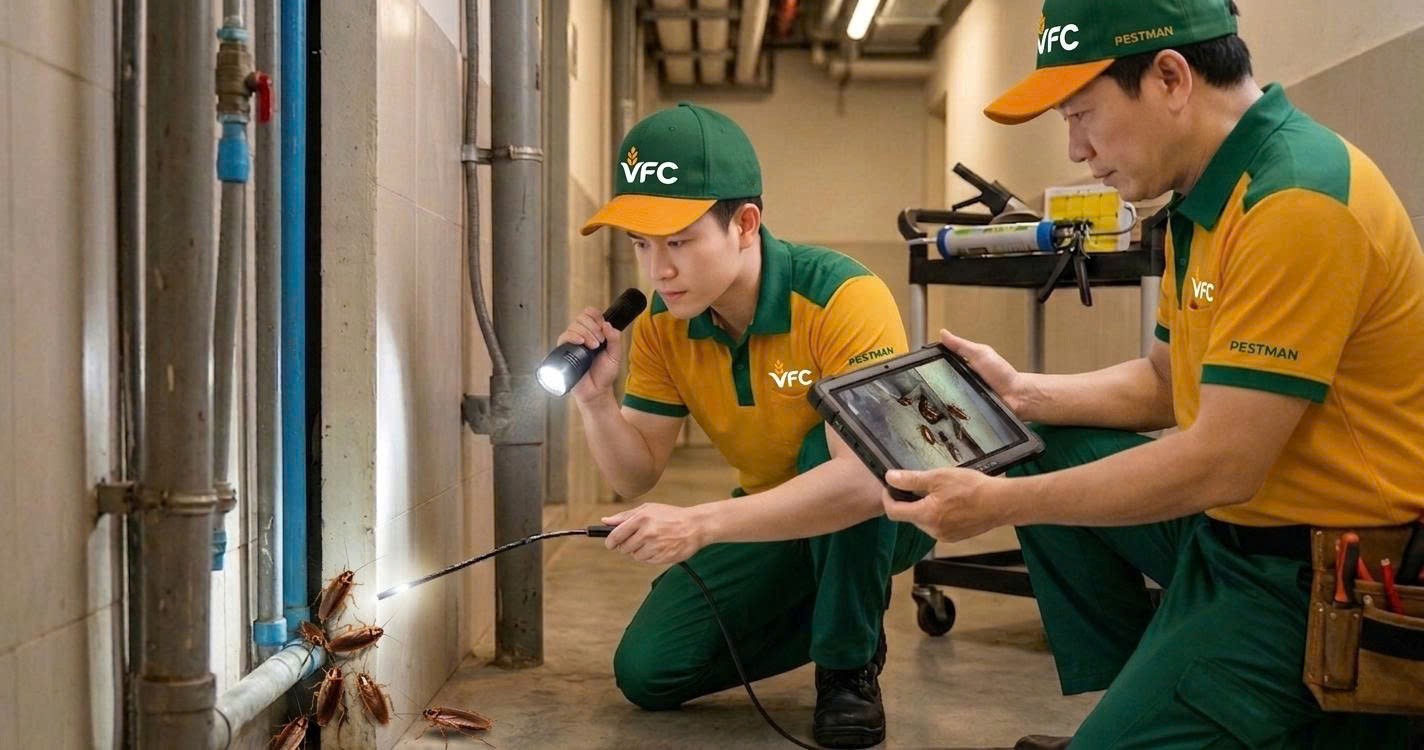
The paramount strength that asserts VFC PestMan's position is the application of comprehensive integrated pest management (IPM) solutions, instead of traditional insect eradication methods. Unlike conventional approaches that only focus on eliminating housefly individuals breaking out in plain sight, VFC PestMan's specialized protocols target the root cause directly. By eliminating food sources, obliterating breeding sites, and establishing solid exclusion barriers, we help protect your space from the risk of re-infestation sustainably.
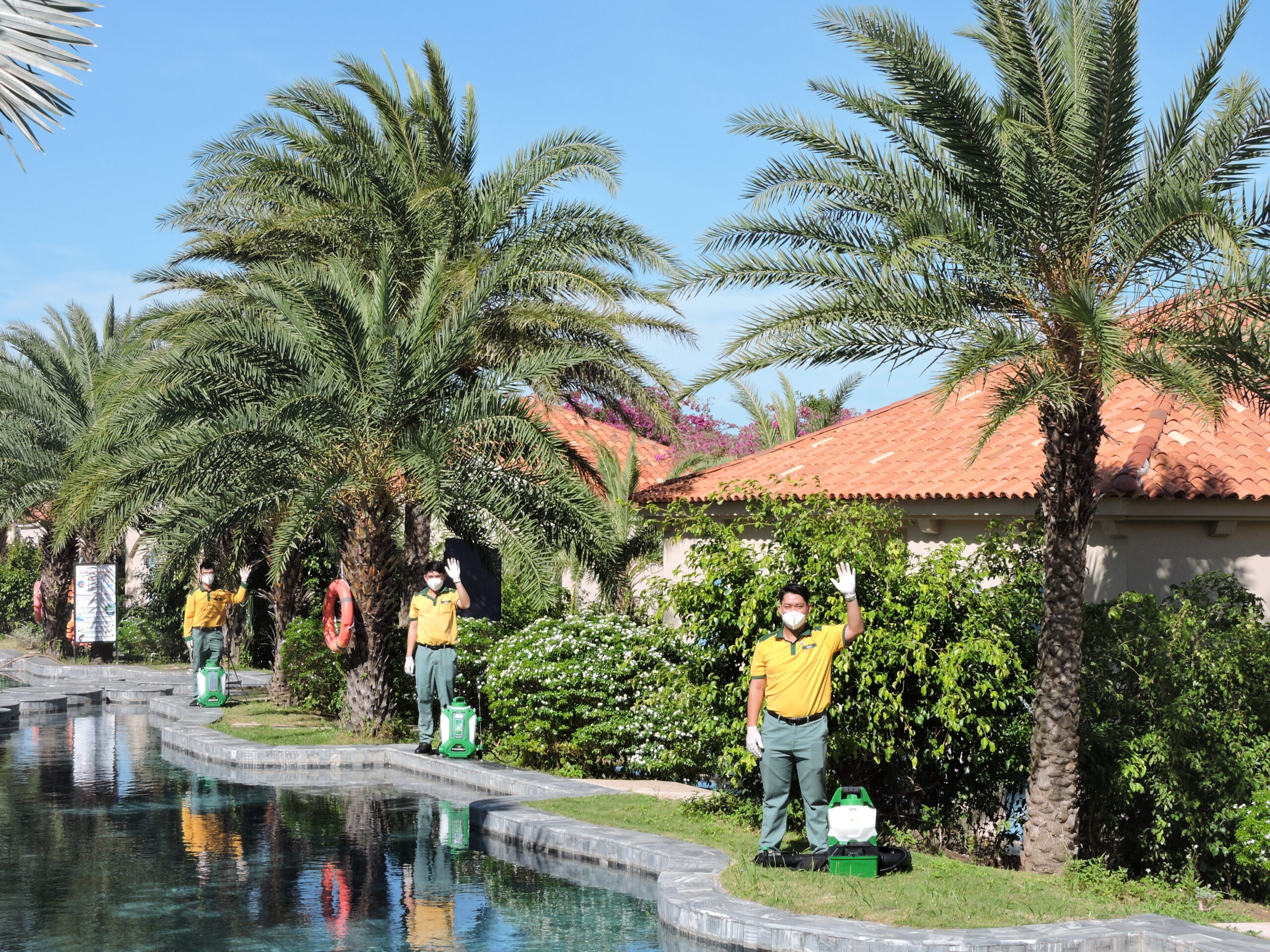
VFC PestMan – Professional Pest Control Unit
Flies are not only a nuisance and a source of property damage, but also carriers of many dangerous pathogens. Instead of wasting time and money on ineffective self-applied spraying methods, our professional pest control service provides a comprehensive solution: eliminating flying insects at factories from the root after just a single treatment. We are committed to using odorless chemicals certified as safe by the Ministry of Health, helping preserve healthy living and working environments for both households and businesses.
Moving beyond that, VFC PestMan has also pioneered the application of a transparent electronic reporting system. This technology allows factory management levels to easily monitor and accurately update pest density indexes in real time, while providing comprehensive standardized data to be fully prepared for working with quality audit delegations.


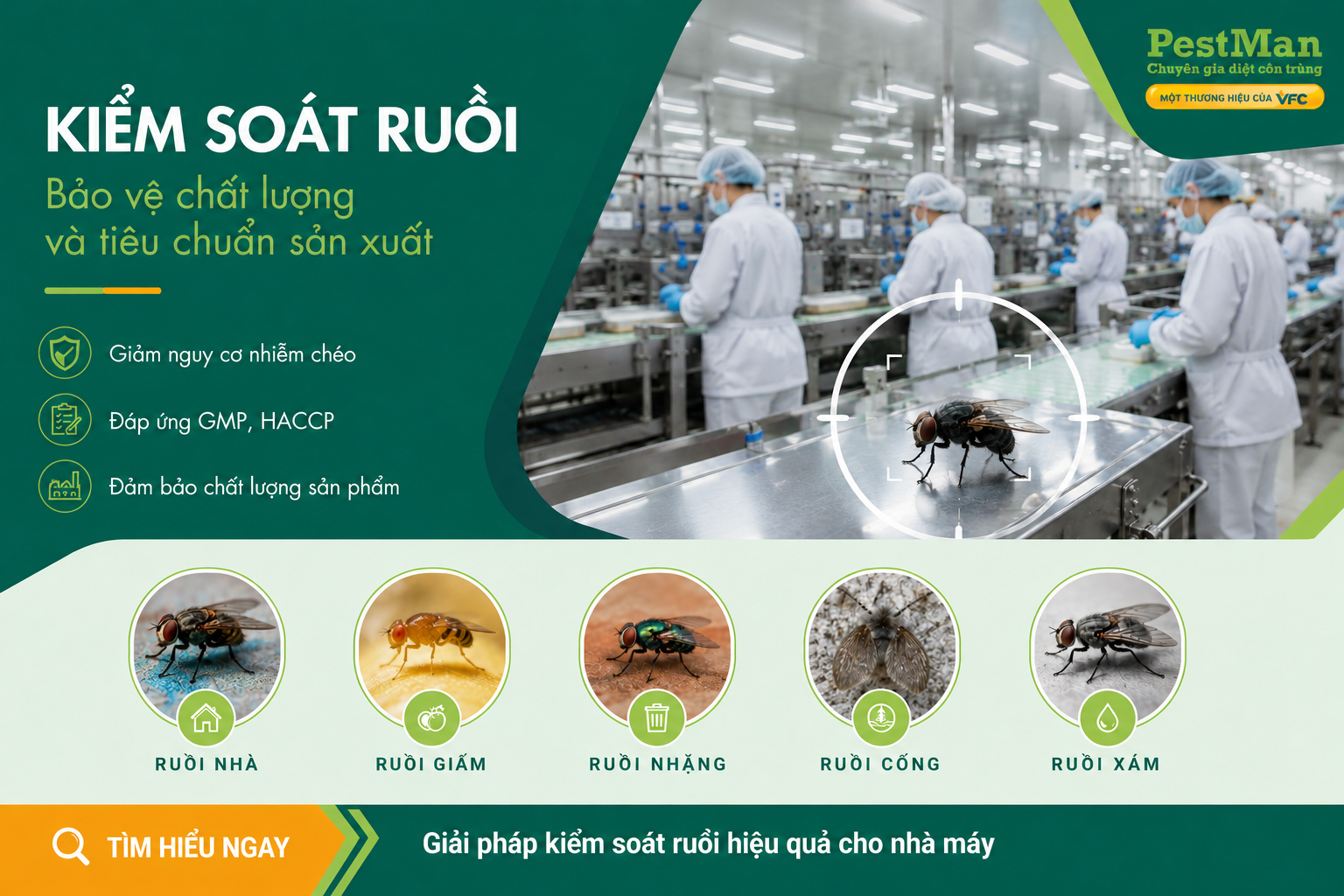
Cách diệt ruồi trong nhà máy hiệu quả: Nhận diện đúng loài để xử lý tận gốc
Trong môi trường sản xuất, đặc biệt tại các nhà máy thực phẩm, đồ uống…
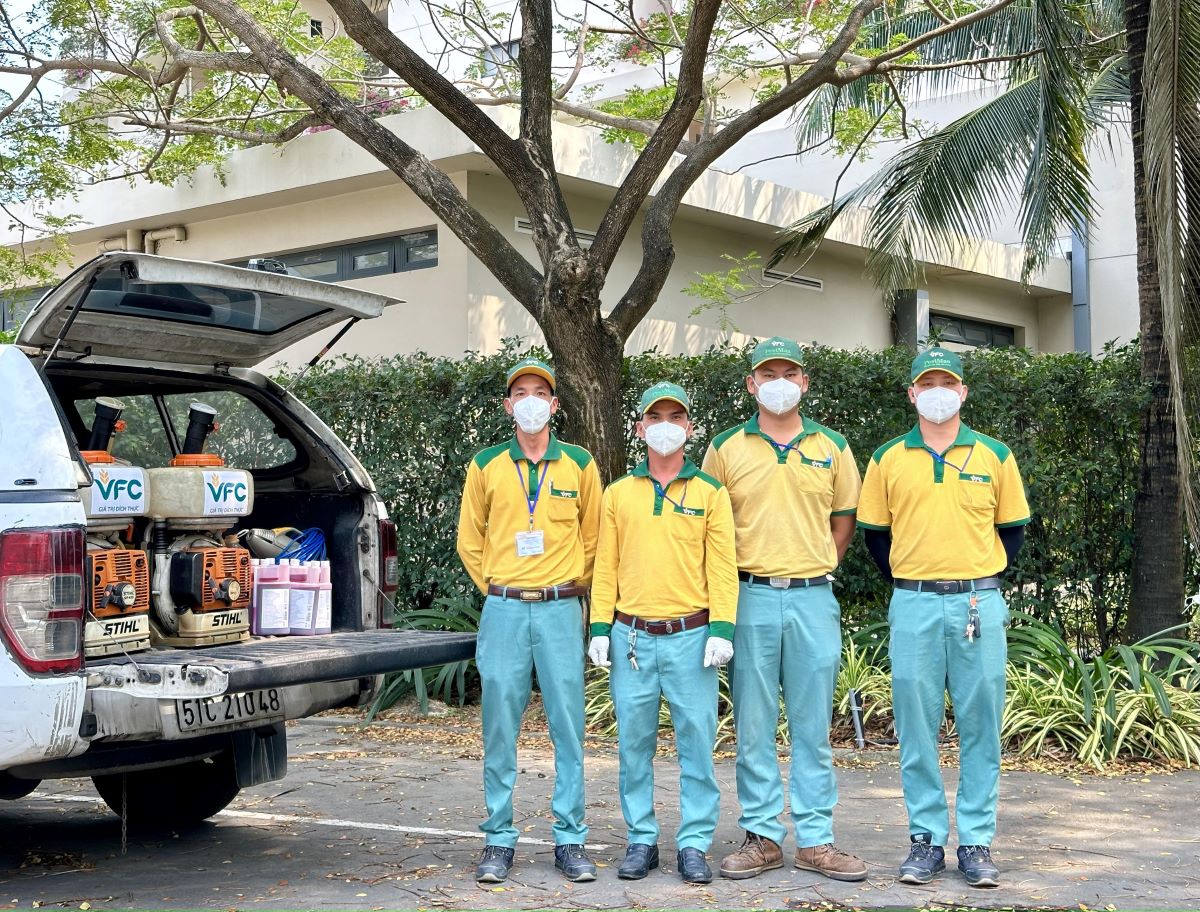
IPM và Phun xịt côn trùng truyền thống: Đâu là giải pháp kiểm soát dịch hại tối ưu cho doanh nghiệp?
IPM trong kiểm soát dịch hại đang dần thay thế phương pháp phun xịt truyền…
Related news

Ready to eliminate audit risks and proactively protect customer experience & brand reputation?