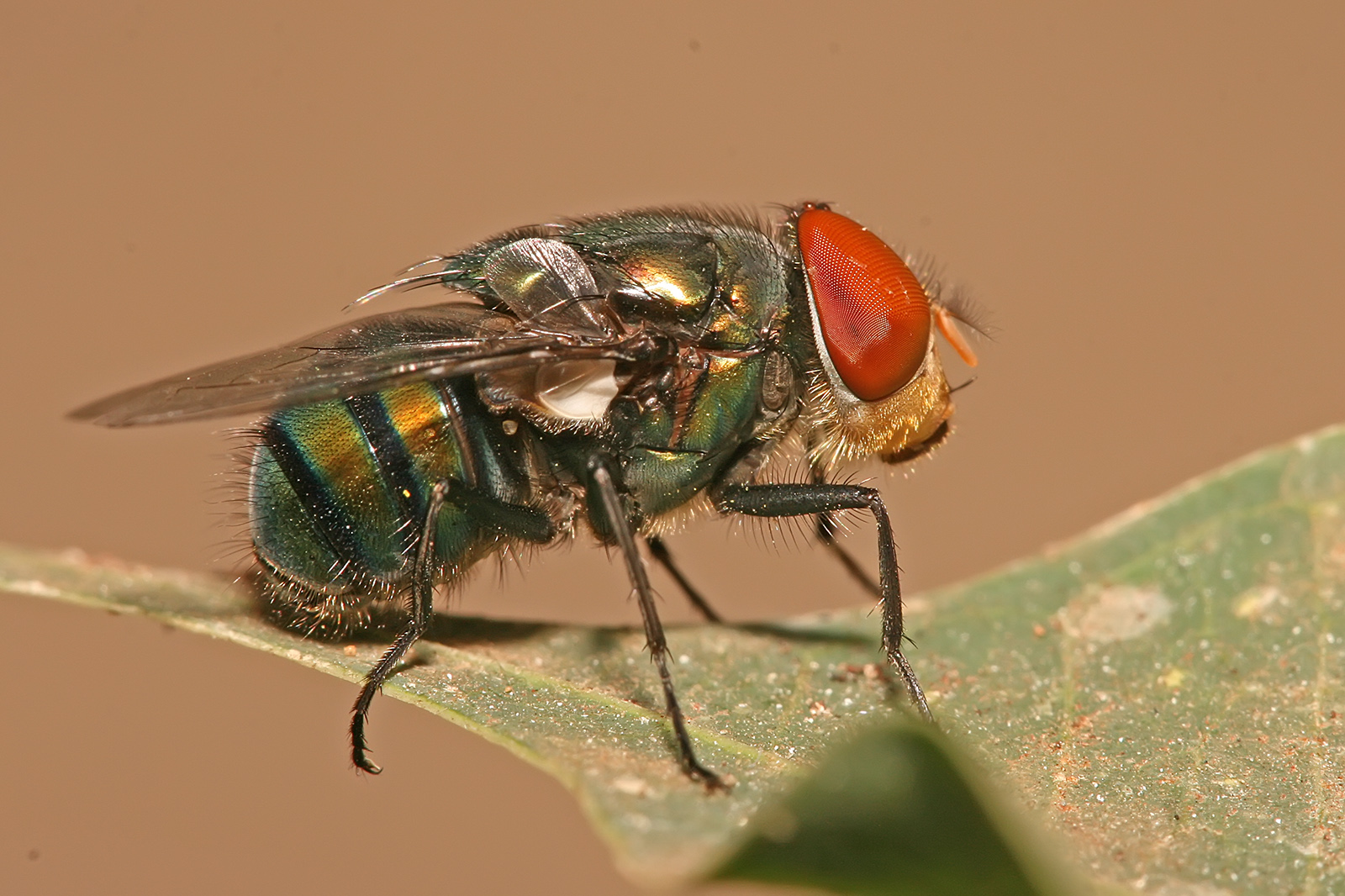
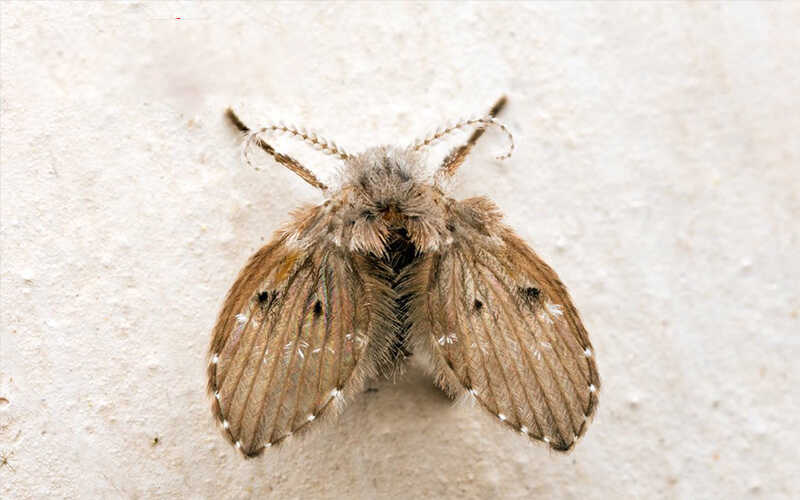
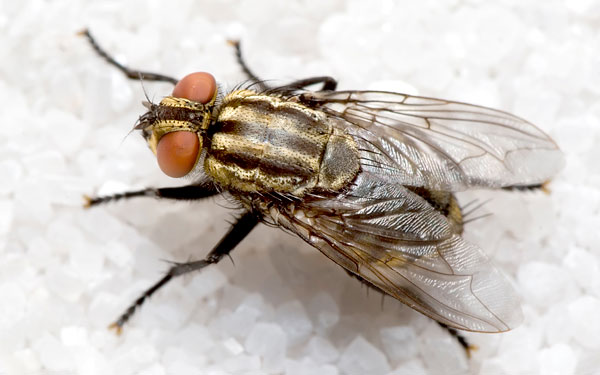
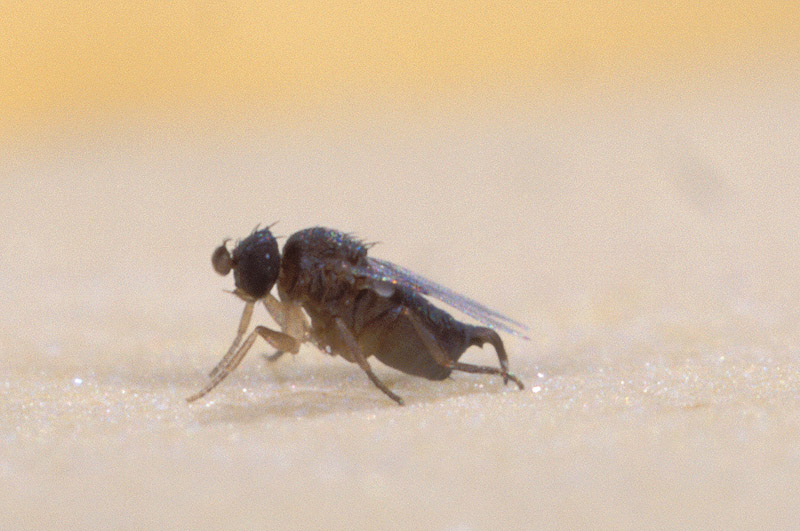
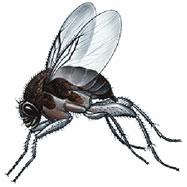
Phorid humpbacked flies have the Latin name Phoridae. Most species are black or dull brown, but some exhibit a yellowish coloration. Their size is extremely small, ranging from only 0.5 to 5.5 mm. The arched thorax of the adult fly gives them a distinct humpbacked appearance.
Behavior, diet & habits
Characteristically, they typically fly in short, erratic bursts. Adults have a distinctive habit of rapidly running across windows, TV screens, tables, walls, and plant leaves. They are frequently mistaken for "human-bloodsucking flies."
Some phorid fly species feed on fungi, while others act as parasites on various other insect species.
>> Read more: Proper fly identification for effective root-cause treatment
Reproduction
Larvae develop in moist areas where organic materials and stagnant water are present. Phorid larvae also develop within animal wounds. Their entire life cycle lasts for 25 days or more, depending on environmental conditions and available food sources.
Signs of a Phorid fly infestation
The most obvious signs of a phorid fly infestation are the adult flies themselves. They are commonly observed buzzing around rooms and scurrying across kitchen counters or other surfaces.
Additional information
The grim nickname "Coffin flies"
Certain phorid fly species possess an exceptionally keen ability to detect the odor of decaying protein. They can squeeze through microscopic cracks in crypts or dig deep through multiple thick layers of soil to reach corpses. Since their larvae can fully develop within sealed environments sourced from bodies buried deep underground, this fly species is frequently utilized by forensic science as a crucial tool for accurately determining the time of death.
The brutal assassin of fire ants
Despite being a nuisance to humans, certain phorid fly subspecies are the number one nemesis of venomous fire ants. The female fly will dive down and inject eggs directly into the ant's body. Upon hatching, the larvae gradually consume the fluid tissues inside the ant's head, subsequently secreting enzymes that cause the ant's head to detach from its body. Due to this horrific habit, they have been imported and bred by scientists as a biological control measure to manage destructive fire ant colonies.
A medical threat causing myiasis
Unlike common house flies that only land on the skin, phorid flies are capable of causing myiasis (maggot infestation) in humans and animals. Their larvae can invade, inhabit, and feed on living or dead tissue directly within open wounds or ulcers of patients. In hospital or nursing home environments, this fly species is extremely dangerous to immobile patients or individuals with unhealed wounds if sanitation practices are not strictly controlled.
"Unique" wing structure under the microscope
If observed under a magnifying lens, the wings of phorid flies exhibit a very distinctive structure that cannot be mistaken for other species. The wing veins at the base close to their body are usually very thick, heavy, and concentrated into a distinct cluster. Conversely, the veins radiating toward the outer margins are very thin, faint, or almost entirely absent, creating a characteristically uneven veining system.
Life cycle
Like most other flies, phorid flies undergo a complete four-stage life cycle including egg, larva, pupa, and adult. Depending on the species, temperature, and environmental conditions, phorid flies need 11-22 days or more to become adults.
Phorid fly control
Locate and eliminate breeding sources
Spraying insecticides only eliminates adult flies temporarily and does not resolve the root cause. You need to thoroughly inspect the entire house to locate their egg-laying sites, especially around underslab leaking water pipes, uncovered trash cans, or the bases of ornamental plant pots with long-standing stagnant water.
Clean the biofilm in drains
Phorid fly larvae survive by feeding on the layer of organic sludge and biofilm adhering to the walls of drain pipes. To destroy this food source, pour boiling water directly down the drain, or use specialized microbial waste-consuming gels. Avoid using chlorine bleach, as it does not remove this physical buildup layer.
Deploy yellow sticky traps to attract flies
Adult phorid flies are strongly attracted to light and bright colors, especially yellow. You should hang or place yellow sticky traps near sinks, bathroom drain areas, or kitchen corners. When flies land or scurry across, they will be firmly trapped and unable to continue reproducing.
Seal cracks and entry points
Due to their microscopic body structure and crawling habits, phorid flies easily squeeze through cracks to enter houses. Use silicone sealant or cement to seal gaps on bathroom floors, around the base of toilets, and holes surrounding drain pipes. At the same time, install fine-mesh insect screens on windows.
Control indoor moisture and waste
Keeping indoor spaces dry is the best way to prevent phorid flies from returning. You need to dispose of organic waste daily, scrub trash cans with soap periodically, and use exhaust fans in bathrooms to dry floors quickly, eliminating their preferred moist environment.
>> Learn more: Effective, safe, and fast root-cause insect control methods