





By pestman | 28-01-2026
According to Dr. Nguyen Ngoc Anh, a specialist in parasitology, flies can directly cause myiasis. The disease is caused by fly larvae. They parasitize and feed on living tissues, dead tissues, or organic fluids within the host's tissues.
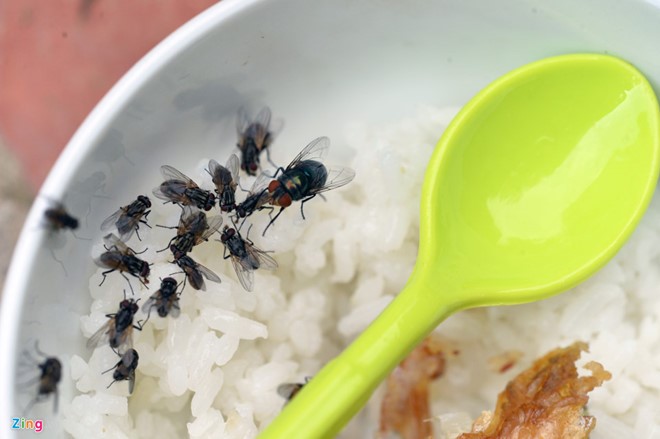 |
| Flies can transmit pathogens to humans through the digestive route. Photo: Hoang Ha. |
The terrifying diseases that flies can cause to humans
Human myiasis can occur at various locations on the body with the following main manifestations:
Bloodsucking myiasis: Only one larval species, Auchmeromyia luteola, is dependent on humans in tropical Africa. These larvae feed on the blood of people sleeping on the ground inside huts at night.
Wound myiasis: Open wounds with poor hygiene conditions provide ideal breeding environments for fly larvae. Common species affecting both humans and animals include Lucillia sericata, L. nobilis, Cochliomyia hominivorax, and several species of Chrysomyia, Sarcophaga, Wohlfahrtia, and Calliphora.
Furuncular myiasis: This condition is caused by Cordylobia anthropophaga (Calliphoridae), Dermatobia hominis, and Hypoderma spp. The larvae mainly parasitize the lower limbs and back, causing painful lesions often accompanied by swollen lymph nodes. The lesions resemble boil-like abscesses containing larvae, which eventually drop to the ground at the final developmental stage, leaving scars afterward.
Creeping subcutaneous myiasis: This condition is caused by the larvae of Gastrophillus and Hypoderma species. The disease begins with an intense painful spot beneath the skin, which later migrates and leaves a continuous red track. The larvae may survive for several months within the host’s body.
Migratory furuncular myiasis: This condition is caused by first-stage larvae of Hypoderma bovis and H. lineanum. Initially, patients experience itching and pain, sometimes severe pain. The lesions may disappear after several days and recur shortly afterward. The larval migration track appears distinctly red, sometimes swollen, and eventually develops into a pus-filled lump.
Nasal and nasopharyngeal myiasis: This condition occurs in individuals with pre-existing nasal disorders or even in healthy nasal cavities. It is caused by Oestrus ovis, Rhinoestrus purpureus, Chrysomyia bezziana, and Cochlyomyia hominivorax. Flies lay eggs inside the nasal cavity, especially in people frequently exposed to animals. Symptoms include severe itching, intense pain, headaches, nosebleeds, and sore throat (when larvae invade the nasopharynx). In severe cases, larvae may spread upward, causing meningitis symptoms and visual impairment.
Ocular myiasis: This rare condition is often a complication of nasal myiasis and may be caused by Hypoderma (affecting the eyelids and outer eye regions), Oestrus, Rhinoestrus, Gasterophilus, Dermatobia, Sarcophaga, and Wohlfahrtia. Patients often feel as though something is moving inside the eye and commonly experience conjunctivitis, eye pain, difficulty opening the eyelids, corneal ulcers, or even blindness if left untreated.
Aural myiasis: This condition occurs mainly in individuals with pre-existing ear diseases and is therefore uncommon. It may be caused by Chrysomyia, Sarcophaga, Oestrus, Rhinoestrus, and related species. Patients experience acute ear pain and itching. The larvae may perforate the eardrum and invade the mastoid sinus, middle ear, and meninges, causing pus discharge and foul-smelling ears.
Gastrointestinal and genitourinary myiasis: In humans, these two forms of myiasis occur accidentally. Gastrointestinal myiasis results from consuming raw or undercooked food containing fly eggs or larvae, spoiled food infested with maggots, or traditional foods intentionally fermented with larvae. Genitourinary myiasis occurs when larvae migrate upward from the urinary opening into the bladder, causing pain.
>> Learn more: Common fly species
According to Dr. Anh, in Vietnam, nasal and aural myiasis is occasionally encountered in otolaryngology departments or specialized hospitals. Patients usually present with symptoms similar to sinusitis, otitis externa, and otitis media, and only visit the hospital for an examination after prolonged, unsuccessful self-treatment.
To treat cases of myiasis, doctors need to accurately diagnose the diseases caused by flies. Depending on the specific location, doctors will implement appropriate treatment measures. Cutaneous myiasis can be treated by incising the skin to extract the larvae; the nasal and ocular parts require surgical intervention; the gastrointestinal tract can be treated with anthelmintic drugs; and the urogenital tract can undergo bladder irrigation to expel the larvae.
>> Read more: Professional pest control services: fast results, long-term safety



Cách diệt ruồi trong nhà máy hiệu quả: Nhận diện đúng loài để xử lý tận gốc
Trong môi trường sản xuất, đặc biệt tại các nhà máy thực phẩm, đồ uống…

IPM và Phun xịt côn trùng truyền thống: Đâu là giải pháp kiểm soát dịch hại tối ưu cho doanh nghiệp?
IPM trong kiểm soát dịch hại đang dần thay thế phương pháp phun xịt truyền…


Related news

Ready to eliminate audit risks and proactively protect customer experience & brand reputation?