





By VFC PestMan | 31-07-2026
Pest and insect control reports are among the most important documents in an integrated pest management programme (IPM). In addition to supporting compliance with standards such as HACCP, BRCGS, FSSC 22000 and AIB, these reports provide data that helps companies monitor pest activity trends, assess the effectiveness of existing control measures and implement appropriate preventive actions. When analysed correctly, a report becomes a valuable tool for risk management and improved facility operations.
What is a pest and insect control report?
A pest and insect control report is a document that consolidates the results of monitoring, inspecting and treating pests and insects over a specified period. It reflects actual conditions in each area of the facility while recording the activities completed and recommendations for improvement during the next reporting period.
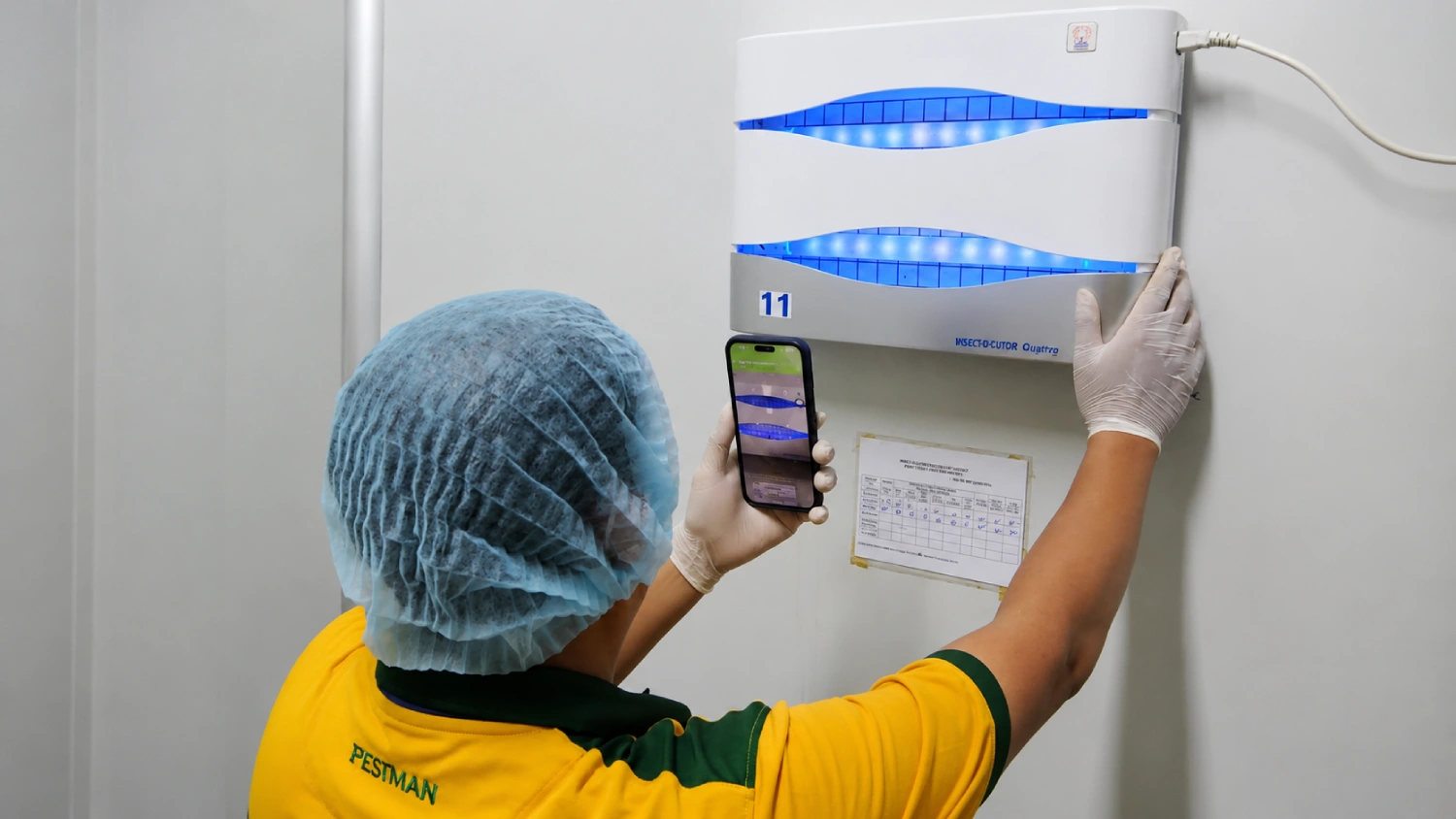
For QA, QA/QC, HSE departments or factory management, the report is an essential source of information to evaluate the effectiveness of the integrated pest management (IPM) program. Through continuously recorded data, businesses can monitor pest occurrence levels, identify high-risk areas, and develop appropriate control plans.
What information is usually included in a pest and insect control report?
A standard report usually begins with general information such as the service date, inspection scope, surveyed areas and pest species being monitored. This information helps readers understand the context of the data presented throughout the report.
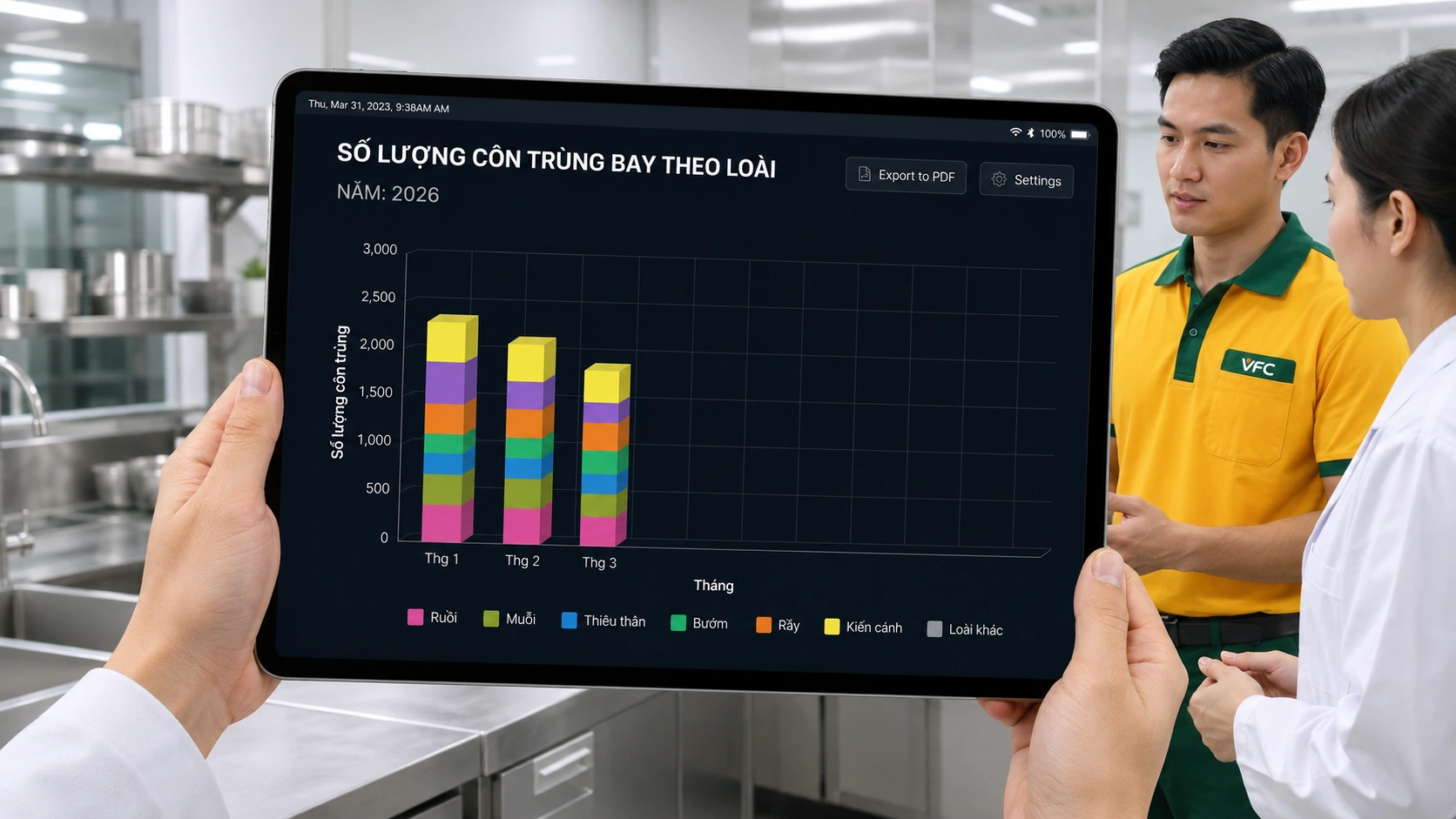
The most important part is the data collected from monitoring points such as insect traps, rodent control stations, or periodic inspection locations. This data reflects pest density by area and time, helping businesses assess risk levels within the facility.
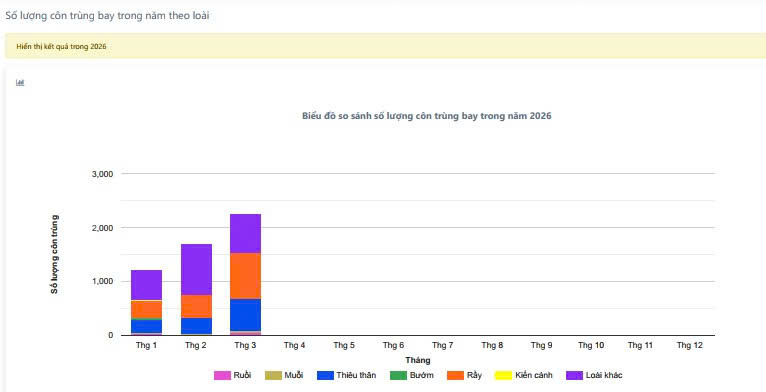
Many reports now also include visual charts or dashboards to present activity trends over time. The final section normally provides observations, an assessment of current conditions and recommendations for improvement to support more effective preventive measures.
What does insect activity data indicate?
Insect activity data represents the number of insects recorded at a monitoring point or within a specific area during a defined period. It provides a basis for assessing pest activity and monitoring the effectiveness of the control programme.
The value of this metric lies in its trend over time. Recording five insects at a monitoring point does not fully reflect the risk level without historical data. When density increases continuously over multiple inspections, businesses have a basis to identify problem areas and prioritize root cause evaluation. Increased density should usually be cross-checked against sanitation conditions, drainage systems, waste areas, raw material stores, and potential insect harborage sites.
Conversely, a gradual decline in activity following the implementation of improvement measures indicates that the control programme is working effectively. For this reason, trend analysis provides more value than focusing on a single figure.
How to interpret a pest control report effectively
When reviewing a pest control report, companies should begin with the overview section to understand the survey scope, service period and monitored areas. This step provides an overall picture before examining individual indicators in detail.
The next step is to identify areas with high pest activity or unusual increases compared with previous periods. These locations normally require an on-site inspection to assess sanitation conditions, structural issues or potential pest entry points.
After identifying high-risk areas, the company should compare the data with activities completed during the same period, such as sanitation, structural maintenance or pest treatments. This comparison helps assess the effectiveness of each measure and determine which actions should be adjusted during the next reporting period.
Finally, the observations and recommendations section should be used as the basis for developing an action plan. These recommendations are generally based on actual site data and help companies prioritise resources for areas with the highest risk levels.
Learn more: 5 cockroach hotspots in factories during the hot and humid season
Common mistakes when interpreting pest control reports
Some companies use pest control reports only as audit documents or records for filing. This limits the value of the data and results in missed opportunities to improve the pest management programme.
Focusing only on the number of insects without analysing trends over time may also lead to incomplete assessments. Data becomes valuable only when it is considered in the context of actual operations and compared with historical monitoring results.
Another limitation is the failure to connect report data with facility activities such as production process changes, equipment maintenance, structural improvements or sanitation procedure adjustments. Combining pest data with operational data helps companies identify root causes more accurately.
See more: Mistakes that cause insects to recur in warehouses
Turning data into preventive actions
The greatest value of a pest control report lies in its ability to support decision-making. When an area records increased insect activity, the company can conduct an on-site inspection and assess food sources, sanitation conditions, entry points and relevant environmental factors.
The analysis results will serve as a basis to implement actions such as improving infrastructure, increasing sanitation frequency, adjusting monitoring equipment placement, or implementing additional appropriate control measures. This process helps businesses proactively manage risks and maintain the effectiveness of their IPM program.
The role of dashboards in pest control reports
Many businesses today have switched to using digital dashboards to manage pest control data. The dashboard helps aggregate information from multiple monitoring points and displays it visually through charts, maps, or metrics over time.
Through a dashboard, managers can quickly identify high-risk areas, monitor activity trends and evaluate the effectiveness of current measures. Digital data also makes record storage, information retrieval and audit preparation more convenient.
Pest control reports under food safety standards
HACCP, BRCGS, FSSC 22000 and AIB require companies to maintain complete and up-to-date pest control records. Pest control reports are among the key documents used to demonstrate that the IPM programme is being implemented and monitored consistently.
Auditors often assess both the quality of the data and how the company uses the information in the report to improve pest control activities. A report that clearly presents activity trends, causes and corrective actions helps the company demonstrate stronger compliance with standard requirements.
Read more: Why do insect infestations keep recurring? Causes and effective IPM solutions.
When should a company upgrade its reporting system?
Businesses should consider upgrading their reporting system when recorded data is fragmented, difficult to aggregate, or time-consuming to analyze. Prior to digitization, businesses also need to review their monitoring point structure, data update responsibilities, and response protocols when metrics exceed thresholds. Digitizing data and building dashboards help enhance tracking capabilities, analysis, and decision-making support.
For large facilities or companies operating under multiple international standards, a modern reporting system can also standardise pest management processes, improve transparency and support both internal audits and customer audits.
Pest control reports help companies monitor pest conditions and manage risks within their facilities. When data is analysed by trend, compared with operational activities and converted into specific improvement actions, companies can improve the effectiveness of their IPM programmes, maintain stable production environments and better meet current food safety standard requirements.


Các loại côn trùng trong kho hàng: Nhận diện và giải pháp kiểm soát toàn diện
Khu vực lưu trữ hàng hóa và kho nguyên liệu tập trung mật độ cao…

Kiểm soát dịch hại trong kho lạnh: 5 điểm mù doanh nghiệp thường bỏ qua
Kho lạnh giữ vai trò quan trọng trong chuỗi cung ứng thực phẩm, dược phẩm…


Related news

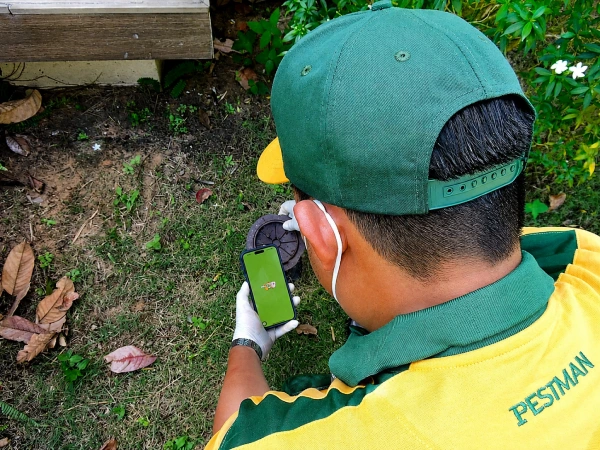

Ready to eliminate audit risks and proactively protect customer experience & brand reputation?





Dear Valued Visitor,
To protect our clients' interests, all materials here are copyrighted and may not be reproduced without permission.
We appreciate your cooperation. Should you need to use our content professionally, please contact us directly.