





By VFC PestMan | 27-08-2026
School grounds can provide favourable conditions for mosquitoes, rodents, ants, flies, termites and other pests before they move into classrooms, kitchens or boarding areas. For this reason, pest management across school grounds should begin with landscaping, drainage systems, waste areas, drains and external boundaries, creating the first preventive layer for the entire educational facility.
1. Why are school grounds the first line of pest prevention?
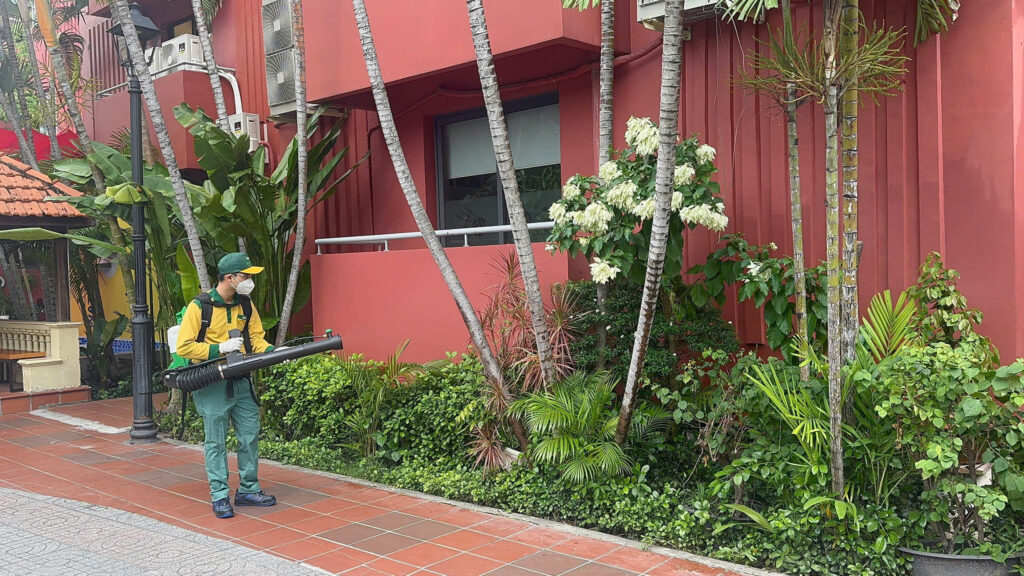
When discussing pest control in schools, attention often focuses on areas where pest activity is more visible, such as classrooms, canteens, restrooms and kitchens. However, many pests may first become active in the surrounding outdoor environment before finding entry routes into school buildings.
School grounds often include trees, lawns, planting beds, drainage systems, waste areas, playgrounds and other spaces that may receive less frequent use. These areas may provide water, food and harbourage for a range of pests. As pest pressure increases outdoors, the likelihood of pests entering buildings may also rise.
Identifying and managing external risks can therefore help reduce the likelihood of pests moving into classrooms, offices, kitchens and other occupied areas. To manage classrooms, kitchens, canteens, dormitories and sanitation areas together, schools need a broader pest management programme for the entire educational facility.
2. What conditions on school grounds can attract pests?
School grounds often cover large areas and are continuously affected by weather, so site conditions can change quickly. An area that remains dry during sunny periods may hold standing water after rainfall, while dense vegetation can obscure inspection points or provide pest harbourage.
Food sources may also arise from a variety of school activities. Food spills after break times, canteen waste, outdoor rubbish bins and organic material around landscaped areas can attract ants, flies and rodents. If waste collection and sanitation are not properly managed, these locations can become persistent pest-attractant sources.
Another factor to consider is the clearance between landscaping and school buildings. Tree branches touching roofs, shrubs growing directly against walls and materials stored beside buildings can provide additional harbourage and access routes for pests. Landscape management should therefore form part of the school's pest prevention plan.
3. Managing mosquitoes and standing water on school grounds
Mosquitoes are an important pest concern on school grounds, particularly during the rainy season. Schoolyards, landscaped areas and drainage systems may contain small water-holding points that routine cleaning can easily overlook.
Water may collect in gutters, plant containers, outdoor items, structural recesses, container lids, low-lying areas or equipment that is not used regularly. Even small amounts of standing water can support mosquito breeding if they remain undisturbed for long enough. Mosquito management should therefore begin by identifying and managing locations where water can accumulate.
After heavy rainfall, schools should consider increasing site inspections rather than relying only on the normal inspection schedule. Slow-draining areas, inspection chambers, planting beds and low-traffic zones should receive priority attention so environmental changes can be identified early.
Preventive measures should focus on eliminating unnecessary standing water, maintaining effective drainage and managing outdoor items that may collect water. Where additional professional treatment is required, the method should be selected based on inspection findings and the actual conditions of each area.
You may also be interested in: Pest control during the rainy and storm season
4. Rodent management from the school's external perimeter
Rodents may move onto school grounds from residential areas, drainage systems, vacant land, nearby food businesses or neighbouring properties. Schools located near markets, restaurants, waterways or construction sites may experience changing levels of external rodent pressure over time.
Rodent activity should not be assessed only by live sightings. Droppings, tracks, gnaw marks, runways, burrows and disturbed soil can also provide evidence of rodent activity. Inspecting these signs around the perimeter can help schools identify rodent activity before it progresses towards buildings.
Priority inspection points include fences, school gates, waste areas, drains, outdoor storage and interfaces between landscaping and buildings. If unusual activity is detected, the next step is to identify food sources, harbourage and movement routes before selecting appropriate control measures.
The transition between outdoor and indoor areas should also be assessed for pest-exclusion effectiveness. Gaps beneath doors, utility penetrations, storage doors and other service openings may provide final entry routes if perimeter controls do not fully intercept rodent activity. For schools with day-boarding or residential facilities, these risks should be monitored alongside kitchens, food stores and student living areas.
Read more: Rodent control within an IPM programme for boarding schools.
5. Waste areas can become pest hotspots
Waste is one of the most significant pest attractants on school grounds. Food waste, food packaging and organic material can attract flies, ants, cockroaches and rodents, particularly where waste areas are located near kitchens or major movement routes.
Waste containers should be suitable for their intended use, kept properly closed and cleaned regularly. Waste retained for extended periods or liquids leaking onto the ground may create additional food sources and attractive odours for pests. The surrounding area should also be kept clean to minimise spilled food and organic residues.
The location of the waste area also influences pest-management risk. If waste is stored too close to kitchen doors, storage entrances or buildings, pests attracted to the area may have easier access to the facility. Reviewing waste-area location and waste-transport routes can help reduce this risk.
If flies or rodent activity are repeatedly recorded around a waste area, increasing pesticide treatment frequency may not address the underlying cause. The school should review collection frequency, container condition, ground sanitation and surrounding conditions to reduce the area's attractiveness to pests. This is a clear example of the difference between treating visible pests and managing the underlying conditions that cause pest activity to recur.
6. How do trees and landscaping affect pest management?
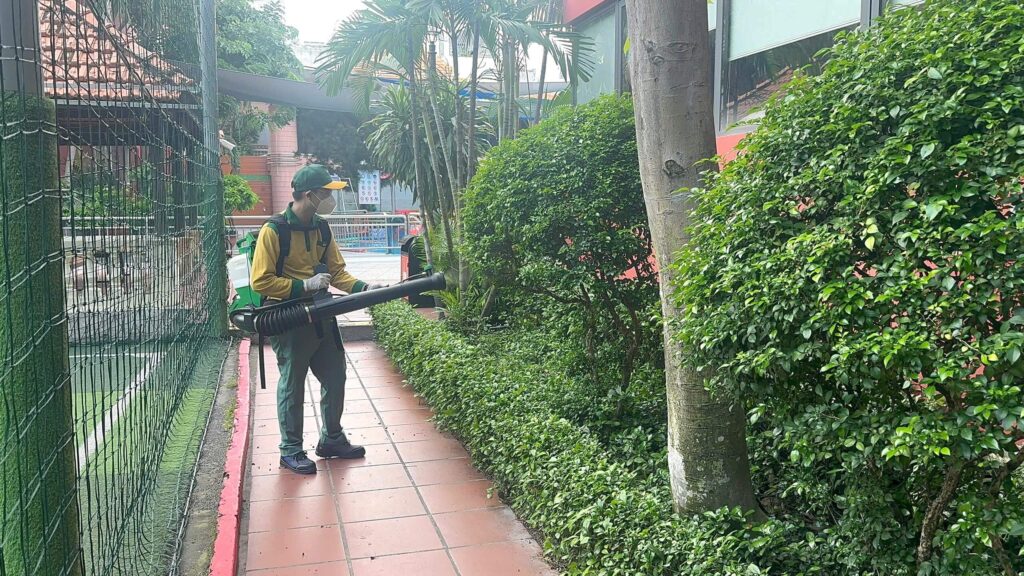
Trees and vegetation provide shade and contribute to a comfortable learning environment, but poorly managed landscaping can also create pest harbourage. Dense shrubs, accumulated leaf litter, branches touching buildings and vegetation growing directly against walls are all conditions that should be monitored.
Dense vegetation can retain moisture and create areas that are difficult to inspect. Accumulated leaves and organic debris may also support certain insect groups. These conditions can also make it more difficult to detect rodent burrows, pest movement routes or signs of termite activity.
Schools should maintain appropriate clearance between vegetation and buildings, trim overly dense growth and remove accumulated organic material. The objective is not to remove landscaping, but to manage it in a way that preserves its function while reducing conditions favourable to pests.
Pest management considerations should also be included when landscaping is designed or renovated. Appropriate plant placement, irrigation design and drainage planning can help reduce pest risks from the outset.
7. Drains and drainage systems require regular inspection
Drainage systems are an important part of school infrastructure but often receive attention only when blockages or flooding occur. Within a pest management programme, drains should be treated as risk areas requiring regular monitoring.
Standing water and organic residues in drains can create favourable conditions for certain insect species. Drainage networks may also connect school grounds with the surrounding environment, providing potential movement routes for rodents and other pests.
Drain covers, screens, drainage performance and accumulated debris should be inspected regularly. This becomes particularly important after heavy rainfall, when debris and sediment may reduce drainage capacity and create additional standing-water areas.
If pest activity is repeatedly recorded around a drain, the wider drainage route should be inspected rather than treating only the drain opening. This approach helps identify the underlying cause and reduce repeated pest activity at the same location.
8. Nearby construction can increase pest pressure
Excavation, demolition and construction activities can disturb harbourage used by rodents, insects and other wildlife. As a result, a school with previously stable pest activity may experience a sudden increase when nearby construction begins. Major changes in the surrounding environment may also indicate that the pest management programme should be reassessed rather than continuing with the same monitoring locations and inspection frequency
Schools should monitor changes beyond their boundaries, including construction sites, cleared land, drainage repairs and new nearby businesses. These changes may alter pest food sources, harbourage and movement routes.
During periods of increased risk, perimeter monitoring should be adjusted accordingly. Areas adjoining construction sites, gates, fences and likely building access points should receive closer inspection.
Recording changes in the external environment also helps provide context for monitoring data. If rodent or insect activity increases around the same time nearby construction begins, the PCO and school have additional information to support investigation and control decisions.
9. Why is broad-area pesticide spraying not a long-term solution?
Pesticide application may be appropriate in certain situations, but long-term pest management depends heavily on reducing the conditions that allow pests to survive and recur. Standing water, waste, dense vegetation and pest entry routes will continue to create pressure if they are not addressed.
In educational environments, control measures must also reflect how each area is used. Playgrounds, walkways, sports areas and other outdoor spaces are regularly used by students, teachers and staff, so any treatment should be carefully planned around site use and access.
Integrated Pest Management (IPM) focuses on prevention, monitoring and identifying underlying causes before control measures are selected. Pesticides are used in a targeted manner when necessary rather than as the default solution across the entire school grounds.
This approach also allows schools to evaluate control effectiveness more clearly. If pest activity declines after standing water is removed, sanitation is improved or landscape conditions are changed, the school has stronger evidence that contributing conditions have been addressed rather than relying on repeated treatment.
10. When should inspections of school grounds be increased?
The rainy season is one period when inspection frequency may need to increase because water and moisture conditions can change quickly. After heavy rainfall, schools should pay particular attention to standing-water points, drainage conditions and landscaped areas where risks may have changed.
The period before a new school year begins is also an appropriate time for a full site inspection. After the summer break, low-use areas may have developed dense vegetation, standing water, accumulated waste or previously undetected signs of pest activity.
Changes to school facilities should also trigger a review of pest risk. When new buildings are added, schoolyards are renovated, or kitchens, waste areas or landscaping are relocated, the pest risk map should be reviewed to determine whether new monitoring points are required.
Monitoring data from previous inspections are also an important basis for deciding when additional inspections are needed. If a particular area repeatedly records increasing pest activity or the same issue continues to recur, the school should increase inspection frequency and investigate the cause rather than waiting for the next scheduled visit.
11. Pest management process for school grounds
The first step is to inspect the entire site and identify locations that may provide food, water, harbourage or pest entry routes. Fences, gates, landscaping, drains, waste areas, playgrounds and building interfaces should all be included in the assessment.
The next step is to classify areas by risk level and develop an appropriate monitoring plan. Locations with repeated pest activity or favourable pest conditions should receive greater monitoring priority than stable areas. Data from each inspection should be recorded so changes can be tracked over time. As the number of monitoring points increases, data should be consolidated by area and reporting period to identify hotspots, activity trends and locations with repeated recurrence.
When unusual activity is detected, the likely cause should be investigated before control measures are selected. Rodent activity may require changes to waste management and exclusion measures; mosquito activity may require standing-water management; while increased insects around landscaped areas may be linked to sanitation or vegetation conditions.
After corrective action is implemented, the area should continue to be monitored to evaluate the result. The continuous cycle of assessment – prevention – monitoring – corrective action – reassessment allows the programme to adapt to changing site conditions throughout the school year. For a practical example of how a pest management provider implements these steps, see the process from site assessment and monitoring-point setup to regular inspection.
12. From school grounds to a whole-school pest management programme
Effective management of school grounds helps reduce external pest pressure, but this represents only one layer of the school's overall protection system. Pests may still be introduced through food, deliveries, equipment, personal belongings or human movement, while kitchens, dormitories and other functional areas have their own risks that require management.
Monitoring data from outdoor areas should therefore be reviewed together with data from inside buildings. If rodent activity increases along the perimeter and signs later appear near a storage area, the two observations should be assessed together. Similarly, increased flying insect activity around the perimeter may help explain changes recorded near entrances or corridors.
13. How does VFC PestMan manage pests across school grounds?
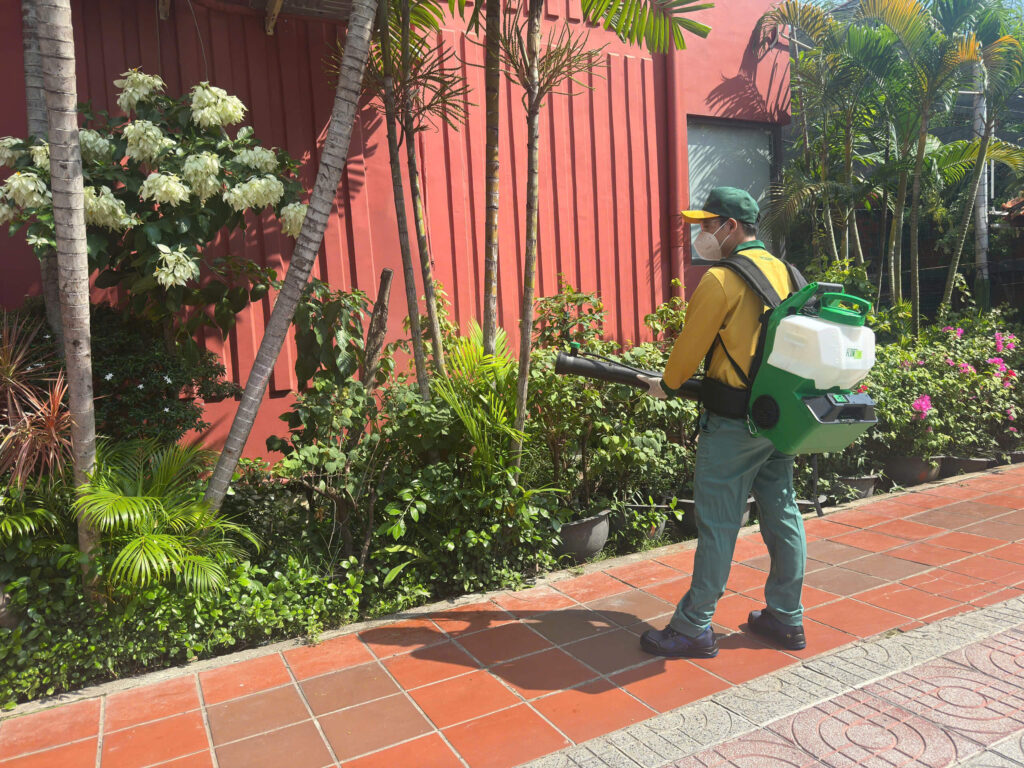
Each school has different site dimensions, landscaping and surrounding environmental conditions, so the programme should begin with an on-site assessment. A school located within a residential area will face different pest risks from one near waterways, industrial zones, construction sites or heavily vegetated surroundings.
VFC PestMan implements programmes based on IPM principles, focusing on risk areas across the grounds, pest entry routes and environmental conditions that may attract or support pest activity. Inspection findings provide the basis for developing preventive measures, monitoring systems and inspection frequencies appropriate to each area. For schools with multiple functional areas or a complex pest history, an appropriate first step is a facility-wide pest risk assessment before monitoring points, inspection frequencies and intervention measures are defined
Data collected across inspections are used to identify recurring risk areas and evaluate the effectiveness of corrective actions. This approach helps shift pest management from incident-driven treatment to proactive risk management while reducing unnecessary intervention in educational environments. For areas frequently used by children or locations with specific scheduling requirements, the pest management approach should be designed around actual operating conditions rather than applying the same treatment package across the entire facility.
Pest management across school grounds provides an important preventive layer before rodents, mosquitoes, flies, ants and other pests reach school buildings. Effective management of standing water, drainage systems, landscaping, waste and external conditions helps reduce pest-supporting sources and enables schools to identify risks earlier.
For long-term effectiveness, management of school grounds should be integrated with the facility-wide IPM programme. VFC PestMan supports schools with site assessment, pest risk evaluation, prevention and monitoring, helping educational facilities maintain a more proactive and controlled environment throughout the school year.


Các loại côn trùng trong kho hàng: Nhận diện và giải pháp kiểm soát toàn diện
Khu vực lưu trữ hàng hóa và kho nguyên liệu tập trung mật độ cao…

Kiểm soát dịch hại trong kho lạnh: 5 điểm mù doanh nghiệp thường bỏ qua
Kho lạnh giữ vai trò quan trọng trong chuỗi cung ứng thực phẩm, dược phẩm…


Related news



Ready to eliminate audit risks and proactively protect customer experience & brand reputation?





Dear Valued Visitor,
To protect our clients' interests, all materials here are copyrighted and may not be reproduced without permission.
We appreciate your cooperation. Should you need to use our content professionally, please contact us directly.