







 PART
01
By VFC PestMan | 31-03-2026
Comprehensive insect control strategy for food logistics warehouses and F&B supply chain
Pest management in logistics warehouses, especially the food and beverage (f&b) industry, requires much more stringency than conventional warehouses. Standards such as ISO, HACCP, ISO 22000, AIB or BRC set strict requirements on preventing cross-contamination from insects. A modern warehousing system not only needs good infrastructure but also must have a proactive pest control process, from raw material receiving, warehousing to factory dispatching.
Article content
1. Establishing a prevention belt from the peripheral area of food logistics and F&B warehouses
For food logistics warehouses, insect prevention must be implemented right from the outer boundary of the warehouse to reduce pressure on the internal storage area.
Environmental hygiene management around and vegetation
The area around the warehouse needs to be kept ventilated. Vegetation, weeds or stagnant water puddles are ideal harborage and breeding places for many pest insects. Clearing bushes with a distance of 0.5 – 1m around the wall base helps limit insects finding their way inside through technical gaps.
Control of waste collection area and pallets
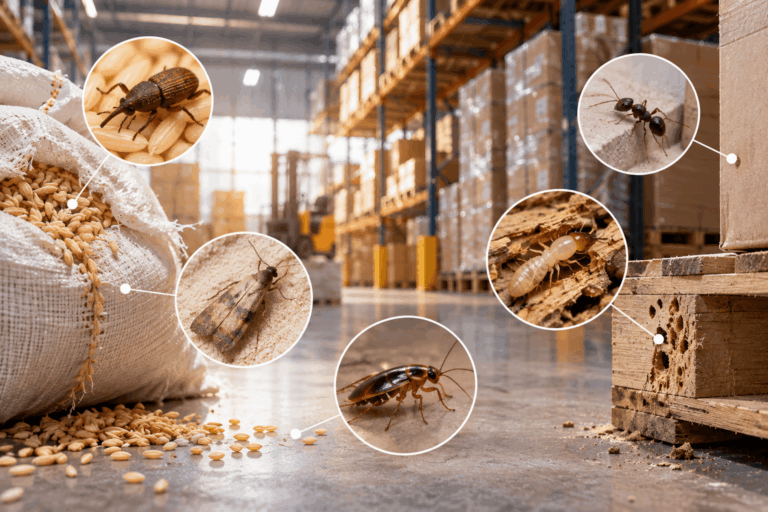
Food waste and old wooden pallets are "magnets" that attract insects. Trash cans must have tight-fitting lids, be placed far from warehouse entrances, and be cleared daily. Pallets need to be thoroughly inspected as they are often harborages for grain weevil eggs and larvae. For dry raw material storage warehouses, businesses need to gain a deeper understanding of groups of weevils, beetles, and food moths that can enter the warehouse system along with raw materials, packaging, or pallets.

Preventing insects from the peripheral boundary helps reduce pest pressure for the inside of the food warehouse
2. Infrastructure solutions – Building armor for the food warehouse system
Logistics warehousing infrastructure needs to be specifically designed to eliminate all opportunities for pest intrusion and harborage.
Optimizing door and entrance systems
At loading docks, the use of plastic strip curtains, high-speed roll-up doors, or air curtains is mandatory. These devices effectively help prevent flying insects such as flies and food moths from invading when trucks enter and exit to pick up goods. For rodents, the loading dock is also a critical point requiring careful inspection because door-bottom gaps and open door times when vehicles move in and out can create direct entry pathways into the warehouse.
Sealing gaps and technical interface points
Warehouse pests have very small sizes, which can squeeze through cracks of only a few millimeters. It is necessary to focus on sealing technical pipes, wall-penetrating cables and gaps at the door base with specialized materials such as silicone glue or stainless steel mesh.
Read more: F&B factory – Reduced pest incidents by 80% and achieved BRC certification within 90 days
3. Smart goods control and logistics warehousing process
In the f&b logistics industry, goods are the shortest way for insects to invade the warehouse.
Strict inspection at the loading dock area
Before goods are put on shelves, the warehouse department needs to randomly inspect batches of goods, especially agricultural products, flour and dry seeds. Early detection of insect signs helps prevent the risk of cross-contamination to the entire warehouse system.
Strictly applying the FIFO principle
Goods stored in inventory for too long will become an ideal environment for insects to complete their life cycle and explode in numbers. Applying FIFO not only helps optimize the goods flow but is also an extremely effective indirect pest management measure, ensuring goods are always fresh and safe.

Controlling input goods helps eliminate the risk of insect contamination from external sources into the transit warehouse
4. Modern insect monitoring and treatment technology in f&b logistics
Instead of overusing periodic chemical spraying, which affects food safety, many modern logistics warehouses have switched to smart monitoring devices. Monitoring equipment is only one part of the system; the key difference lies in shifting from scheduled spraying to IPM based on root causes, risk levels, and actual monitoring data.
Advanced LED technology insect light traps
Insect light trap lines using LED technology not only have outstanding flying insect attraction capabilities but also ensure absolute safety. LED lamps do not cause glass fragments to break and do not use chemicals, perfectly suitable for food storage warehouses requiring high hygiene standards.
Periodic monitoring and data reporting
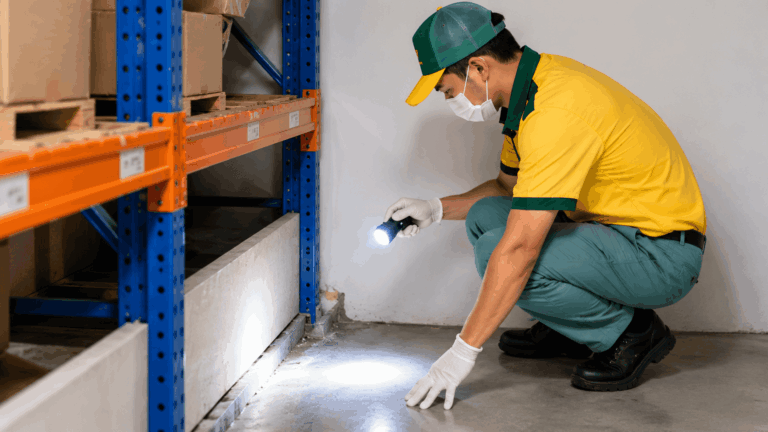
Periodic inspection of sticky traps and light traps helps experts analyze the density and species of insects present. From there, on-site treatment measures can be implemented more accurately, effectively, and safely for the warehouse environment. When there is a large number of monitoring points, data should be digitized to track density trends over time, identify hotspots, and compare activity levels between loading docks, storage areas, warehouse doors, and peripheral areas.

Modern light trap systems help control flying insects without affecting food safety on shelves
5. Logistics warehouse hygiene – The foundation of sustainable pest control
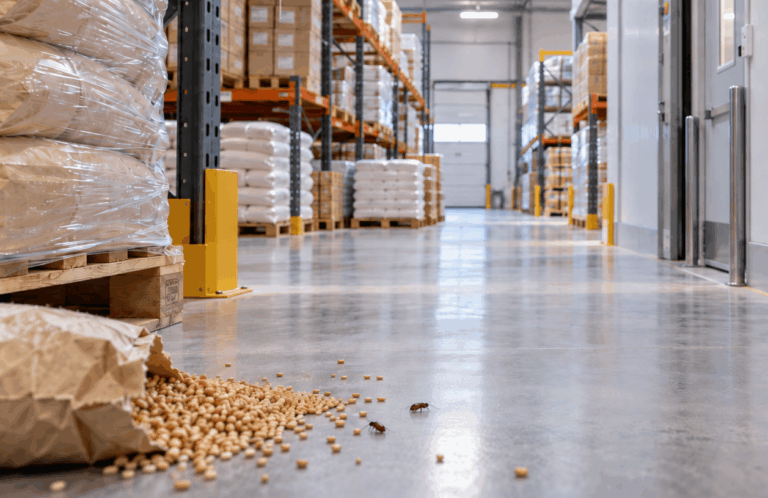
Food warehouse pests can maintain life relying only on spilled food crumbs in floor crevices or under shelf bottoms.
- Perform regular dry cleaning: Use industrial vacuum cleaners to immediately remove spilled powder, grains, and debris. Avoid sweeping with brooms, as this may push contaminants deeper into cracks and hidden gaps.
- Clean shelving and pallets regularly: After a batch is fully dispatched, thoroughly clean the storage rack area before placing a new batch. This helps eliminate potential food sources for pests completely.
6. The importance of professional pest control units in logistics warehouses
Establishing defense layers for f&b warehouses does not just stop at installing equipment but also lies in the ability to analyze data and forecast specific risks. Professional pest control units act as technical "gatekeepers", helping businesses identify system vulnerabilities even when insects have not broken out.
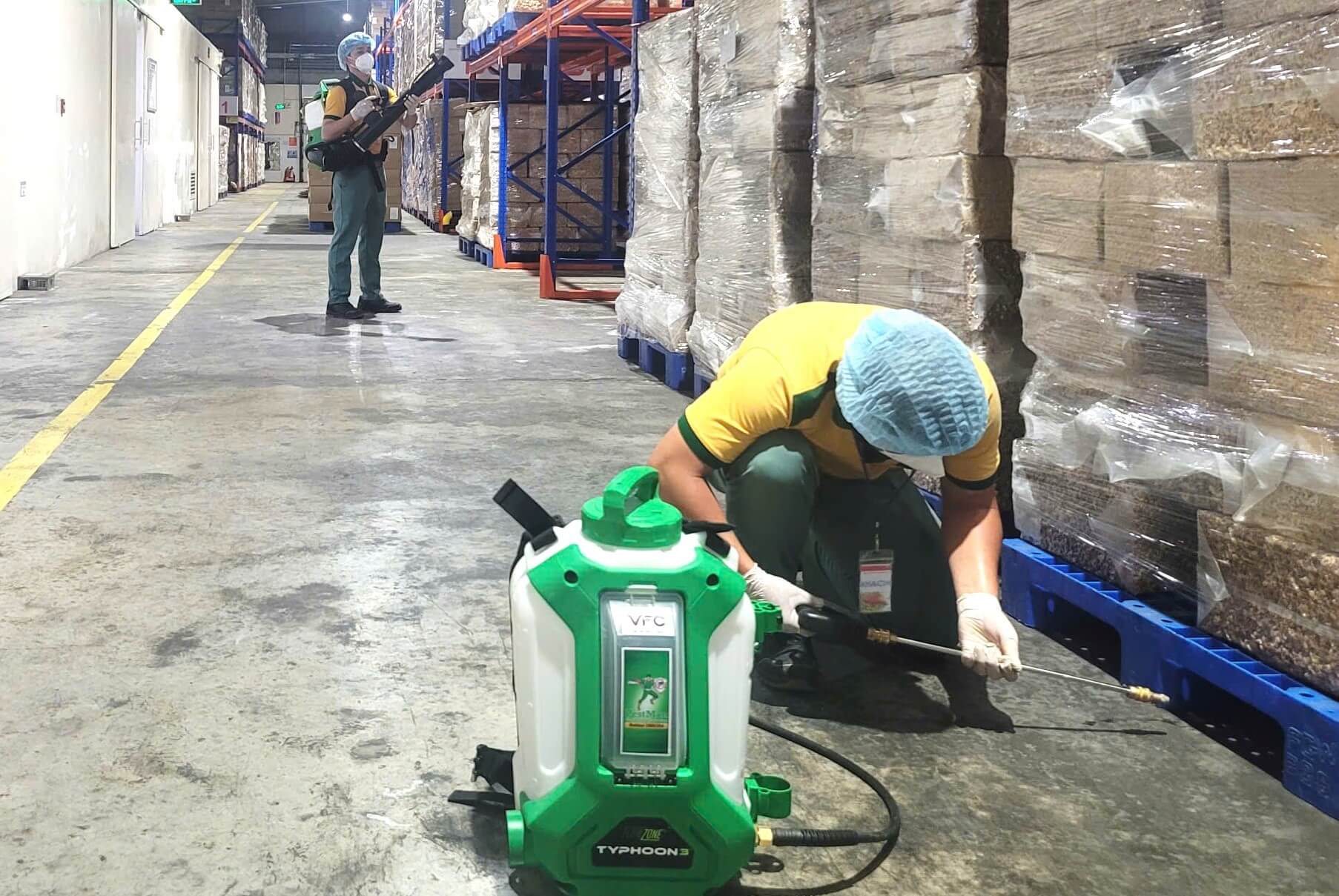
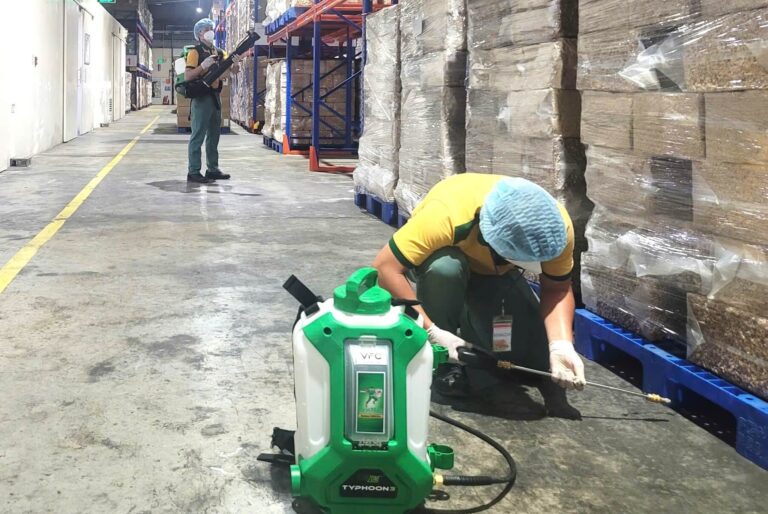
VFC PestMan team performs pest control in the logistics warehouse of a factory
With a solid technical foundation in the pest control industry in Vietnam, VFC PestMan has been deploying international standard integrated pest management (IPM) models for many large logistics warehousing systems. Instead of just handling incidents, our expert team focuses on surveying infrastructure structure and goods characteristics to offer proactive prevention plans. This helps businesses' warehouses always be ready to pass the most rigorous audits such as HACCP, AIB or BRC.
Read more: What is PCO pest control? A comprehensive facility protection solution from VFC PestMan
It can be seen that insect control in food logistics warehouses and f&b supply chain is actually a journey of maintaining cleanliness and operational discipline. When businesses perform well the synchronization between prevention infrastructure, smart warehousing processes and monitoring technology, pest risks will be reduced to a minimum. Methodical investment in prevention work today is a solid guarantee for goods quality and business efficiency of enterprises in the supply chain.
For warehouses that do not yet have a clear risk map or experience frequent recurrence at loading docks, storage areas, or perimeters, the initial step should be to assess target species, attraction sources, entry pathways, critical areas, and existing monitoring systems before building a control program.
PART
01
 PART
02
Mistakes that cause insects to recur in warehouses
 PART
03
Pest control in food warehouses: Risks, procedures, and IPM solutions
 PART
04
Comprehensive insect control strategy for food logistics warehouses and F&B supply chain
 PART
05
Pest control in cold storage facilities: 5 blind spots businesses often overlook

Ready to eliminate audit risks and proactively protect customer experience & brand reputation?





Dear Valued Visitor,
To protect our clients' interests, all materials here are copyrighted and may not be reproduced without permission.
We appreciate your cooperation. Should you need to use our content professionally, please contact us directly.