





By VFC PestMan | 29-04-2026
Hotels are environments with many conditions that can support pest activity due to continuous operations, high guest occupancy and the combination of multiple functional areas such as guest rooms, restaurants, kitchens, food stores, landscaped areas and technical zones.
Therefore, pest control in hotelsneeds to be implemented proactively, focusing on identifying high-risk areas, maintaining regular monitoring and developing appropriate preventive measures rather than responding only after a problem has occurred.
1. Why do hotels need regular pest control?
Hotels provide many conditions that allow pests to survive and develop. Food sources from restaurants, kitchens and food stores; water sources from swimming pools and landscaped areas; and the continuous flow of guests can create numerous opportunities for insects and other pests to enter the property.
Unlike conventional production environments, hotels also have high expectations regarding service experience. Guests often assess accommodation quality not only by facilities and amenities but also by cleanliness, safety and comfort throughout their stay.
Some common pests in hotels include:
- Bed bugs in guest rooms.
- Cockroaches in kitchens and restaurants.
- Flies in food-preparation and waste-handling areas.
- Mosquitoes in landscaped and pool areas.
- Ants and small insects around food-service areas.
- Rodents in food stores and technical areas.
In addition to where they appear, operations teams also need to understand the characteristics and sources of the common insects and pests found in hotels and resorts in order to select suitable monitoring methods. Pest control in hotels needs to follow a preventive approach, with each area assessed according to how it is used and its individual risk level.
2. Bedrooms and guest rooms – Areas requiring control of bed bugs and hidden insects

Bedrooms and guest-room spaces are where guests directly rest and relax. Therefore, any sign of insects or bites can completely undermine the guest experience and seriously damage brand reputation.
Among these pests, the bed bug (Cimex lectularius) is one of the most significant threats in sleeping areas. Bed bugs mainly enter through guests’ suitcases, bags and clothing and can spread quickly. During the day, they hide deep in locations close to people, including:
- Mattress seams, folds and mattress protectors.
- Upholstered or wooden headboards, bed slats and bed legs.
- Bedside tables and wall-mounted electrical outlets near beds.
- Gaps along wall bases, mouldings, behind wall pictures and curtain folds.
In addition to bed bugs, bedrooms and guest rooms may also face risks from German cockroaches hiding in wardrobes and minibars; fleas where pets are permitted; ants attracted to spilled sweet food; or mosquitoes and other flying insects entering through balconies and windows.
For effective prevention, the housekeeping department plays a key role through a double-check process during room cleaning:
- Check for bed bug signs when changing bed linen: Look for tiny black spots (bed bug faeces), shed skins or small blood stains on sheets and mattresses.
- Immediate isolation procedure: When suspicious signs are found, immediately isolate the room and cross-check the two adjacent rooms as well as the rooms above and below to reduce the risk of wider spread.
- Professional coordination: Use specialised bed bug mattress encasements, regularly vacuum gaps and crevices thoroughly and carry out periodic heat or chemical treatment through a professional PCO.
Effective control requires a combination of periodic inspections, training housekeeping staff to recognise pest signs and rapid action when abnormalities are detected.
3. Buffet restaurants – Areas that attract multiple pest groups
Buffet restaurants are high-risk areas because large quantities of food are continuously displayed in open spaces while large numbers of guests move through the area. Food spills, food odours and concealed spaces around counters and fixtures create ideal conditions for attracting house flies, ants and cockroaches.
Fruit flies (Drosophila melanogaster) and house flies (Musca domestica) are among the main concerns because they not only affect appearance but can also transfer microorganisms to ready-to-eat food.
Hotels should prioritise inspection of the following points in restaurants and dining areas:
- Buffet serving lines: Tray rails, bases of heated counters, edges of sneeze guards and gaps around GN pans.
- Dirty-dish collection areas: Receiving tables, collection trolleys, floor gaps where water accumulates and food-waste containers.
- Under tables, chairs and along wall bases: Concealed areas where guests may accidentally drop food and tiled skirting with open grout joints.
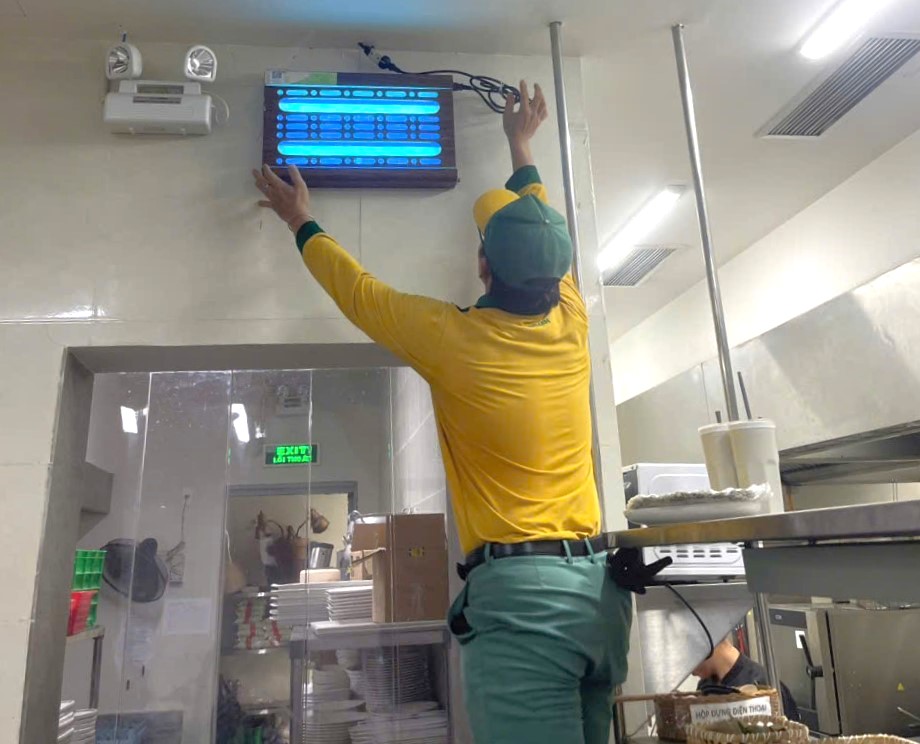
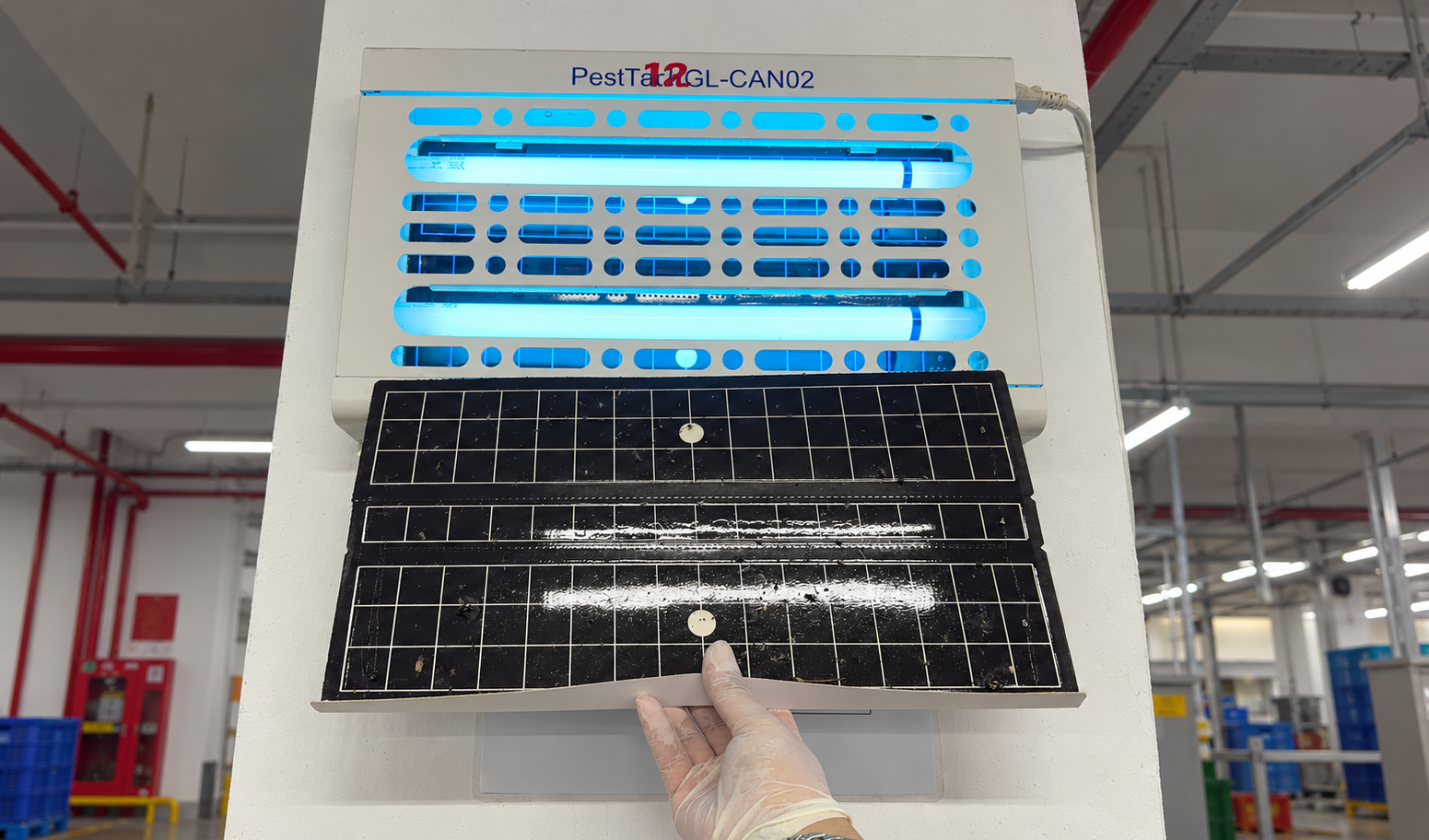
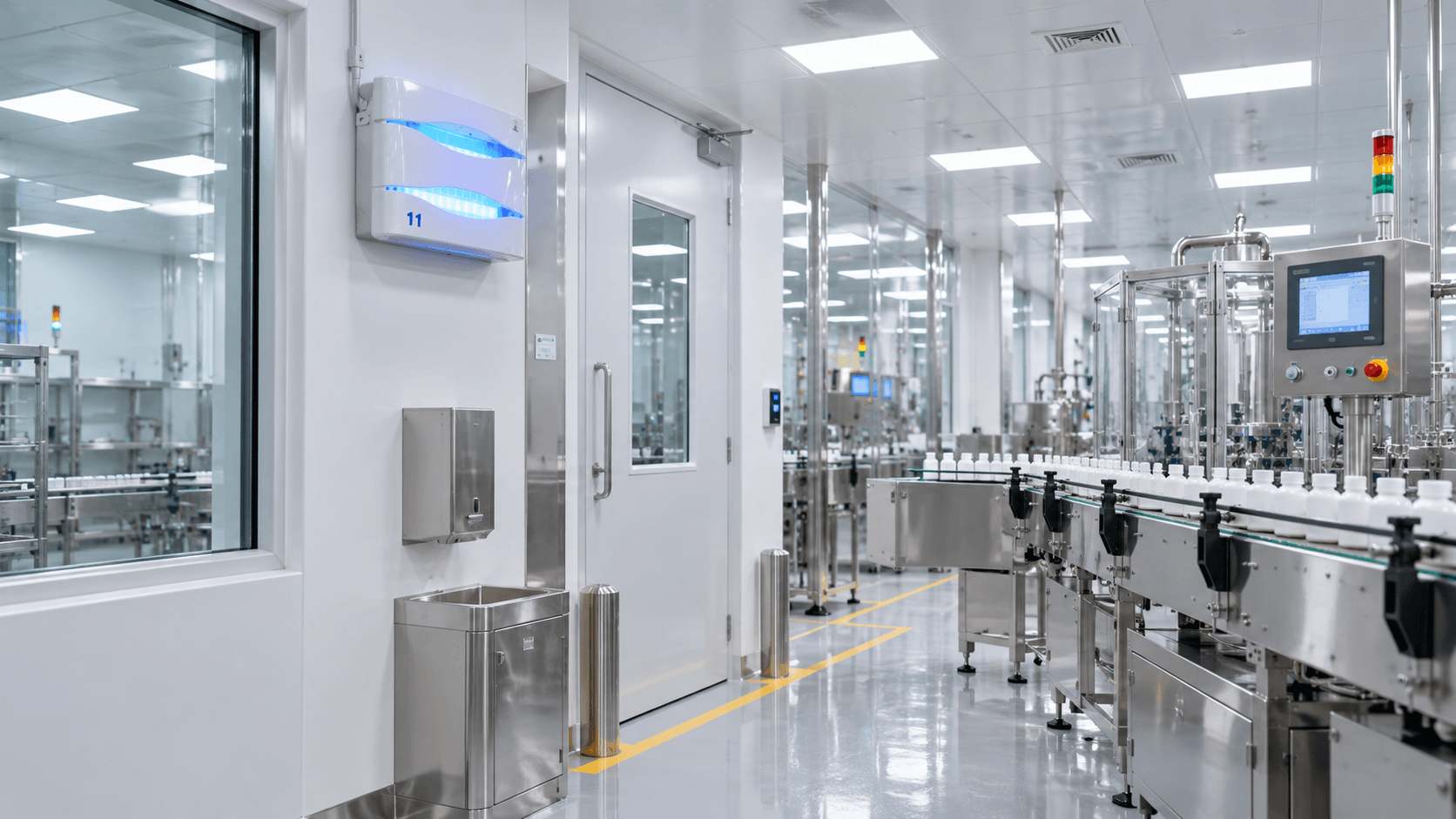
Hotels can then implement control methods such as installing glue-board insect light traps in concealed locations near entrances, while ensuring that the devices never shine directly toward food counters or main entrances. At the same time, clean-as-you-go procedures should be maintained immediately after guests finish dining, dedicated pedal-operated waste bins should remain closed and all drainage channels should be thoroughly cleaned after each service period. For insect light trap systems, the fact that the lamp still illuminates does not necessarily mean the device is maintaining effective attraction; UV-A intensity, lamp age, glue-board condition, installation position and competing light sources also need to be checked.
4. Kitchen areas – Locations with a high risk of pest activity
Food-preparation areas contain nearly all the conditions most favourable to pests: high temperatures, continuous moisture, accumulated grease and numerous technical gaps that are difficult to access. Typical pests include German cockroaches (Blattella germanica), drain flies (Psychodidae), ants and rodents.
German cockroaches are particularly challenging because of their rapid reproduction, resistance to commonly used chemicals and ability to hide deep in warm areas.
Key insect harbourage locations in kitchens include:
- Gaps behind and beneath heat-generating equipment such as gas cookers, ovens, rice steamers and motors of refrigerated or freezer worktables.
- Damaged tile grout, gaps around stainless-steel wall trims, electrical service boxes and cable conduits.
- Grease traps and damp floor drains, where drain flies and American cockroaches may commonly breed.
Hotels can apply the following pest management measures in kitchen areas:
- Mechanical and technical sanitation: Position equipment at least 15–20 cm away from walls and 15 cm above the floor; seal all cracks using specialised silicone sealant; and clean grease traps periodically.
- Gel bait treatment: Use specialised gel bait for German cockroaches around hinges and concealed electrical areas instead of applying residual surface sprays, helping avoid cross-contamination of food and food-preparation utensils.
5. Food storage – Areas exposed to risks from incoming materials
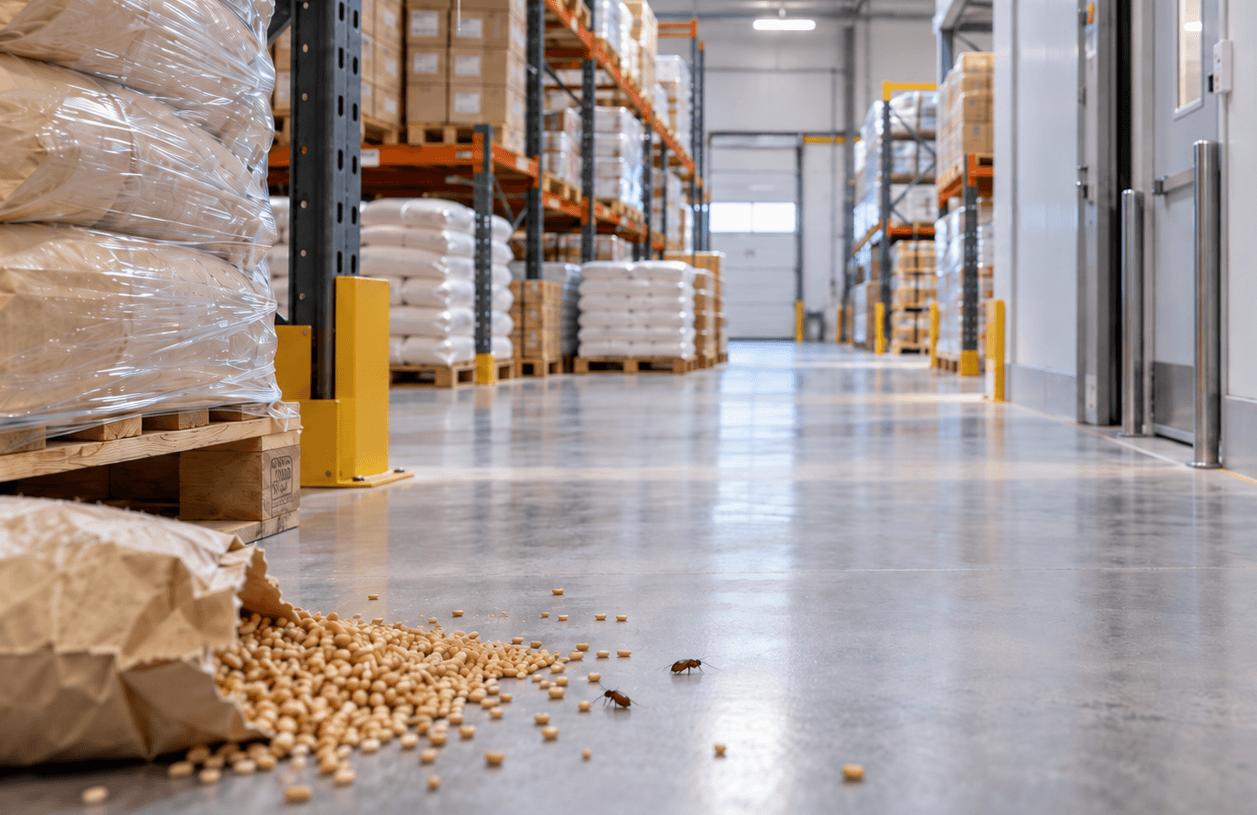
Food stores contain a wide range of dry ingredients, spices and beverages serving the hotel’s entire F&B operation. Because goods may remain static for extended periods in dark conditions, these areas provide favourable environments for stored-product insects, warehouse pests, cockroaches and rodents to enter, reproduce and cause damage.
Pest risks in these areas often originate from the external supply chain through shipments, cardboard boxes and wooden pallets, or they may develop locally when storage conditions are inadequate. Hotels should pay particular attention to the following risk factors:
- Relative humidity exceeding acceptable levels, creating favourable conditions for mould and grain pests.
- Extended storage periods and insufficient stock rotation, allowing localised pest populations to accumulate.
- Goods stored directly against walls or on the floor, eliminating technical inspection access.
- Concealed spaces behind shelving that restrict visibility and make early signs of pest entry difficult for staff to detect.
- Inadequate sanitation of floors and storage racks, leaving dry powder, grain and food residues.
To protect food supplies, hotels need to combine incoming-material inspection, stock rotation according to FIFO (First In, First Out), a minimum inspection clearance of 30–45 cm from walls and close periodic monitoring of mechanical traps and bait stations. For dry foods, grains or materials stored for long periods, warehouse teams also need to recognise the groups of weevils and insects that may enter storage areas with raw materials or packaging.
6. Landscaped areas and swimming pools – Risks from the external environment
Outdoor grounds, including gardens, lawns, water features and swimming pools, form the visual landscape of the hotel but also act as the boundary directly connected to the external ecosystem. These areas can become sources of mosquitoes, flying insects, millipedes and burrowing rodents before they move toward guest accommodation.
Landscaped environments can easily become ideal breeding areas if vegetation and drainage are not properly managed. In particular, Aedes mosquitoes associated with dengue transmission, along with other mosquito species, often prefer to lay eggs in standing-water locations such as:
- Saucers beneath outdoor plant pots and decorative flower containers.
- Condensation trays from outdoor air-conditioning systems and condenser units.
- Surface-water collection pits and roof gutters blocked by fallen leaves.
- Gaps around pool filtration chamber covers and overflow drainage channels surrounding swimming pools.
- Decorative objects and outdoor furniture that collect rainwater.
In areas with many standing-water points, teams need to understand the life cycle, breeding behaviour and identification signs of Aedes mosquitoes so that locations requiring larval removal can be prioritised correctly. Therefore, pest control in outdoor areas should not stop at spraying adult insects; the core priority is to eliminate all mosquito larval breeding sites and clear dense vegetation close to building walls.
7. Technical areas – Hidden pest harbourage that is difficult to detect
Technical areas, transformer stations, pump rooms, corridor suspended ceilings and basements are enclosed operational zones completely outside the guest’s field of view. Due to low light, stable temperatures, limited human activity and complex infrastructure networks, these areas can become ideal harbourage for rodents, American cockroaches and crawling insects.
Without strong preventive and exclusion measures, pests can quickly move from these areas through service shafts and technical pipe routes into suspended ceilings before entering guest rooms or restaurants. When a hotel has many rooms, landscaped areas and monitoring points, data can be digitised to track trends by area, identify hotspots and review the treatment history of each monitoring point. During periodic inspections, operations teams need to focus particularly on the following critical locations:
- Plant rooms, central control rooms and electrical transformer stations, where rodents may gnaw cable insulation and create short-circuit or fire risks.
- Unsealed openings and water or drainage pipes passing through floors or walls that have not been closed with rodent-resistant materials.
- Underground electrical cable trenches, wastewater collection pits and high-moisture basement floor-drain systems.
- Scrap storage rooms and areas containing maintenance equipment or construction materials stored for long periods.
- Gaps beneath fire doors and technical-room doors directly connected to the outside environment.
Control of technical areas needs to be fully integrated into the overall pest management programme by combining physical exclusion measures, such as sealing gaps and installing steel mesh, with dedicated rodent-monitoring stations that are numbered and inspected periodically.
8. Building an effective hotel pest control programme
Pest control in hotels needs to follow a risk-management approach rather than an incident-response model. This is also the core principle of IPM, which combines surveys, prevention, exclusion, monitoring and targeted treatment instead of relying on periodic spraying.
An effective programme needs to begin with a survey of the entire property, identification of pest groups that may occur and assessment of weaknesses in current operations.
The hotel then needs to establish a periodic monitoring plan covering guest rooms, food areas, technical zones, landscaped areas and supporting facilities.
Recording inspection data also helps hotels track pest trends, evaluate control effectiveness and implement early measures before problems affect guests.
9. Frequently Asked Questions
Which areas in hotels are most likely to experience pest activity?
High-risk areas commonly include guest rooms, buffet restaurants, kitchens, food stores, landscaped areas, swimming pools and technical areas because they provide suitable food sources, water or harbourage for pests.
Why do hotels need periodic pest control?
Periodic control helps detect pest signs early, reduces the risk of impact on guests and supports consistent service quality.
Is it true that bed bugs in hotels are caused by poor sanitation?
Not entirely. Bed bugs can enter through guests’ luggage, clothing and personal belongings. Therefore, even hotels with high sanitation standards still need appropriate inspection and prevention programmes.
Do hotels need to apply IPM for pest control?
Yes. IPM allows hotels to combine multiple measures such as monitoring, prevention, environmental management and appropriate treatment to achieve long-term pest control.
Pest control in hotels needs to be considered part of service-quality management. Regular inspection of high-risk areas helps businesses detect problems early, reduce the risk of impact on guests and maintain a safe, professional accommodation environment.


Các loại bẫy và thiết bị giám sát dịch hại trong nhà máy
Bẫy và thiết bị giám sát là một phần quan trọng trong chương trình kiểm…
Pheromone traps: An insect monitoring solution for pest control
Pheromone traps are applied in pest control due to their ability to attract...
Related news


Ready to eliminate audit risks and proactively protect customer experience & brand reputation?





Dear Valued Visitor,
To protect our clients' interests, all materials here are copyrighted and may not be reproduced without permission.
We appreciate your cooperation. Should you need to use our content professionally, please contact us directly.