





By VFC PestMan | 07-04-2026
Pest management involves managing, preventing and controlling organisms that may affect human health, product safety, property and production activities. For businesses, effective pest management is not limited to treating insects when they appear; it also includes identifying risks, conducting regular monitoring and developing appropriate preventive measures.
Today, Pest Control and IPM are two common terms in the pest management field. Understanding the difference between these two approaches helps businesses choose the most appropriate method, particularly in industries with stringent hygiene requirements such as food, pharmaceuticals, logistics, hospitality and healthcare.
1. What is pest management?
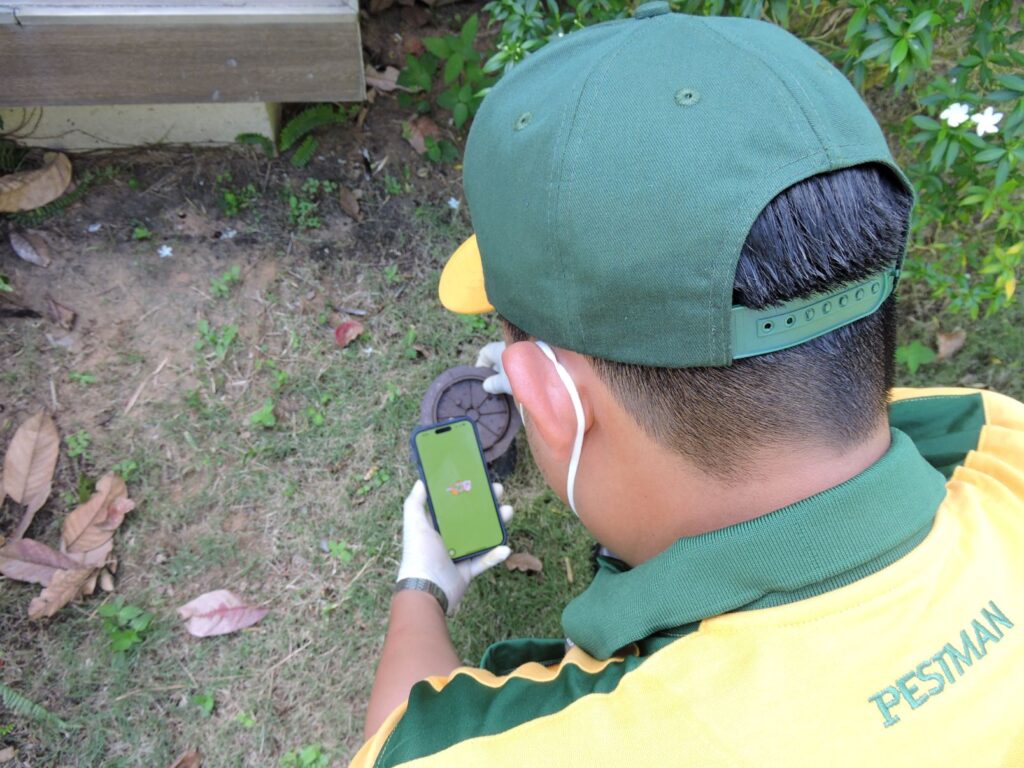
Pest management is the process of applying technical measures to prevent, reduce or eliminate pests within a specific area. Common pests include insects such as flies, mosquitoes, cockroaches, ants and beetles, as well as animals such as rodents, birds, snakes and other species that may affect the operating environment.
In business environments, pests not only create hygiene issues but may also lead to risks related to:
- Food safety and product quality.
- Non-compliance with requirements under standards such as HACCP, GMP, ISO 22000 and FSSC 22000.
- Disruption to production activities.
- Impacts on brand image and customer experience.
For example, a food-processing facility may face flies entering production areas, beetles occurring in raw material warehouses or cockroaches harbouring in difficult-to-access locations. Effective control needs to begin by identifying the cause, source of occurrence and level of risk rather than treating only the visible signs.
2. Why do businesses need proactive pest management?
Businesses need proactive pest management because many pest species reproduce quickly, adapt well and become much more difficult to control once they have developed into large populations.
A common mistake is to take action only after insects or other pests have been detected. This approach often leaves businesses facing:
- Higher treatment costs.
- Risks to production activities.
- Difficulty identifying the original source of the problem.
- The possibility of reinfestation after treatment.
For example, a few German cockroaches appearing in a food-processing area may indicate a population developing in equipment gaps, around pipes or in areas that are difficult to observe. If spraying is applied only where cockroaches are seen, the risk of recurrence may remain.
Effective pest management needs to shift from a mindset of “treating the problem when it occurs” to “managing risk before the problem occurs.” If a business still relies mainly on periodic spraying, it should take a closer look at why spraying can rapidly reduce pest density but cannot replace an IPM programme that controls the source of occurrence and the risk of recurrence.
3. What is Pest Control?
Pest Control refers to pest management activities that use various methods to reduce or eliminate the presence of pests within a specific area.
Common Pest Control methods include:
3.1. Chemical control
This method uses approved pest control products to treat insects or other pests.
This method is commonly used when pest density needs to be reduced quickly or when specific points of occurrence need to be treated.
However, chemical use needs to be carried out by qualified personnel, in accordance with technical instructions, with proper dose control and measures to ensure safety for people, products and the environment.
3.2. Mechanical and physical control
These include measures such as:
- Installing insect screens.
- Using insect light traps.
- Sealing gaps.
- Improving area sanitation.
- Controlling food sources and harbourage areas.
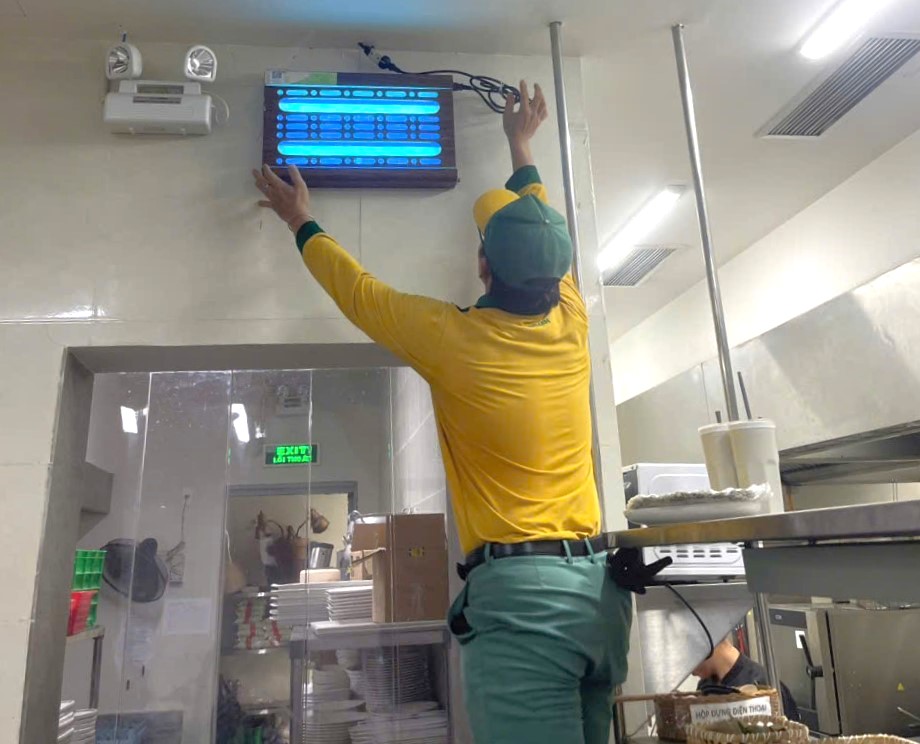
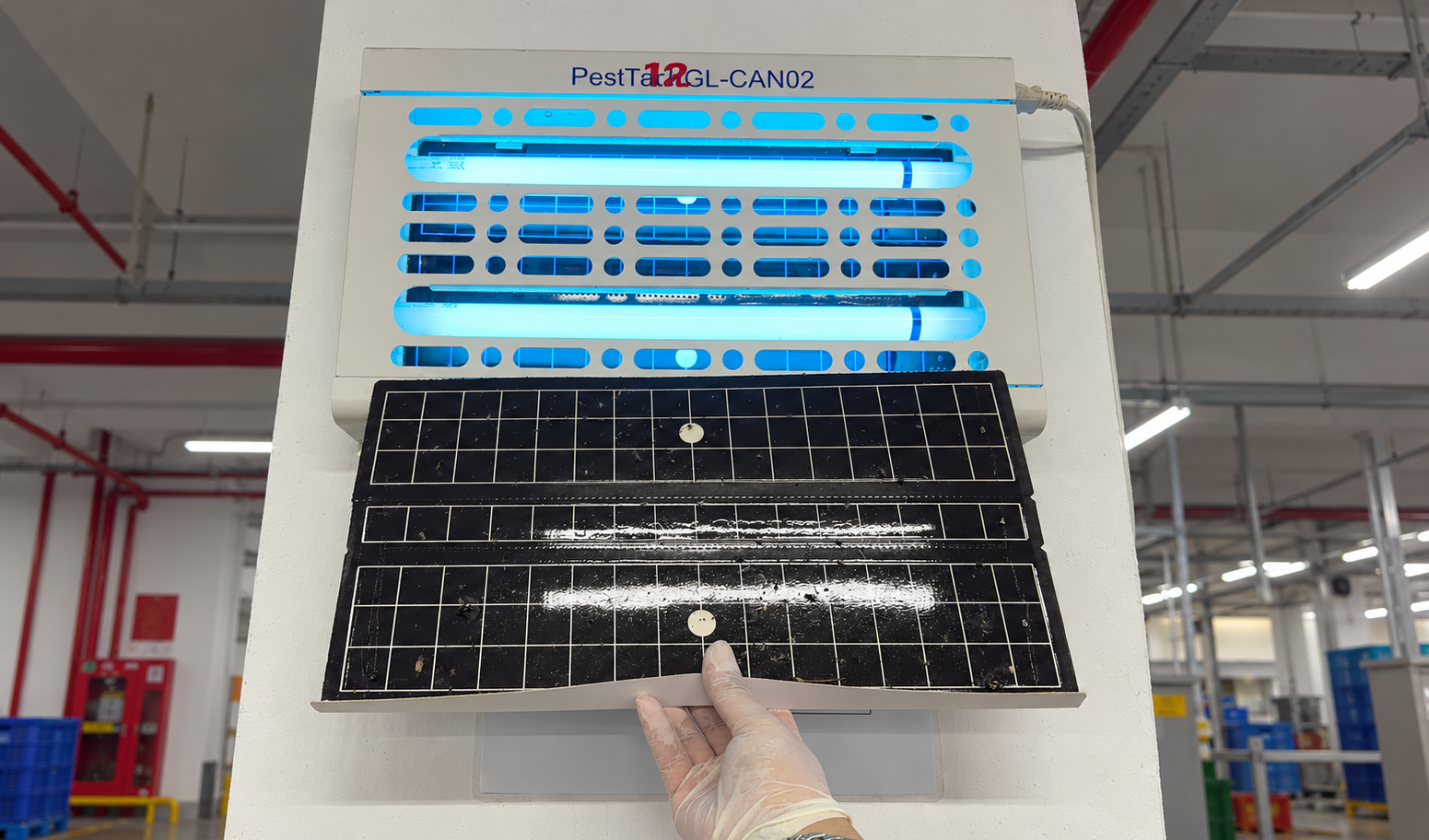
These are important measures that help reduce favourable conditions for pest development. For insect light traps in particular, effectiveness depends not only on whether the device is emitting light, but also on UV-A intensity, lamp age, installation position, glue boards and competing light sources.
3.3. Biological control
Biological control uses natural factors or biological mechanisms to limit pest development.
This method is commonly studied and applied in specialised control programmes.
4. What is IPM and why is it applied in businesses?
IPM (Integrated Pest Management) is an approach based on combining multiple control measures to prevent and manage pests over the long term.
Unlike isolated treatment after insects are detected, IPM focuses on understanding why pests appear and controlling the risk at its source.
An IPM programme typically includes:
4.1. Site assessment and risk evaluation
Businesses need to identify:
- Pest species at risk of occurring.
- Areas where pests are likely to occur.
- Environmental conditions affecting pest activity.
- Weak points in operating procedures.
For example, raw material warehouses may be at risk of beetle occurrence because of storage conditions or incoming materials, while waste-handling areas may attract flies because of food sources and moisture. Assessment results should be converted into a risk map identifying target species, attractants, entry routes, critical areas and the monitoring approach for each risk group.
4.2. Data-driven monitoring
IPM requires regular monitoring through:
- Monitoring traps.
- Pest reports.
- Occurrence trends over time.
- Inspection images and data.
Data help businesses evaluate the level of control instead of relying only on visual judgement. When there are many control points, data can be digitised to track occurrence trends, identify hotspots, retrieve the history of each control point and monitor compliance levels over time..
4.3. Prevention and continuous improvement
After identifying the cause, businesses can implement measures such as:
- Improving sanitation.
- Adjusting operating procedures.
- Controlling entry points.
- Adding appropriate technical measures.
5. What is the difference between Pest Control and IPM?
Pest Control and IPM are related, but they differ in their approach.
| Criteria | Pest Control | IPM |
| Objective | Treat and reduce pests | Long-term pest management |
| Approach | Often focuses on treating visible problems | Focuses on causes and prevention |
| Methods | May use one or several measures | Combines multiple measures |
| Monitoring data | May not always be required | An important component |
| Suitability | Homes and areas requiring specific treatment | Factories, hotels and businesses with stringent control requirements |
For food manufacturers, pharmaceutical businesses and other industries subject to stringent control requirements, IPM is often selected because it helps establish a continuous pest management system that can be demonstrated through documentation.
6. Should businesses choose Pest Control or IPM?
The choice depends on the operating environment, level of risk and management requirements of each business.
Pest Control may be suitable for situations where a specific problem needs to be addressed within a short period.
IPM, meanwhile, is more suitable for:
- Food-processing facilities.
- Logistics warehouses.
- Hotels and resorts.
- Hospitals.
- Retail chains.
- Businesses that need to meet audit requirements. For food businesses, pest management requirements also need to be considered against how standards such as FSSC 22000 and BRCGS require risk management, data management and programme traceability..
An effective IPM programme not only helps reduce pest occurrence but also supports businesses in controlling risk, preparing audit documentation and improving operational stability. When an external provider is hired to implement the programme, businesses should evaluate the PCO based on its capability to implement IPM, data transparency and its ability to respond and provide ongoing support when abnormalities occur.
7. How does VFC PestMan implement pest management using an IPM approach?
VFC PestMan develops pest management solutions based on each customer’s actual conditions rather than applying a single standard approach to every environment.
The process typically begins with an assessment of current conditions, identification of pest species, evaluation of risk areas and development of an appropriate control plan.
During implementation, the technical team focuses on:
- Identifying points of occurrence and entry routes.
- Selecting appropriate treatment methods.
- Monitoring pest activity.
- Recording data and reporting results.
- Recommending long-term preventive measures.
This approach helps businesses better understand pest conditions, provides a basis for decision-making and supports a more stable operating environment.
Pest management is an important risk-management activity for businesses, particularly in environments with stringent hygiene and safety requirements. Pest Control helps address specific pest problems, while IPM provides a more comprehensive approach through prevention, monitoring and continuous improvement.
To develop an appropriate pest management programme, businesses need to begin with an assessment of current conditions, identify risks and select solutions based on actual operating characteristics.
VFC PestMan currently provides pest management solutions for factories, warehouses, hotels, hospitals and businesses, with assessment, implementation and monitoring tailored to specific needs.
If businesses are looking for a pest control company for businesses, need to survey the current pest situation or build a control program suitable for a factory, warehouse, hotel, or building, VFC PestMan can assist with on-site evaluation and propose solutions based on actual risks.
Hotline: (+84) 932669883
Email: contact@pestman.vn


Các loại bẫy và thiết bị giám sát dịch hại trong nhà máy
Bẫy và thiết bị giám sát là một phần quan trọng trong chương trình kiểm…

Pheromone traps: An insect monitoring solution for pest control
Pheromone traps are applied in pest control due to their ability to attract...
Related news



Ready to eliminate audit risks and proactively protect customer experience & brand reputation?





Dear Valued Visitor,
To protect our clients' interests, all materials here are copyrighted and may not be reproduced without permission.
We appreciate your cooperation. Should you need to use our content professionally, please contact us directly.