





By pestman | 28-01-2026
What are big-headed ants?
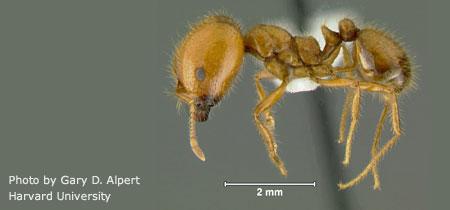
Big-headed ants (Pheidole megacephala) are an ant species native to Africa and are listed among the world’s 100 most dangerous invasive species.
What are big-headed ants?
Behavior, diet, and habits of big-headed ants
Each big-headed ant colony contains two distinct types of worker ants: major workers and minor workers. Major workers have disproportionately large heads compared to their bodies. The species gets its name from the appearance of these major workers. Major workers act as soldiers responsible for defending the colony. They also use their powerful mandibles to crack seeds and other food sources for the rest of the colony.
Minor workers are about half the size of major workers. They are responsible for foraging, feeding immature ants, and building the nest. Minor workers greatly outnumber major workers within the colony. Although this species does not damage building structures, it is known to carry tapeworm parasites.
Big-headed ants build their nests in soil beneath rocks or logs. In some cases, they create small soil mounds around the nest entrance. More commonly, their nests are found beneath stones or near building foundations. They enter homes through cracks in the foundation. Although they rarely nest indoors, they frequently forage inside homes. Most indoor infestations of big-headed ants actually originate outdoors.
Outdoors, these ants feed on insects and honeydew. When foraging indoors, they prefer protein-rich foods. They easily establish foraging trails between their nests and food sources. As a result, these trails can sometimes be followed to locate the colony.
>> Read more: Bullet ants – Tiny insects with the most painful sting on Earth
Reproduction
The queen’s eggs develop into worker ants and future reproductive generations. Colonies often contain multiple queens.
Signs of a big-headed ant infestation
The most common sign is the presence of worker ants inside the home. They are often spotted while foraging and may enter areas such as kitchens or even bathrooms.
To help prevent big-headed ant problems, eliminate potential nesting sites around the home. Firewood piles should be kept as far away from the house as possible. Maintaining a clear gap between the house and surrounding mulch or vegetation can help prevent ants from entering the home.
Controlling this ant species may require multiple treatment methods. If any part of the colony survives, the population can quickly recover. The best solution is to seek assistance from a professional pest control company.
Big-headed ant control methods
Using biological bait (core control method)
- Suitable bait types: Choose gel or granular ant baits containing active ingredients such as Fipronil, Hydramethylnon (Amdro), or Metaflumizone.
- Placement method: Place the bait along ant trails, near nest entrances, or around tree bases.
- Note: Do not spray fast-kill insecticides near bait placement areas, as this may scare worker ants away and prevent them from feeding on the bait.
Perimeter spray treatment (protective barrier)
- Residual spraying: Use insecticide sprays containing Bifenthrin or Fipronil around the building foundation and lower walls (up to 50 cm high and 50 cm outward) to create a protective barrier.
- Granular treatment: Apply insecticidal granules (Bifenthrin granules) to lawns or around tree bases where ants commonly nest.
Natural methods (suitable for small or indoor areas)
- Diatomaceous earth (DE): Apply food-grade DE powder into wall cracks and hidden crevices. The powder damages the ants’ exoskeleton, causing dehydration and eventual death.
- Baking soda mixture: Mix powdered sugar and baking soda at a 1:1 ratio and place the mixture in room corners. Ants that consume it will suffer internal gas buildup and eventually die.
- Vinegar or essential oils: Spray diluted vinegar solution or peppermint essential oil along ant trails to eliminate pheromone scent markings and disrupt their navigation.
Preventing reinfestation
- Seal entry points: Use silicone sealant to close gaps and cracks around windows, doors, and electrical lines.
- Environmental sanitation: Clear dense vegetation and move piles of firewood, bricks, and debris away from the building foundation to eliminate ideal nesting sites.
- Food source management: Always keep food tightly covered, especially sweets, meat, and greasy foods, which are highly attractive to big-headed ants.
>> Learn more: Effective, safe, and fast root-cause insect control methods


Mistakes that cause insects to recur in warehouses
Insects in warehouses can affect the quality of goods, efficiency, ...
Effective fly control in factories: Identifying the right species for root-cause treatment
In manufacturing environments, especially in food and beverage factories…
Related news

Ready to eliminate audit risks and proactively protect customer experience & brand reputation?






Dear Valued Visitor,
To protect our clients' interests, all materials here are copyrighted and may not be reproduced without permission.
We appreciate your cooperation. Should you need to use our content professionally, please contact us directly.