





By hoangnga | 30-06-2026
Termites can silently damage wooden furniture and many other items in the house if not treated promptly. However, simply spraying insecticides or placing bait may not solve the problem completely. This article will guide you on how to properly treat termites at home, and also share solutions to help prevent them from returning.
1. Where do termites and wood borers originate in homes?
In daily life, many people loosely group "termites and wood borers" together, but these are two entirely different insect groups. Wood borers mainly cause damage inside processed wood products, whereas termites live in colonies, nest underground or in hidden spots, and can move across various areas of a building. Correctly understanding the characteristics of each species will help you choose the right treatment method from the start.
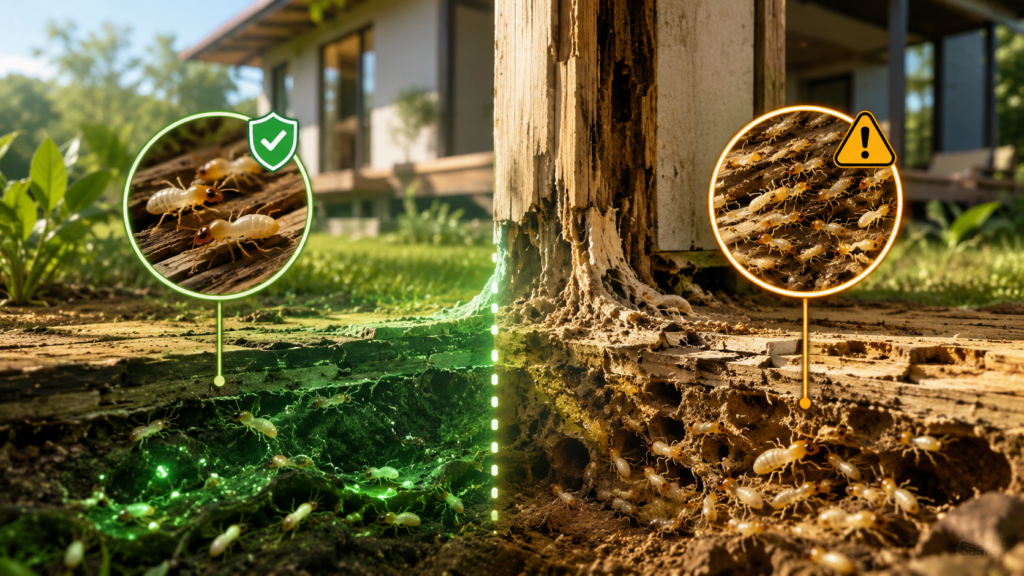
Termites typically invade homes through soil foundations, building footings, wall cracks, utility pipes, or wooden items previously infested with termites. Additionally, garden areas with abundant greenery, decaying stumps, or high humidity create favorable conditions for termites to thrive before spreading indoors. Identifying the exact entry source is always the first step for effective home termite and wood borer treatment.
Unlike many other insects, termites usually operate silently over extended periods. By the time wooden doors warp, wooden cabinets sound hollow, or hardwood floors show degradation, the termite colony may have already grown extensively. Therefore, early detection consistently reduces treatment costs and limits structural damage.
2. Common methods for treating termites and wood borers at home today
Currently, various home treatment methods exist, ranging from simple DIY measures to specialized solutions for severely infested structures. Each method has its own scope of application, so selection should be based on actual field conditions rather than word-of-mouth experience.
Using termiticides
Termiticides are a popular choice for many households due to their accessibility and immediate application upon detecting termite activity. The chemical is usually sprayed directly onto mud tubes, suspected nest locations, or damaged wooden furniture to rapidly reduce surface termite activity.
The effectiveness of this method heavily depends on accurately identifying the nest location. In many cases, the visible termite area is merely a foraging path, while the main nest lies deep underground or behind building structures. If treatment is limited to the spotted area, the colony can continue to grow and re-emerge elsewhere over time.
Using termite baiting systems
Termite bait operates on the foraging habits of worker termites. After consuming the bait, worker termites carry it back to the nest and distribute it to other colony members. Through this mechanism, termite bait can eliminate large numbers of individuals rather than just surface termites.
To achieve optimal results, bait stations must be precisely positioned along termite paths and monitored throughout the treatment process. Incorrect placement or untimely bait replacement may cause the colony to divert to alternative food sources, significantly reducing treatment efficacy.
Eliminating favorable conditions for termite growth
Alongside termite eradication, improving environmental conditions enhances overall home treatment outcomes. You should repair plumbing leaks, reduce indoor humidity, and clear away wood scraps, cardboard, and cellulose-containing materials, as these serve as attractive food sources for termites.
Furthermore, garden areas require periodic inspection. Decaying tree stumps, old timber piles, or leftover construction materials can harbor termites before they infiltrate your building. Proactively removing these elements helps minimize the risk of post-treatment re-infestation.
3. Why do many home termite treatment cases experience recurrence?
This is a common question among homeowners who have used sprays or baits only to find termites returning to the same spot or spreading to other areas months later. The cause often lies not in product quality, but in termite biology and treatment approaches mismatched with the property's structural conditions.
Termites are social insects operating within a highly organized colony structure comprising the queen, workers, soldiers, and swarmers. Most visible surface individuals are merely worker termites foraging for food, while the main nest may reside deep underground, inside wall cavities, or in hard-to-reach areas. Treating only the active surface group without eliminating the whole colony leaves a high probability of recurrence.
Another reason is premature chemical application before determining the full extent of infestation. In many instances, spraying chemicals immediately upon noticing mud tubes causes the colony to shift directions and expand into other structural areas. This complicates subsequent remediation efforts and obscures the true scale of the colony.
Using uncertified chemicals or mixing multiple formulations can also diminish treatment results. Beyond posing environmental risks, these improvised measures typically offer only temporary relief unless paired with thorough site surveys and post-treatment monitoring. This explains why many households repeatedly treat termites without permanently resolving the problem.
4. When should you hire professional termite control services?
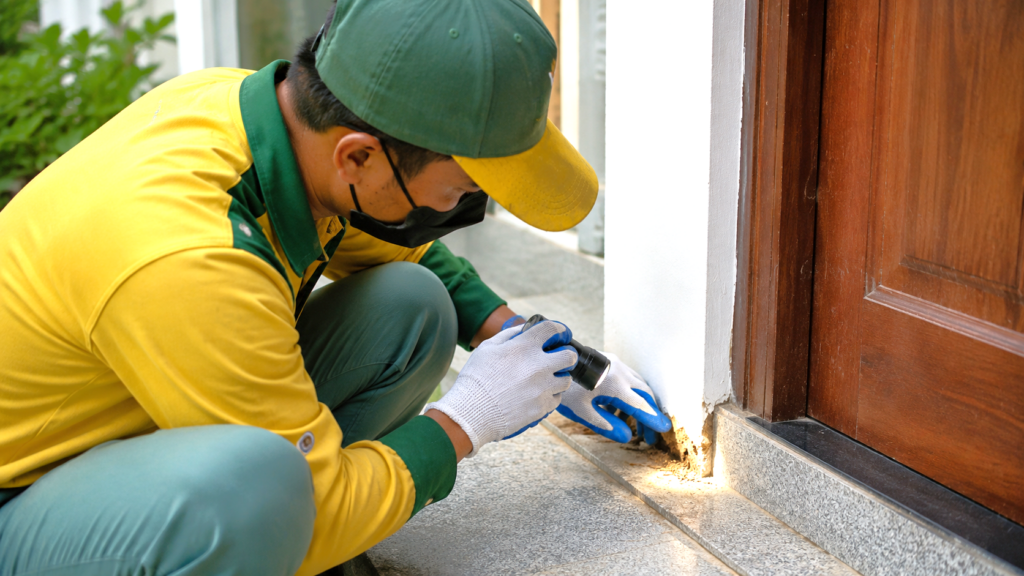
If termite activity is recent, localized to a small area, has not caused significant damage, and its path is easily identifiable, you can manage it using appropriate methods combined with indoor environmental modifications.
However, when termites appear in multiple locations, recur repeatedly after DIY treatments, or threaten wooden doors, cabinetry, flooring, and critical structural elements, self-treatment is rarely effective. At this stage, professional inspection and assessment are essential to pinpoint the infestation level and select an appropriate strategy.
For older properties or homes featuring extensive natural timber elements, termite control should follow a long-term preventive strategy rather than reactive spot treatments. This approach minimizes re-infestation risks while safeguarding expensive wooden features from costly repairs or replacement.
5. How does a professional termite treatment process work?
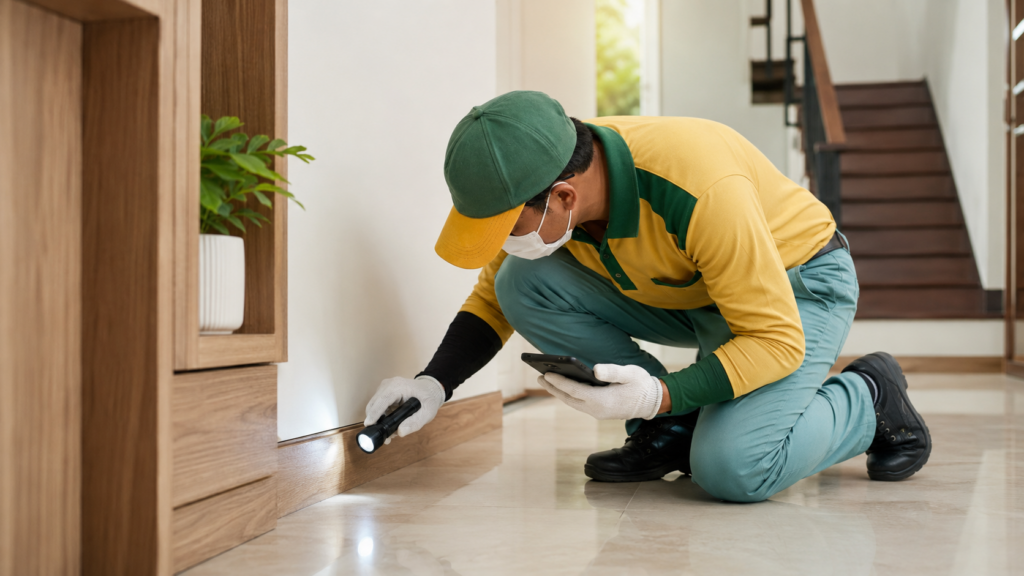
Professional pest control providers rarely start by spraying chemicals right upon arrival. Instead, the initial step always involves a comprehensive inspection to identify termite species, infestation scope, damage severity, and suspected nest locations. This data is critical for tailoring a customized treatment plan for each property.
Following the survey, technicians evaluate termite foraging trails and choose the appropriate solution. Depending on the scenario, options may include localized chemical applications, baiting systems, or integrated measures to optimize control efficacy. The objective is always to target the entire colony rather than just surface individuals.
Upon completing the treatment, the property requires ongoing inspections to evaluate success and detect early signs of re-infestation. This crucial step is often overlooked in DIY efforts, yet it remains vital for preventing termite recurrence over months or years.
For structures requiring long-term protection—such as villas, hotels, resorts, or wood-rich residences—termite management programs are structured around proactive prevention. Rather than reacting after infestation, these systems monitor perimeter activity to mitigate future intrusion risks.
Read more: 7 Thorough pest control methods for hotels and resorts
6. Exterra termite control technology – A long-term control solution
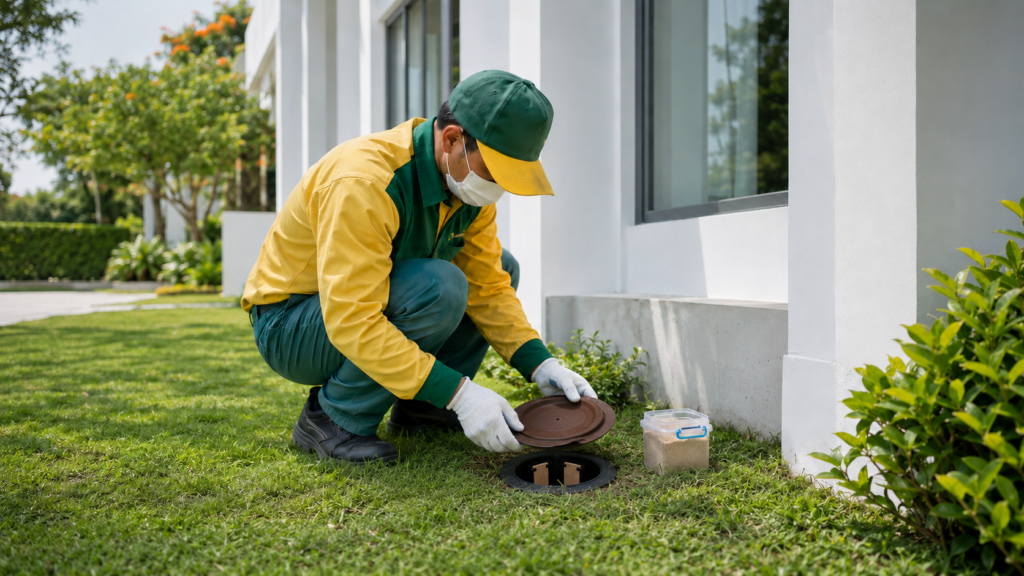
For properties suffering from chronic infestations or recurring DIY failures, long-term termite management offers far more stable results than spot treatments. Modern technologies focus on controlling the whole colony upon initial perimeter entry rather than merely killing active surface termites.
One widely adopted modern technology is Exterra—a termite management system utilizing interception stations installed around the perimeter. Leveraging natural foraging behavior, the system enables early detection and source elimination, significantly reducing long-term re-infestation risks.
7. How to prevent termites from returning after treatment
After completing home treatments, maintaining an inhospitable environment for termites is just as critical as the initial elimination process. Damp areas, persistent water leaks, or accumulated timber, cardboard, and cellulose products represent prime target zones if left unmonitored.
You should conduct regular checks on wall bases, door frames, kitchen cabinets, under-stair spaces, and areas adjacent to gardens for early signs of activity. Concurrently, fix water leakages, ensure proper ventilation, and maintain clean outdoor surroundings to remove conducive conditions.
For high-risk properties or structures with a history of repeated infestations, routine professional inspections help evaluate current conditions and catch early warning signs before severe damage occurs.
Home termite and wood borer treatment achieves maximum efficacy when selecting the right methodology early on. For minor, recent infestations, applying suitable DIY steps along with environmental cleanup can effectively mitigate recurrence.
However, if termites have recurred frequently, spread extensively, or compromised timber features and building structures, a professional pest control survey is vital to locate the true infestation origin and implement targeted solutions. This comprehensive approach enhances treatment success, provides sustainable long-term protection, reduces recurrence risks, and preserves structural property value.
Learn More: Top 5 reputable termite control companies in Vietnam



Top 5 reputable termite control companies in Vietnam
Finding a suitable termite control company not only helps deal with termites…
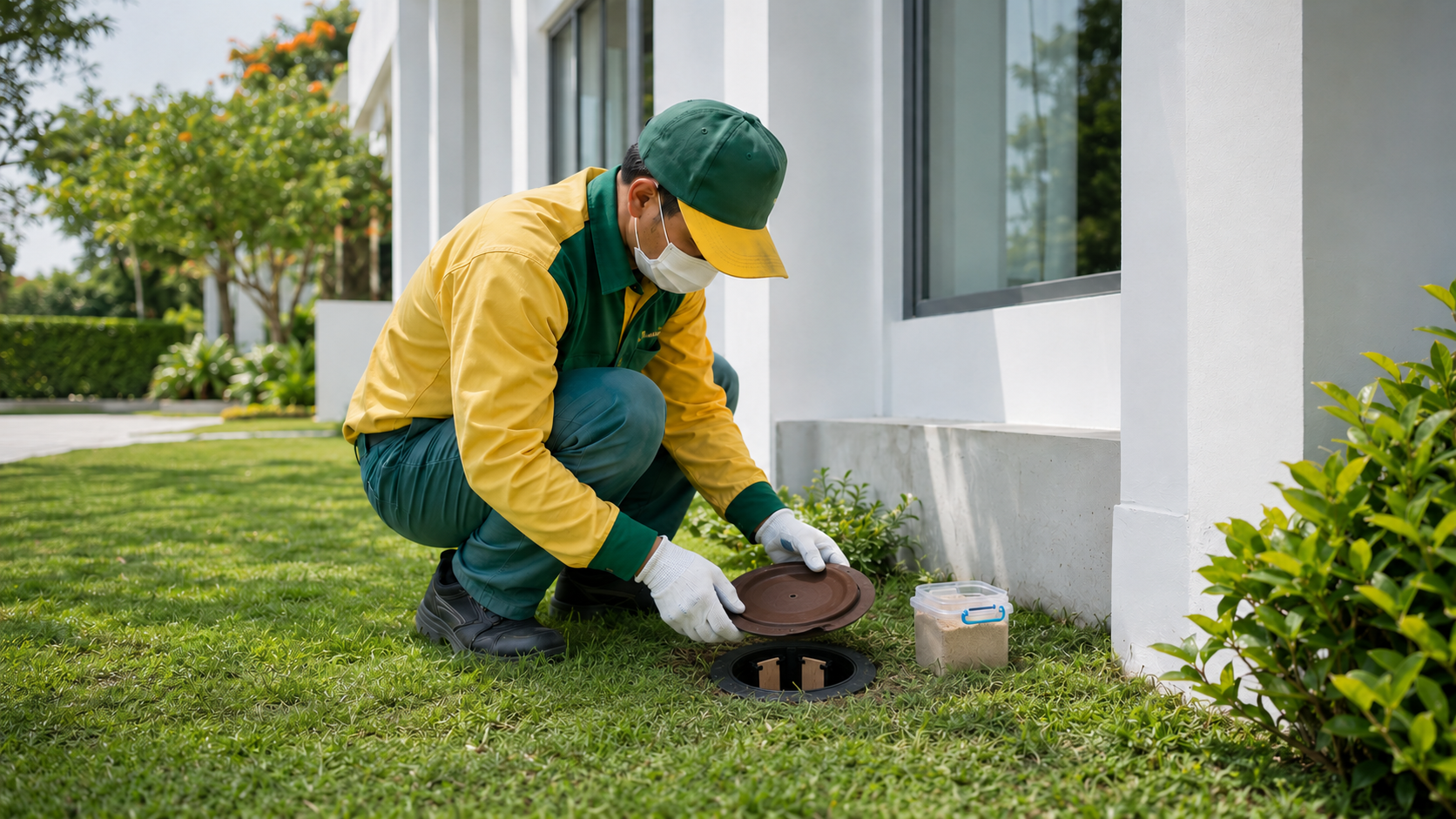
Proper termite control at home can help prevent termites from returning.
Termites and wood borers can silently destroy wooden furniture and many items in…
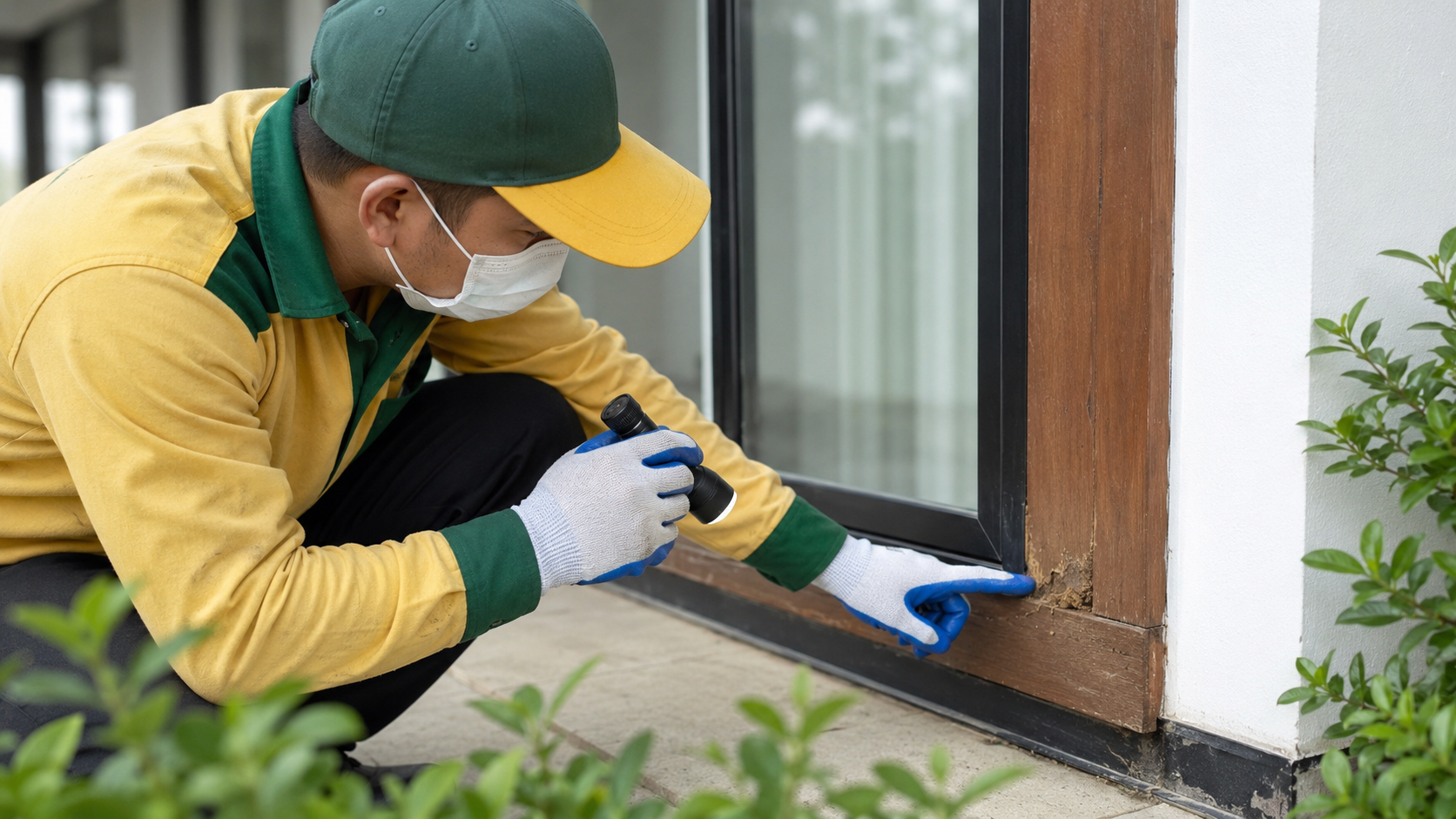
How is eradicating termites completely different from treating them temporarily?
When detecting termites appearing in a structure, many people often prioritize treating…

Food Testing in 2026: Mandatory Testing Parameters and Compliance Procedures for Food Businesses
Food testing in 2026 remains a fundamental legal requirement for all organizations and businesses involved in the production, import, and distribution of food and beverage (F&B) products in Vietnam.
Related news
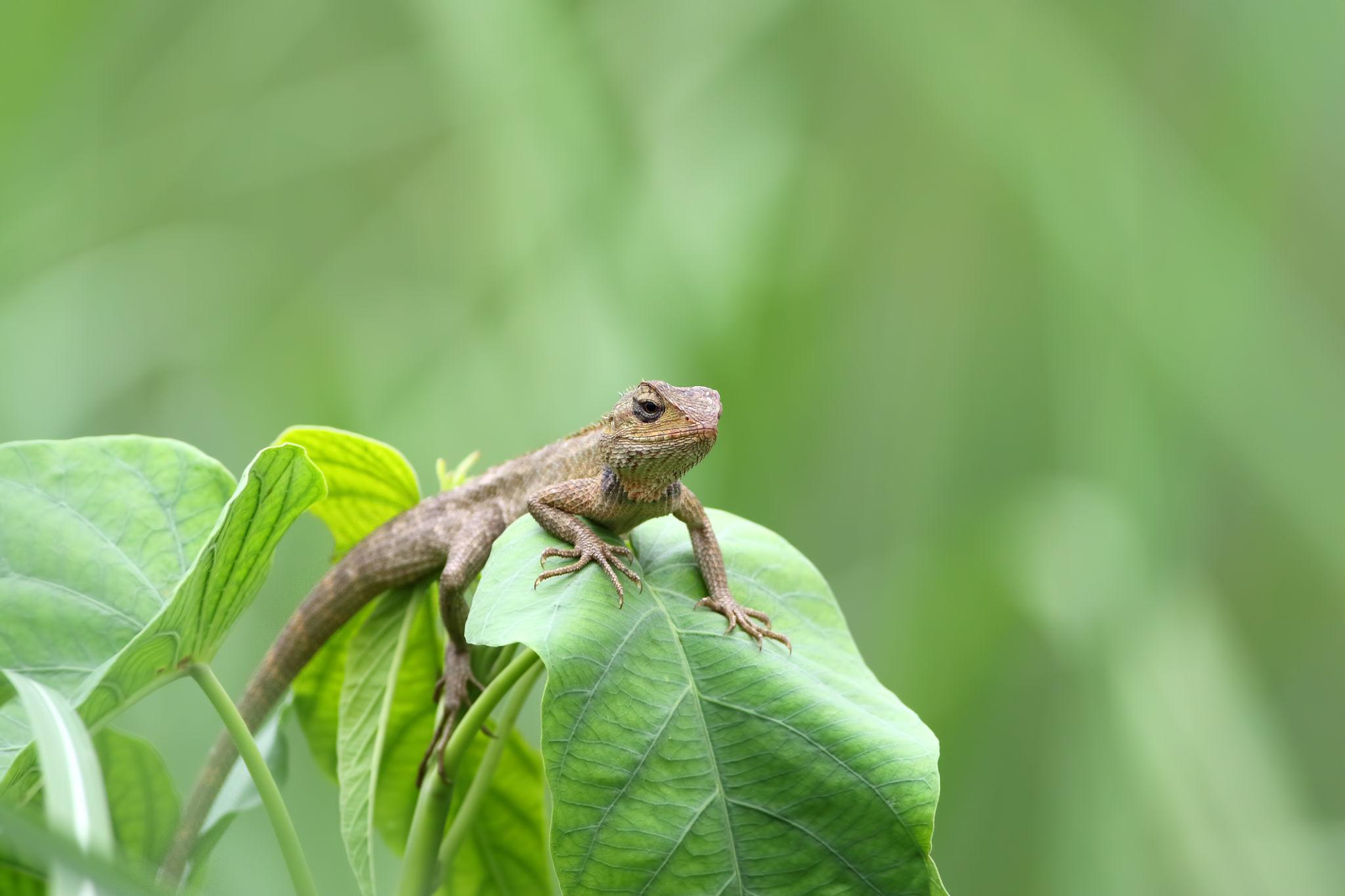
4 Diseases Associated with Reptiles That Can Affect Humans and How to Prevent Them Safely
The presence of reptiles in homes, factories, warehouses, or production facilities is not only a sign of pest-related risks but may also indicate the potential transmission of several dangerous diseases. Understanding diseases associated with reptiles and the appropriate preventive measures helps businesses and households proactively protect human health and maintain a safer environment.

Ready to eliminate audit risks and proactively protect customer experience & brand reputation?






Dear Valued Visitor,
To protect our clients' interests, all materials here are copyrighted and may not be reproduced without permission.
We appreciate your cooperation. Should you need to use our content professionally, please contact us directly.