





By VFC PestMan | 26-10-2026
A periodic pest control contract that does not clearly define the scope of work, response times or responsibilities for handling incidents can create difficulties for a business as soon as an issue occurs. The contractor may have completed the agreed number of service visits, yet rodents may still appear in the warehouse, insects may recur in production areas, or the QA/QC team may not receive sufficient documentation for review before an audit.
To reduce these situations, businesses need to evaluate the contract not only in terms of cost and treatment frequency, but also its ability to maintain effectiveness, ensure operational safety and clearly define responsibilities between the parties.
Below are eight important clauses that QA/QC, HSE, procurement and operations management teams should agree on before signing a contract with a pest control provider.
1. Why does a pest control contract need to be detailed?
Unlike one-time insect treatment, periodic pest control is an ongoing activity designed to monitor, prevent and address risks that arise at the facility.
For factories, warehouses or businesses operating multiple locations, pest risks may change with the season, infrastructure conditions and production activities. Maintaining a fixed number of treatment visits alone is not enough to ensure that the control programme remains suitable for these changes.
The contract therefore needs to clearly define three areas: what work the contractor will perform, what results and records the business will receive, and how both parties will coordinate when pest conditions change.
For example, a factory may sign a contract for rodent-trap inspections twice per month. However, if a camera records a rodent in the finished-goods area, the business needs to know whether the incident is covered by the contract, how quickly the contractor must respond and how the treatment results will be recorded.
If these matters have not been agreed in advance, coordination may be delayed, disputes over additional costs may arise, or the pest risk may not be addressed at the appropriate time.
2. Eight clauses that should be clarified in a periodic pest control contract
2.1. Service scope and pest groups covered

This is the first clause that needs clarification because the term “pest control service” can include many different types of work.
A contract that covers only rodents and common insects does not automatically include termite, snake, bird or other specialised pest treatments.
Businesses need to agree on the list of pests covered, the service areas and situations that fall outside the contract. Before finalising the scope, businesses should also compare the seven criteria used to evaluate a pest control contractor’s capabilities.
Items that should be defined include:
- Target pests: Rodents, flies, mosquitoes, ants, cockroaches, termites or other agreed species.
- Service areas: Production areas, raw material warehouses, packaging areas, perimeter areas, offices and related locations.
- Service activities: Surveys, monitoring, prevention, periodic treatment or incident response.
- Areas with restricted access or special safety requirements.
- Pest groups or service items requiring a separate appendix or separate service.
For example, in a food factory, the programme may focus on monitoring rodents and insects in warehouses, production areas and perimeter zones. However, if termites are detected in a building structure, the business needs to determine whether termite survey and treatment are included in the contract.
Clearly describing the scope from the beginning helps the contractor prepare the correct resources and avoids different interpretations when additional requirements arise.
2.2. Inspection frequency, treatment schedule and conditions for changing the plan
Service frequency is commonly stated in quotations, but if the contract only says “twice per month” or “monthly periodic treatment,” the requirement may still not be sufficiently clear.
A service visit may include inspection of monitoring points, equipment maintenance, planned treatment, site observations and reporting. Therefore, the tasks that must be completed during each visit need to be agreed.
The contract should define:
- Number of inspections or treatments during each period.
- Areas and devices that must be inspected.
- Notice period for service scheduling.
- Conditions for changing or rescheduling visits.
- How inaccessible areas will be handled.
- Work-confirmation procedures after each visit.
For factories operating continuously, implementation needs to suit production shifts, sanitation schedules and internal safety requirements.
For example, trap inspections in warehouse areas can be arranged around receiving and dispatch activities, while chemical treatment in sensitive areas may need to be performed only after measures have been taken to protect raw materials and equipment.
Important point: Periodic frequency should include a mechanism for adjustment based on risk assessment and monitoring data. An area with recurring pest activity may require increased inspection without changing the entire programme.
Inspection frequency needs to be adjusted according to risk and signs showing that the pest management programme should be reassessed.
2.3. Equipment and chemical lists and management responsibilities
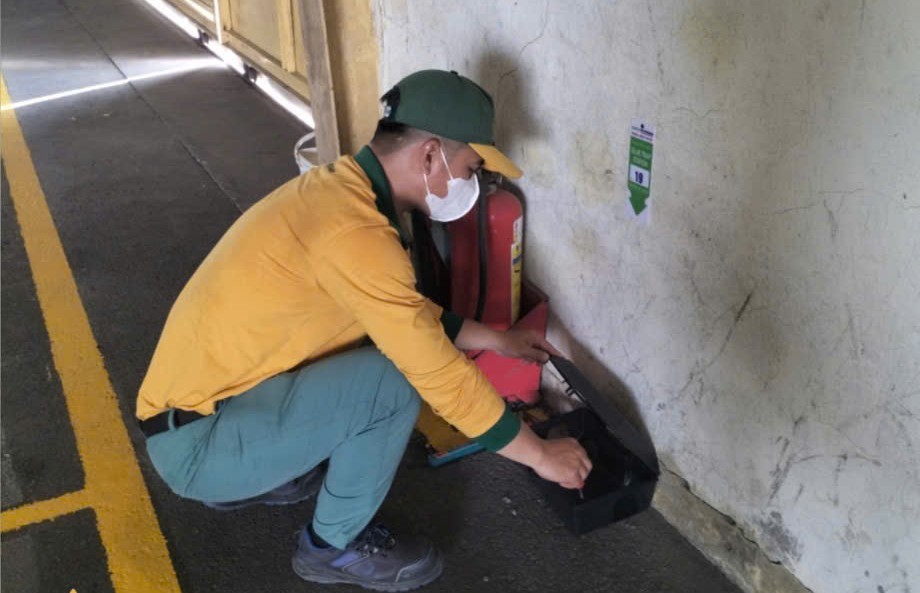
A pest control system may include rodent boxes, insect light traps, glue traps, termite monitoring stations and other specialised devices.
When signing the contract, businesses need to determine which equipment is supplied by the contractor, which equipment belongs to the facility and how maintenance responsibilities are divided.
For monitoring systems, the contract or technical appendix should include:
- Device type, quantity and proposed installation location.
- Monitoring-point map and device identification codes.
- Responsibilities for inspection, cleaning, maintenance and replacement of consumables.
- Procedures for damaged or relocated devices.
- Responsibilities for management, recovery or handover of equipment when the contract ends.
For pest-control chemicals, the contractor needs to provide appropriate information on product name, active ingredient, intended use, Safety Data Sheets (SDS) and relevant legal documents.
The treatment method needs to be selected based on pest type, treatment location, operating conditions and the facility’s safety restrictions.
For example, in product-sensitive areas, the business may require mechanical and monitoring methods to be prioritised while tightly controlling any chemical use.
This clause helps the business better manage the suitability of equipment, chemicals and contractor responsibilities throughout the service period.
2.4. Response times and incident-handling procedures
Not every pest incident occurs during a scheduled inspection.
Rodents may appear in a packaging area, cockroaches may be detected in production, or fly activity may increase abnormally during raw material receiving.
This is when the business needs a clear support procedure instead of waiting for the next scheduled service visit.
The contract should distinguish three timeframes:
- Acknowledgement time: The period within which the contractor confirms receipt of the incident report.
- Technical response time: The period within which the contractor provides initial guidance or a coordination plan.
- On-site attendance time: The period within which technical personnel arrive to inspect or treat the issue when required.
In addition, both parties need to agree on how incidents are classified by priority.
For example, a rodent detected in a finished-goods area or an insect found in an area where product is directly exposed may require a faster response than a pest sign found in the perimeter.
Special situations need to be clearly defined so that all incidents are not handled under the same timeframe.
Businesses should note that a commitment to respond within two hours does not mean that a technician will arrive on site within two hours. Each timeframe, applicable condition and geographic scope needs to be clearly stated.
The contract should also require incident-treatment results to be documented in a record or report, including the suspected cause, actions taken and items requiring continued monitoring.
2.5. Records, reports and data provided to the business
For factories, especially facilities subject to quality-management requirements or periodic audits, pest control documentation is an important part of the service.
If the contract only states “a report will be provided after each treatment” without describing the content, the QA/QC team may receive documents that do not meet monitoring or traceability needs.
Businesses should clarify which records must be provided and when they will be delivered.
| Record | Purpose |
|---|---|
| Device-location map | Identify monitoring locations and coverage |
| Service log | Track timing and activities performed |
| Inspection report | Record pest conditions during each cycle |
| Monitoring data and trend analysis | Evaluate changes and identify high-risk areas |
| Incident-treatment record | Document incidents and actions taken |
| Related chemical documentation | Support safety management and traceability |
| Recommendations and corrective-action follow-up | Support programme improvement |
In addition to the list of documents, the contract should specify the reporting format, delivery deadlines, historical traceability and the business’s rights to access data.
In particular, monitoring data should not stop at recording pest numbers. The contractor needs to be able to analyse trends, identify abnormal locations and recommend appropriate actions.
Businesses may also learn more about how to read pest control reports and analyse insect-density data to determine what information they should require the contractor to provide.
A complete, systematic documentation set helps QA/QC evaluate service performance, follow up corrective actions and prepare documents for relevant audits. QA should also review five common pest control documentation issues that are easily detected during audits before finalising reporting requirements.
2.6. Coordination responsibilities between the business and the contractor
Not every cause of pest activity falls within the direct control of the service provider.
A contractor may identify a gap beneath a door, spilled food, standing water or a poorly managed waste area. However, infrastructure repairs or changes to sanitation procedures often require action from the business.
Therefore, the contract needs to define the responsibilities of each party.
The contractor’s responsibilities may include:
- Surveying and identifying pest risks.
- Carrying out the agreed service plan and schedule.
- Inspecting and maintaining monitoring systems within the contract scope.
- Alerting the business to high-risk locations.
- Recommending corrective actions and providing reports.
- Supporting reinspection after treatment.
The business’s responsibilities may include:
- Appointing a contact person to coordinate with the contractor.
- Providing access to permitted areas.
- Providing information about production activities and relevant infrastructure changes.
- Maintaining sanitation and waste management according to internal procedures.
- Completing repairs, sealing gaps or improving environmental conditions that fall under the facility’s responsibility.
- Promptly reporting pest signs.
For example, if the contractor repeatedly records rodents entering through a warehouse door but the structural gap has not been repaired, the risk of continued rodent entry remains even when trapping points are inspected on schedule.
Clearly defining responsibilities helps the business and contractor work together to address causes rather than focusing only on pests already observed. Businesses may also refer to IPM consulting, training and monitoring services to standardise responsibilities across QA, warehouse, production teams and the contractor.
2.7. Service costs and items arising outside the contract
Periodic pest control quotations are usually based on area size, facility type, risk level, pest list and technical approach.
However, the initial cost does not reflect every situation that may arise during implementation.
Situations that should be clarified include:
- Adding devices when monitoring coverage is expanded.
- Increasing treatment frequency beyond the agreed schedule.
- New pest species that are not included in the service scope.
- Emergency treatment on holidays or outside working hours.
- Replacement of damaged equipment where the cause falls outside maintenance coverage.
- Survey or treatment in newly commissioned areas.
The contract should state which cases are included in the periodic fee, which require additional quotations and what approval process applies before work begins.
For example, if the business expands a new finished-goods warehouse and requests an additional rodent-monitoring system, both parties need to determine the number of devices, inspection frequency and additional cost before updating the programme.
The principle should be that no chargeable additional work is carried out without approval from an authorised person at the business, unless the parties have agreed on a different mechanism in the contract.
This helps procurement teams manage budgets and reduces disputes during acceptance and payment.
2.8. Acceptance criteria, effectiveness evaluation and renewal conditions
A periodic pest control contract should not be accepted solely because the contractor completed the planned number of visits.
To evaluate service quality, businesses need to agree on criteria that can be checked and compared.
Indicators may include:
- Completion rate of scheduled inspections.
- Operating condition of the monitoring system.
- Incident response and treatment times.
- Completeness and timeliness of reports.
- Completion status of corrective actions.
- Pest-activity trends in key areas.
For indicators related to pest density or pest counts, biological characteristics, environmental conditions and monitoring methods need to be considered when establishing suitable targets.
A single inspection cycle with no pests recorded on traps does not necessarily prove that the entire area is free from risk. Conversely, an increase in captures may reflect changes in pest activity or changes in the detection effectiveness of the system.
Therefore, effectiveness needs to be evaluated using a combination of data, survey results and actual site conditions. Effectiveness should be assessed from actual conditions, survey findings and pest-monitoring data from each inspection cycle.
In addition to acceptance criteria, the contract should clarify when the programme will be reviewed, renewal conditions, termination procedures and responsibilities for handing over records, data and equipment if the parties do not continue working together.
For businesses operating multiple locations, these requirements also help maintain consistency when changing suppliers or adjusting the pest control programme.
3. Which clauses should be prioritised during contract negotiation?
Not every facility has the same level of risk. Therefore, in addition to general requirements, businesses should prioritise clauses based on operating characteristics.
| Business type | Clauses to prioritise |
|---|---|
| Food and beverage factories | Chemical safety, product protection, monitoring records and audit support |
| Pharmaceutical factories | Access control, treatment methods in restricted areas and record traceability |
| Warehouses and logistics | Rodent control, incident handling and coordination with receiving/dispatch schedules |
| Hotels and resorts | Treatment schedules suited to guests, incident response and control of landscaped areas |
| Multi-site operations | Standardised reporting, response times and data management across locations |
For businesses operating multiple facilities, developing a standard set of clauses covering service quality, documentation and evaluation criteria makes contractor management more consistent.
However, technical appendices still need to be adjusted according to pest conditions and the actual operating environment at each location.
4. VFC PestMan supports businesses with periodic pest control programmes
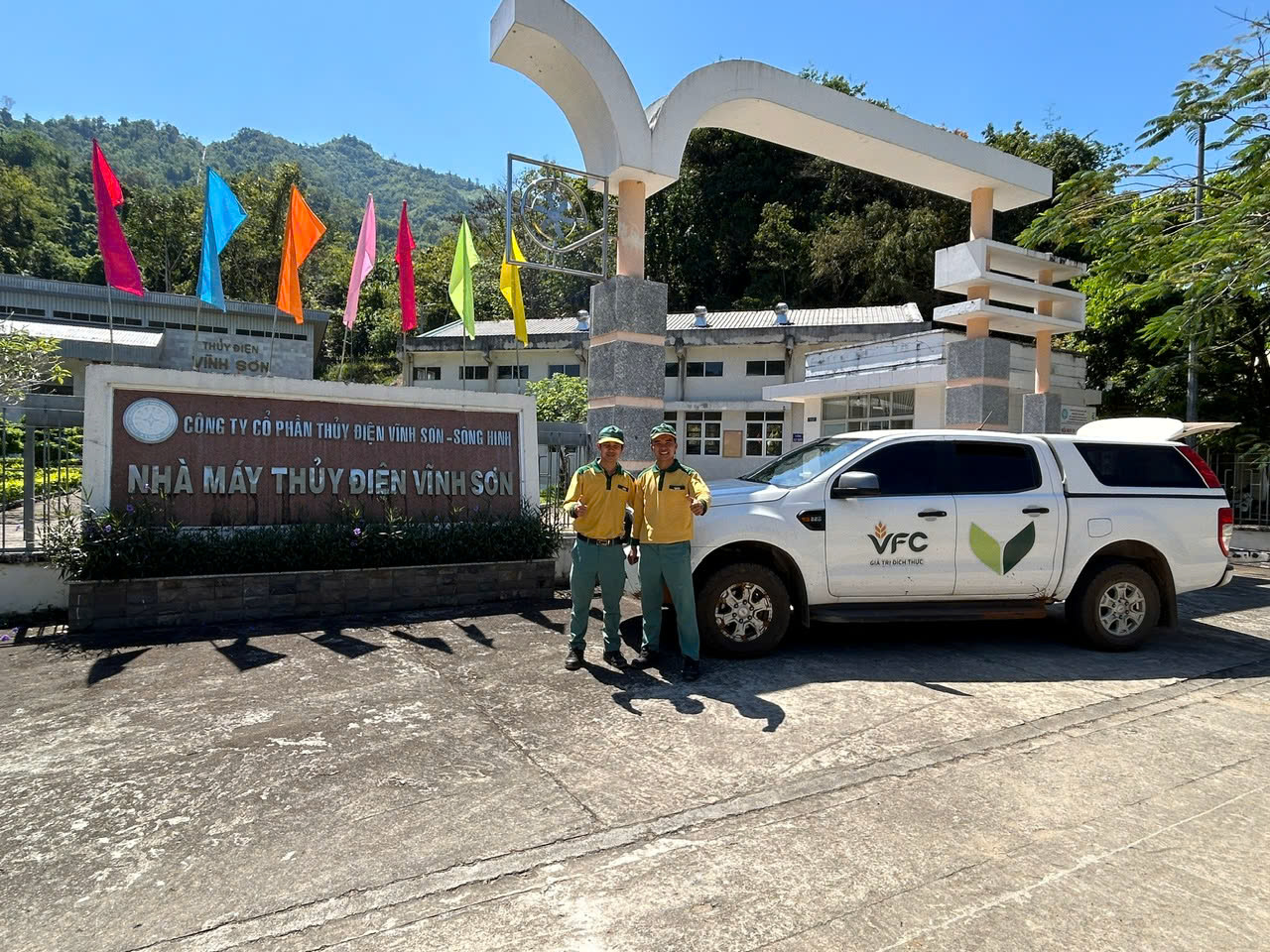
VFC PestMan is a pest control brand of Vietnam Fumigation Joint Stock Company (VFC), building on more than 50 years of experience in fumigation and pest control.VFC PestMan is a pest control brand of Vietnam Fumigation Joint Stock Company (VFC), building on more than 50 years of experience in fumigation and pest control.
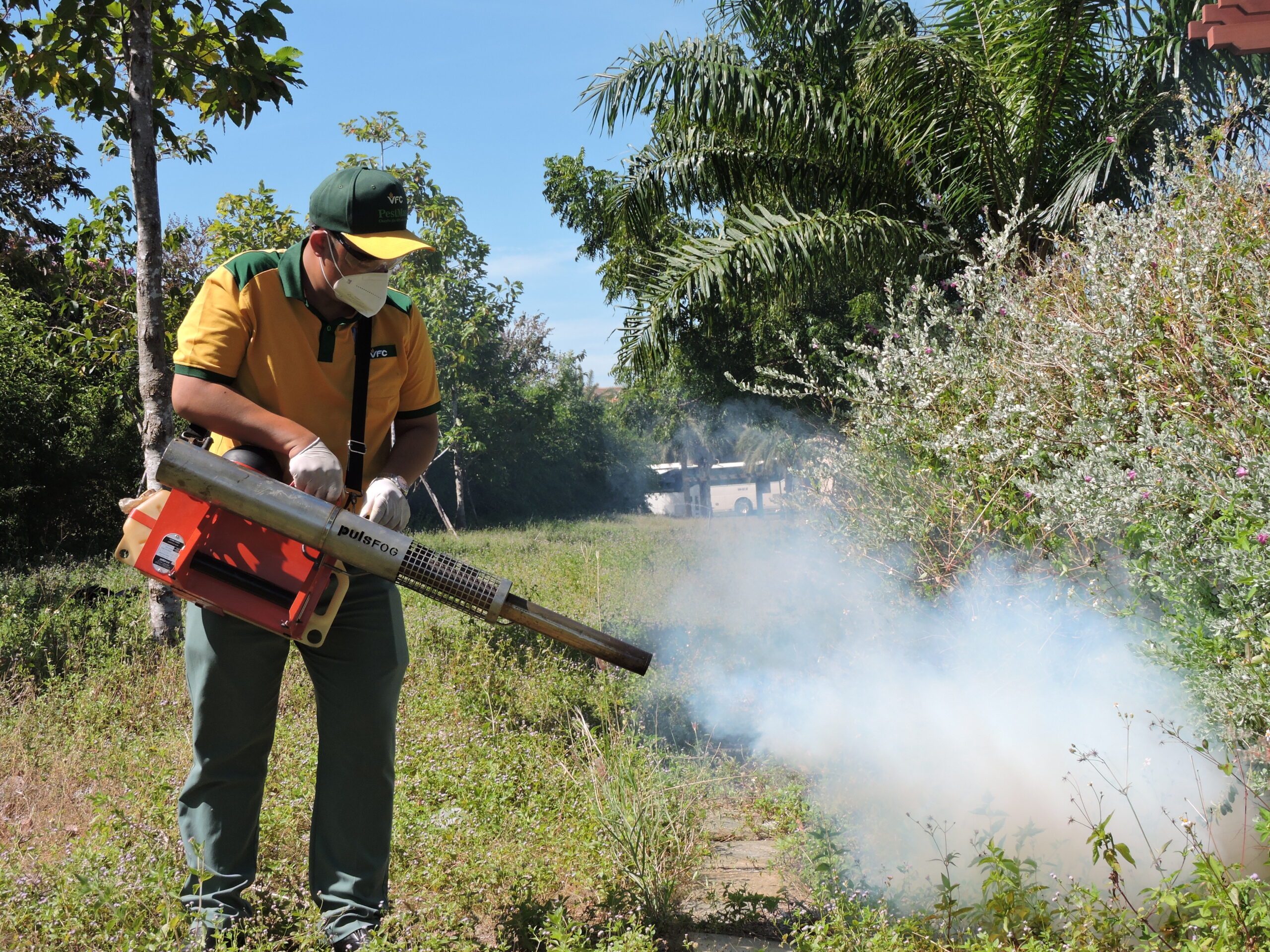
For business customers, VFC PestMan implements pest control programmes based on an IPM approach, combining site surveys, risk assessment, monitoring-system setup and periodic performance tracking.
Solutions are developed according to actual operating conditions. Depending on the characteristics of each facility, VFC PestMan evaluates target pests, risk levels and priority areas, then recommends an appropriate control approach.
Monitoring activities are supported by management data. The PestMan App and Dashboard support service-activity recording, inspection-result management and pest-trend monitoring, giving QA/QC and operations management teams additional information for evaluating programme effectiveness.
The coordination process focuses on safety and operational continuity. Treatment methods need to be developed according to facility characteristics, safety requirements and operating times agreed with the customer.
For businesses seeking a long-term partner, VFC PestMan’s insect and pest control services for businesses can be considered..
In addition, VFC PestMan provides professional pest control solutions ranging from insect, rodent and termite control to risk assessment and the development of IPM programmes suited to different operating environments.
An effective periodic pest control contract needs to clearly define service scope, implementation schedule, equipment-management responsibilities, incident-response times, reporting documentation, costs and performance-evaluation criteria. These clauses help businesses proactively manage service quality, reduce unexpected additional work and establish a clear coordination mechanism with the contractor.
For factories, warehouses, hotels and other facilities requiring continuous operations, agreeing on responsibilities from the contract stage also provides a foundation for maintaining a long-term pest control programme. VFC PestMan provides periodic pest control solutions for businesses, combining site surveys, IPM programmes and transparent monitoring data systems. Contact VFC PestMan for a site survey, solution consultation and a quotation for a periodic pest control service suited to your facility.
Hotline: (+84) 932669883
Email: contact@pestman.vn


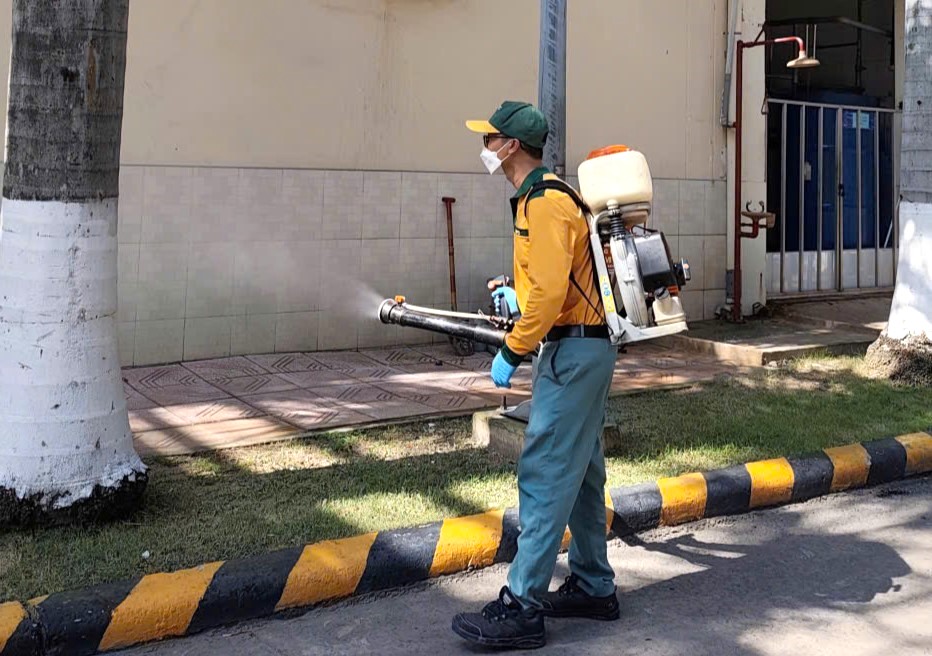
VFC PestMan – đơn vị cung cấp dịch vụ diệt muỗi nhà máy tại Hà Nội
Dịch vụ diệt muỗi nhà máy tại Hà Nội được VFC PestMan triển khai dựa…
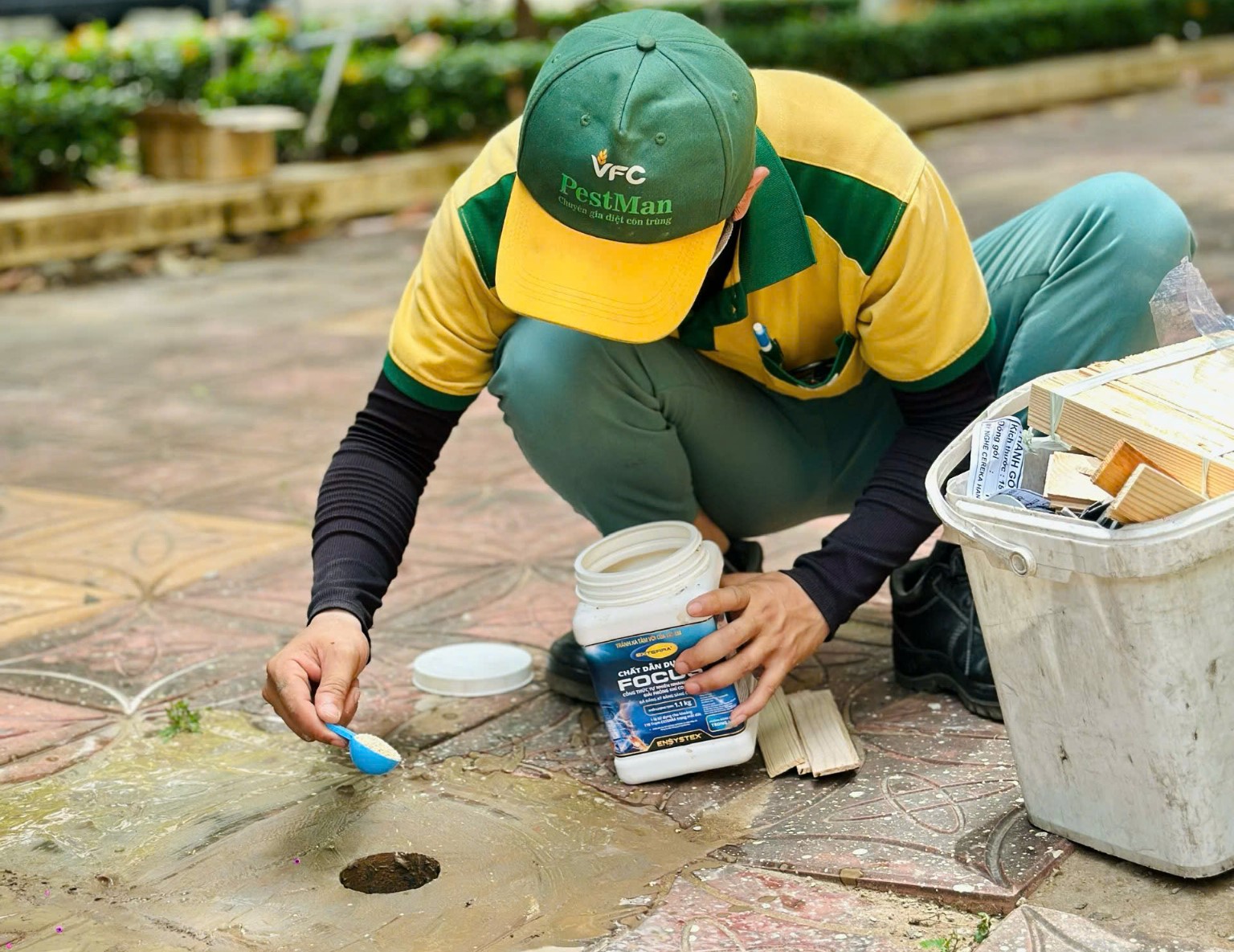
Dịch vụ diệt mối kho hàng, nhà máy hiệu quả, bảo vệ kết cấu công trình
Dịch vụ diệt mối kho hàng, nhà máy của VFC PestMan giúp doanh nghiệp phát…
Related news



Ready to eliminate audit risks and proactively protect customer experience & brand reputation?





Dear Valued Visitor,
To protect our clients' interests, all materials here are copyrighted and may not be reproduced without permission.
We appreciate your cooperation. Should you need to use our content professionally, please contact us directly.