







 PART
01
By VFC PestMan | 11-09-2026
Pest control in cold storage facilities: 5 blind spots businesses often overlook
Cold-storage warehouses play an important role in the supply chains of food, pharmaceuticals and many industries that require strict storage conditions. However, low temperatures only slow the biological activity of certain species, while rodents, cockroaches, flies, stored-product insects and other insect groups can still enter through goods, vehicles, warehouse doors, buffer areas and technical systems. Therefore, cold-storage pest control needs to be implemented according to actual operational flow, with clearly defined monitoring points and periodic monitoring data.
Article content
An appropriate programme helps businesses identify risk areas early, reduce the likelihood of pests reaching goods and support faster coordination among QA, HSE and warehouse operations. The five blind spots below are locations that businesses should include in regular monitoring plans.
1. Why do cold-storage warehouses still face pest risks?

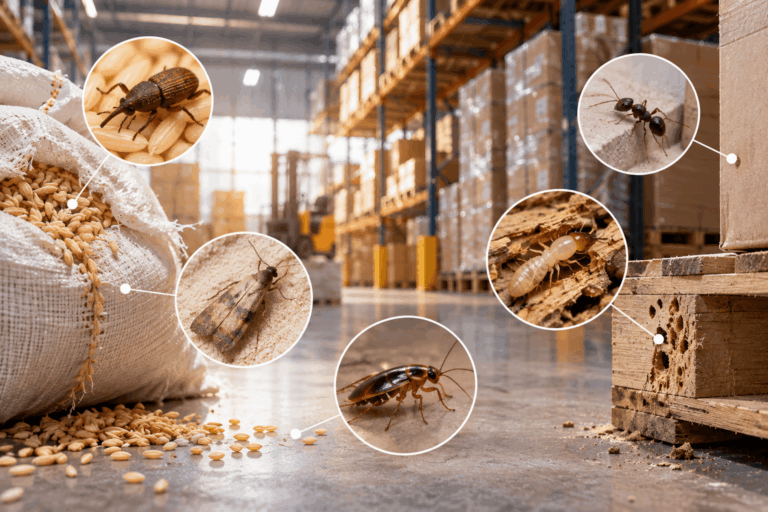
Low temperatures can slow the development cycle of many insect species, but pests can still enter warehouses through goods flow and daily operations. Pallets, cardboard boxes, raw materials, trucks, forklifts and packaging may carry insects, eggs, larvae or signs of rodents. For warehouses storing food, agricultural products or dry materials, businesses should also identify insect groups that may enter the warehouse system with raw materials, packaging and goods.
Transition areas such as loading docks, buffer storage areas, technical corridors and machinery rooms generally have higher temperatures than the main cold room. These are locations where rodents and insects may shelter, move or gain deeper access to storage areas.
Therefore, cold-storage pest control needs to cover the entire route from outside the building to receiving areas, transition zones and storage areas. This zoning approach helps businesses focus resources on locations with a higher likelihood of pest risk.
2. Blind spot 1: Warehouse doors and loading docks
Warehouse doors and loading docks are areas with frequent interaction between the outside environment and the cold-storage system. Each vehicle arriving for delivery or collection creates periods when doors remain open while increasing the movement of people, equipment, pallets and packaging through the area.
Flying insects may be attracted to lighting around doors and loading docks. Rodents may approach through areas beneath vehicles, dock edges, gaps beneath doors or junctions between the floor and warehouse structure. Small defects such as loose door seals, deteriorated dock seals or gaps beneath doors can all become entry routes.
What should be inspected around warehouse doors?
Businesses should periodically inspect the condition of door seals, dock shelters, dock levelers, gaps beneath doors and junction points. Door-opening and closing procedures also need to be clearly controlled to reduce the amount of time doors remain open during each receiving or dispatch operation.
Rodent and insect monitoring points should be appropriately positioned around this area. When data increase at a particular point, managers can immediately review door condition, vehicle flow and receiving and dispatch activities to identify the cause.
3. Blind spot 2: Pallets, cardboard boxes and incoming goods
Incoming goods are one of the most common routes through which pests enter warehouses. Wooden pallets with gaps, multi-layer cardboard boxes, paper packaging and shipments from multiple sources can provide harbourage for small insects, stored-product insects or insect eggs.
Risk increases with dry materials, granular products, agricultural products and goods stored for long periods. Early signs may include insects around bag edges, unusual material dust, small holes in packaging or signs on pallets.
How should goods receiving be controlled?
A cold-storage pest control process should include inspection of incoming goods before they enter the main storage area. Warehouse personnel need to inspect pallet condition, packaging, package surfaces and abnormal signs at the receiving area.
Shipments showing suspicious signs should be separated for closer inspection. This approach helps reduce the risk of bringing pests from outside deeper into the racking system.
4. Blind spot 3: Support areas and the external perimeter
Areas surrounding a cold-storage warehouse directly affect pest pressure on the facility. Waste areas, pallet-staging areas, machinery rooms, technical stations, drainage areas, vegetation and perimeter fences can all create conditions for rodents, flies, cockroaches or other pest groups to appear.
Rodents often move along walls, fences, pipes and areas with little disturbance. Insects may develop around organic matter, standing water or waste and then continue moving toward warehouse entrances.
A cold-storage pest control programme should include a monitoring layer at the perimeter. Businesses can position appropriate control points around boundary walls, staging areas, fences and high-risk routes to detect pest activity early.
Alongside monitoring, perimeter sanitation needs to be maintained regularly. Waste needs to be collected according to schedule, old pallets need to be neatly arranged, vegetation close to the building needs to be controlled and standing-water points should be addressed promptly.
5. Blind spot 4: Structural gaps, insulated panels and technical areas
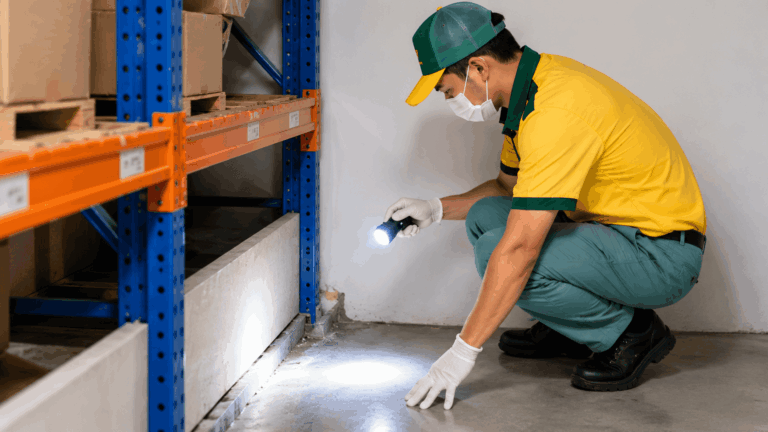
Cold-storage warehouses contain many structural details that are difficult to observe, such as panel joints, wall-floor junctions, spaces around pipes, cable trays, areas behind refrigeration units, rack bases and wall penetrations. These points need to be included in the periodic inspection schedule.
Rodents can use gaps for movement and shelter. Some locations around panels or pipes can also form concealed routes, causing signs to appear later than in open areas.
Cold-storage pest control at these points should focus on detecting and addressing entry routes. Gaps need to be sealed with appropriate materials, wall penetrations need to be properly finished and technical areas should have clearly defined inspection schedules.
This approach helps reduce the ability of rodents and insects to move through structural elements while also supporting the protection of insulated panels, cables and other important technical components.
6. Blind spot 5: Monitoring data are insufficient for early warning
Data help businesses identify which points are stable and which areas show an increasing risk trend. Increased activity at a rodent trap point, a higher-than-normal number of insects captured by an insect light trap, or repeated pest occurrence in one area are all signals that require investigation.
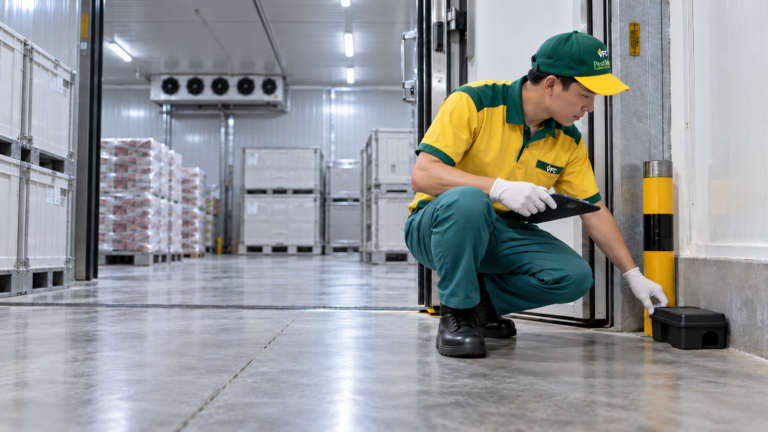
A cold-storage pest control programme should manage monitoring points using ID codes, location maps and inspection histories. Weekly or monthly data help managers track trends more clearly and take earlier action. When there are many control points, data can be digitised to monitor density trends, identify hotspots, retrieve the history of each point and track treatment status over time.
When a monitoring point shows a change, businesses can simultaneously review related factors such as changes in goods sources, vehicle traffic, door condition, sanitation conditions or nearby construction activity.
For food warehouses, pharmaceutical warehouses or facilities subject to audits, data also support traceability. Clear reporting on location, condition, treatment actions and follow-up results helps QA prepare documentation more easily for audits. For data to be genuinely useful during audits, QA needs to understand how to interpret pest density, occurrence trends, corrective actions and the relationship between reports and actual conditions in each area..
7. Cold-storage pest control using the IPM model

IPM - Integrated Pest Management - is an integrated pest-management model that is suitable for cold-storage warehouses because it combines multiple measures according to risk level. The objective is to reduce conditions that attract pests, limit entry routes, monitor early and select treatment methods appropriate for each area.
7.1. Prevent pest entry
Businesses need to inspect door gaps, wall bases, panel joints, pipes, cable trays and junctions with the outside environment. Any gaps identified need to be sealed with materials appropriate to the warehouse structure.
Loading areas should be inspected frequently because they are the main transition route. Door seals, dock shelters, dock levelers and areas around loading docks need to remain in stable condition throughout operations.
7.2. Control sanitation and environmental conditions
Spilled goods, damaged cardboard, old pallets and waste can all attract pests. Businesses need a clear sanitation schedule for areas beneath racks, buffer areas, loading docks, support areas and areas surrounding the warehouse.
Warehouses storing dry materials should pay additional attention to signs of stored-product insects in long-stored lots. Sanitation control helps reduce food sources and harbourage, thereby reducing pest pressure throughout the system.
7.3. Establish a monitoring system
The monitoring system may include mechanical traps, rodent control stations, glue traps, pheromone traps for stored-product insects and insect light traps in appropriate areas. For insect light traps, the fact that a device is still illuminated is not sufficient to conclude that the system is operating effectively; UV-A intensity, lamp condition, glue-board condition, installation location and competing light around warehouse doors also need to be checked.
Each device should have a clear identification code and inspection schedule. The data collected help businesses determine which areas are stable and which locations require additional inspection.
7.4. Manage data and monitor trends
Data consolidated by monitoring point, area and period provide a clearer picture of pest conditions. Trend charts, device maps and treatment history help responsible personnel assess risk levels over time.
For cold-storage pest control, data digitisation is particularly useful when warehouses are large or businesses operate multiple facilities. Managers can compare conditions across areas and identify locations that require priority inspection.
8. Which pests require attention in cold-storage warehouses?
Rodents
Rodents are a priority pest group because they move effectively, find shelter within structures and can damage packaging, cables or insulation materials. Loading areas, buffer storage areas, technical panels and external areas are points that require regular monitoring.
Stored-product beetles and other stored-product insects
These groups often travel with raw materials, packaging or pallets. Warehouses storing dry food, agricultural products, grain materials and packaged products need to inspect incoming goods carefully and monitor lots stored for long periods.
Flies and flying insects
Flies and flying insects often concentrate around doors, loading docks, waste areas and illuminated zones. Control activities need to combine sanitation, door management and monitoring devices positioned appropriately. Because sources differ among fly groups, businesses should correctly identify the species before deciding on monitoring locations and treatment methods.
Cockroaches
Cockroaches may occur in support areas, buffer storage areas, technical rooms and areas with higher humidity. Signs of activity need to be addressed early to reduce the risk of spread to other areas.
9. When should businesses review their pest control programme?
Businesses should review the programme when there are changes in goods flow, warehouse expansion, supplier changes, increased receiving and dispatch frequency or layout adjustments. These changes can create additional entry routes and alter the level of risk in each area.
A review is also needed when trap data increase continuously, rodent signs repeatedly appear, insect light traps record abnormal density or goods show signs of pest impact. Therefore, inspection frequency should not be fixed solely according to a monthly schedule but needs to be adjusted according to the risk level of each area, monitoring data, pest type, operational changes and occurrence history.
Before an audit, QA should review the device map, data history, status of corrective actions and points where abnormalities were previously recorded. This helps ensure greater consistency between the data and actual site conditions. For facilities applying FSSC 22000 or BRCGS, pest-control data also need to clearly demonstrate area-based risk assessment, traceability and how the business uses data to determine corrective actions.
10. Criteria for selecting a cold-storage pest control provider
The service provider needs to be capable of assessing the entire warehouse system, from the perimeter to loading docks, buffer storage areas, storage areas and technical areas. The proposed solution needs to clearly identify risk points, priority pest species and measures appropriate for each location.
Experience working in food, pharmaceutical and logistics-warehouse environments is also very important. Cold-storage pest control is directly related to hygiene requirements, product safety, operations and data traceability.
The reporting system needs to be clear enough for managers to use in actual operations. Control-point maps, images, data, trends and recommended actions help businesses track effectiveness across inspection cycles. In addition to on-site experience, businesses should evaluate a PCO based on its ability to implement IPM, level of data transparency, audit-support capability and responsiveness when abnormalities arise.
11. Frequently asked questions about cold-storage pest control
Do sub-zero cold-storage warehouses require periodic pest control?
Yes. Pests can enter with pallets, cardboard boxes, raw materials, vehicles and receiving and dispatch activities. Areas such as loading docks, buffer storage areas and technical rooms can also provide shelter for rodents and insects.
Which pests are commonly found in cold-storage warehouses?
Commonly monitored groups include rodents, stored-product beetles and other stored-product insects, flies, cockroaches and some flying insects. The specific species depend on the type of goods, sanitation conditions, warehouse design and surrounding environment.
Which locations should be prioritised for monitoring?
Priority areas include warehouse doors, loading docks, buffer storage areas, pallet-receiving areas, waste collection points, wall bases, panel joints, technical pipes, machinery rooms and the external perimeter.
Does cold-storage pest control require chemicals?
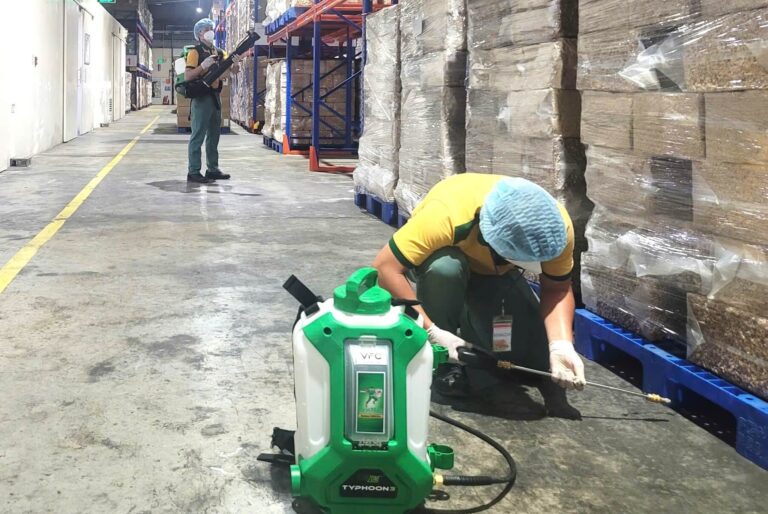
Methods need to be selected based on the area, type of goods, level of risk and the business’s safety requirements. IPM prioritises prevention, sanitation, entry prevention and monitoring. Chemicals are used at appropriate locations, in accordance with the product label and an evaluated technical plan.
How do pest-control data support audits?
Data help businesses demonstrate monitoring and treatment over time. Device maps, inspection logs, images, density trends and corrective actions provide a basis for QA to retrieve information when requested by an auditor.
12. Cold-storage pest control needs to focus on five critical blind spots
The effectiveness of cold-storage pest control depends greatly on accurately identifying where pests can enter, shelter and move. Warehouse doors, incoming goods, perimeter areas, technical structures and monitoring data are five areas that need to be included in the regular management programme.
The IPM model helps businesses connect site assessment, pest-entry prevention, sanitation, monitoring devices and monitoring data into a unified system. This allows operations and QA teams to identify risks earlier, address the correct areas and maintain clear records for quality management.
If a business needs to reassess its cold-storage pest control programme, review entry points or develop a monitoring system suitable for food, pharmaceutical and logistics warehouses, VFC PestMan can support on-site assessment and recommend solutions based on actual operating conditions.
Hotline: (+84) 932669883
Email: contact@pestman.vn
PART
01
 PART
02
Mistakes that cause insects to recur in warehouses
 PART
03
Pest control in food warehouses: Risks, procedures, and IPM solutions
 PART
04
Comprehensive insect control strategy for food logistics warehouses and F&B supply chain
 PART
05
Pest control in cold storage facilities: 5 blind spots businesses often overlook

Ready to eliminate audit risks and proactively protect customer experience & brand reputation?





Dear Valued Visitor,
To protect our clients' interests, all materials here are copyrighted and may not be reproduced without permission.
We appreciate your cooperation. Should you need to use our content professionally, please contact us directly.