





By hoangnga | 30-06-2026
Insects in warehouses can affect cargo quality, operational efficiency, and business reputation. Although many warehouses have implemented periodic cleaning and control, insect recurrence still occurs in many units. The causes usually stem from unrecognized points during warehouse management and operation.
1. Only treating when insects are detected
Many businesses only deploy treatment after staff detect flies, cockroaches, ants, or other insects in the warehouse. At this time, insects have usually existed for a while and may have moved to many different areas. Treatment helps reduce insect density at that moment but has not yet eliminated the factors that cause them to continue appearing.
During operation, insects can invade along with goods, pallets, transport vehicles, or from the outside environment. If entry points and developmental conditions still exist, insects will continue to return after each treatment. Proactively monitoring and periodically assessing risks helps businesses detect problems early before they affect goods.
2. Not yet controlling input goods and packaging well
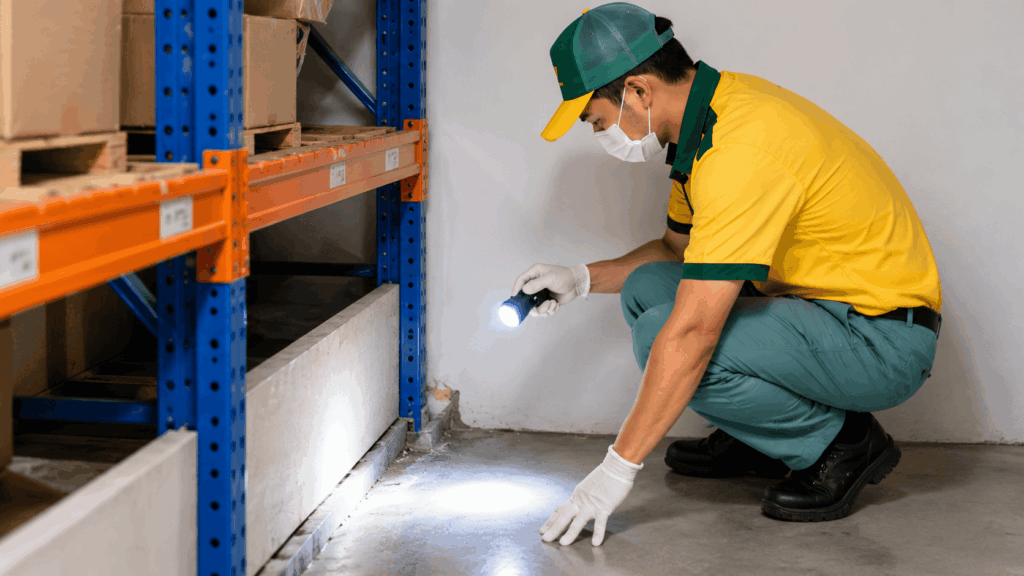
Goods entering the warehouse are one of the common pathways bringing insects inside the warehouse. Vegetables, fruits, dry raw materials, wooden pallets, carton boxes, or transport packaging can all carry insects or insect eggs that are very difficult to identify with the naked eye.
The cargo receiving area therefore needs to be inspected right from when the transport vehicle arrives at the warehouse. Businesses should build inspection procedures for pallets, packaging, and cargo status before entering the warehouse to reduce the risk of insects spreading to the storage area and delivery area.
3. Missing areas that are rarely inspected
Many inspection programs only focus on main aisles or cargo storage areas, while positions such as hidden corners behind shelves, wall bases, technical rooms, waste collection areas, manholes, or loading/unloading doors are rarely reviewed. These are places where insects easily shelter and develop before spreading to other areas.
Comprehensive inspection by area helps businesses early detect abnormal signs and have timely treatment measures. At the same time, inspection results are also the basis to evaluate insect occurrence trends and adjust the management program appropriately.
4. Warehouse conditions creating a favorable environment for insects
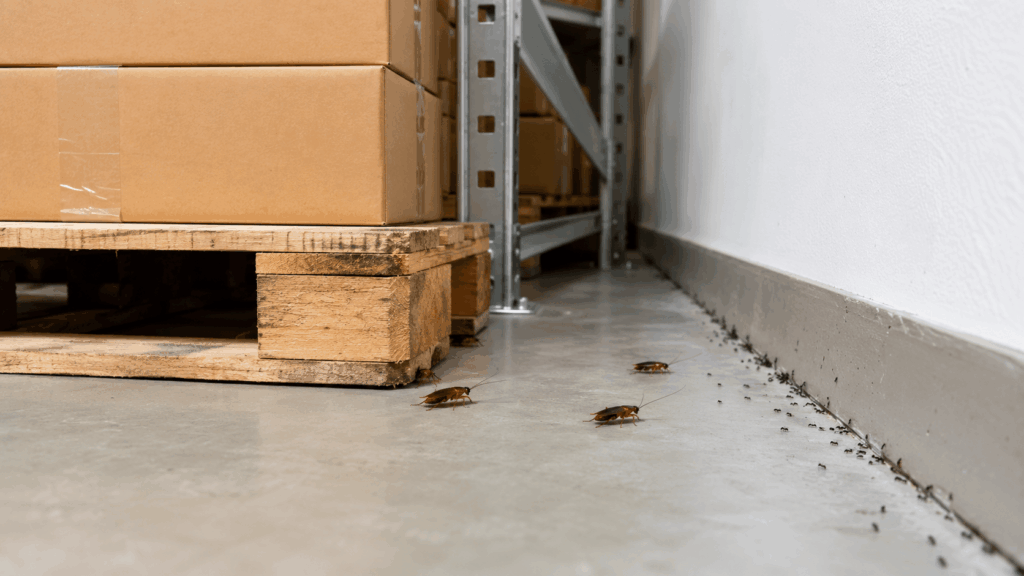
High humidity, stagnant water, goods stored for too long, damaged packaging, or spilled raw materials all increase the risk of insect occurrence. These are factors that often appear during the operational process if the business does not yet have appropriate management and cleaning procedures.
Maintaining a dry warehouse, arranging goods scientifically, quickly handling damaged goods, and controlling storage time will contribute to reducing the living conditions of insects. Small changes in the management process can bring significant efficiency in limiting the risk of recurrence.
Read more: Comprehensive insect control strategy for food logistics warehouses and f&b supply chains
5. Lacking a periodic monitoring program
Periodic monitoring helps businesses track the appearance of insects by area and by time. When there is continuous data, businesses will easily recognize which areas have a high risk, when to increase inspection, and which measures are bringing efficiency.

A monitoring program usually includes tracking devices, location maps, inspection schedules, and periodic reports. This is an important information source helping businesses make data-based decisions instead of just relying on actual observation.
6. Depending too much on chemicals
Chemicals are a part of the insect control program, however, long-term efficiency still depends on many other factors such as infrastructure, hygiene, the goods receiving process, and monitoring work. If the root causes of occurrence still exist, insects can continue to appear even though treatment has been deployed many times.
Businesses need to build an overall solution suitable for the characteristics of each warehouse. The combination of infrastructure management, hygiene, monitoring, and right-time treatment will help improve control efficiency and reduce the frequency of insect recurrence.
7. IPM helps businesses control insects more sustainably
Integrated pest management (IPM) is a method that helps businesses control insects based on risk assessment and monitoring data. The program includes status survey, identifying entry points, tracking insect density, analyzing trends, and deploying corrective measures suitable for each area in the warehouse.
When applying IPM, businesses can proactively control conditions that increase the risk of insect occurrence instead of just focusing on treatment when incidents occur. This is also the approach chosen by many logistics warehouses and food warehouses to maintain a stable storage environment and meet safety and quality requirements.

Insect recurrence in warehouses is often related to many factors in the operational process such as input goods, storage conditions, rarely inspected areas, and inadequate monitoring programs. When businesses correctly identify these causes and deploy appropriate preventive measures, the risk of insect occurrence will be significantly reduced.
Building an ipm program helps insect control activities become more proactive and systematic. This is the foundation for businesses to protect goods, maintain warehouse quality, and improve operational efficiency in the long term.
Learn more: Pest control methods for factories, hospital, and schools


Mistakes that cause insects to recur in warehouses
Insects in warehouses can affect the quality of goods, efficiency, ...
Effective fly control in factories: Identifying the right species for root-cause treatment
In manufacturing environments, especially in food and beverage factories…
Related news

Ready to eliminate audit risks and proactively protect customer experience & brand reputation?





Dear Valued Visitor,
To protect our clients' interests, all materials here are copyrighted and may not be reproduced without permission.
We appreciate your cooperation. Should you need to use our content professionally, please contact us directly.