





By pestman | 28-01-2026
A tiny fly repeatedly appearing around floor drains, dishwashing areas, or restrooms may not be a fruit fly as many people assume. In many cases, it is actually the Phorid Fly (Humpbacked Fly)— one of the key indicator pests that suggests the presence of decomposing organic matter or sanitation issues that have not been fully addressed.
1. What are phorid flies and how to identify them?
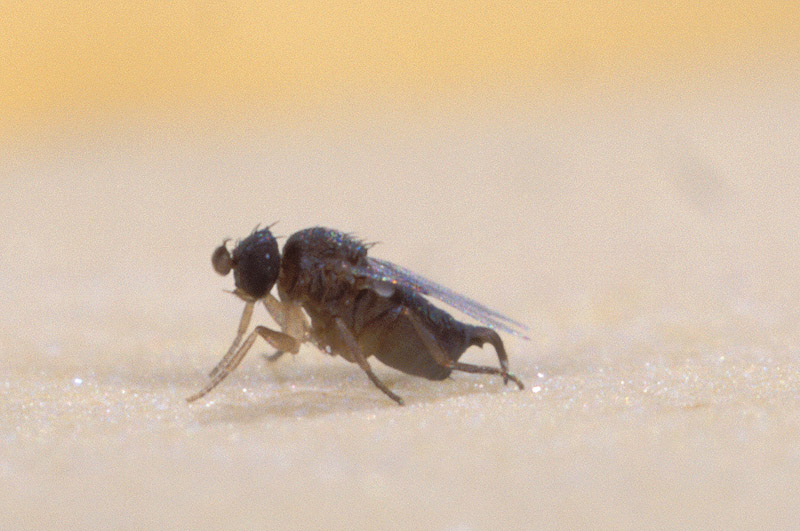
Phorid flies are insects belonging to the Phoridae family, distinguished by a thorax developed higher than the head and abdomen, creating a humpbacked appearance when observed with the naked eye.
Phorid flies are widely distributed worldwide and recorded in various environments such as: Residential housings, restaurants, hotels, food processing plants, logistics warehouses, hospitals, and waste treatment areas. It is this high adaptability that makes this insect an important target in pest monitoring and integrated pest management (IPM) programs.
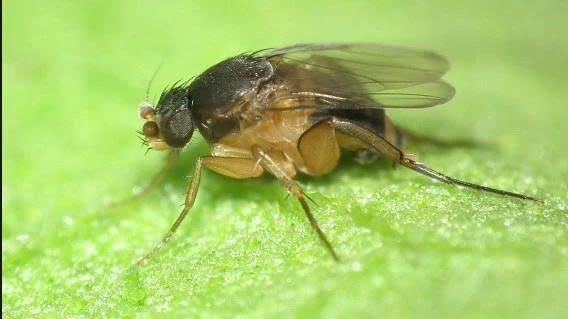
What are phorid flies and identification signs?
Identification signs
Appearance:The body is typically brown, black, or dull yellow in color. Its most distinctive feature is the strongly arched thorax, which forms a noticeable humpbacked profile.
Movement behavior:When disturbed or approached, phorid flies tend to run rapidly across surfaces (such as countertops or tables) or make short hopping movements before taking flight. This behavior distinguishes them from fruit flies, which typically fly away immediately when disturbed.
Flight pattern:They typically fly in small groups, hovering close to walls, surfaces, or other structures, and often dart quickly across a person's field of vision rather than circling freely in open air.
Preferred habitat:Unlike house flies, phorid flies are primarily attracted to decaying organic matter, wastewater, leaking drains or pipes, garbage containers, and decomposing food sources.
2. Where do phorid flies usually appear?
In sanitation areas and restrooms
- Technical shafts and floor drains: This is where hair, soap scum, and dead skin accumulate to form a moist organic biofilm.
- Toilet bases and sinks: Crevices with dirty underground water leaks or peeled silicone sealant around sinks that trap stagnant water for a long time.
In kitchen areas
- Kitchen sink drains: Where grease and tiny organic food particles accumulate over time.
- Waste storage areas: Trash can bottoms that are not regularly scrubbed, and gaps where garbage leachate leaks out.
- Under refrigerators or dishwashers: Where dirty condensate drain pans are located or in damp, humid spots.
Outdoor and garden areas
- Potted plants: Waterlogged soil, organic fertilizers that are not thoroughly decomposed, or decaying fallen leaves on the pot surface.
- Composting or animal carcass areas: Green organic waste piles, decomposing insect and small animal carcasses.
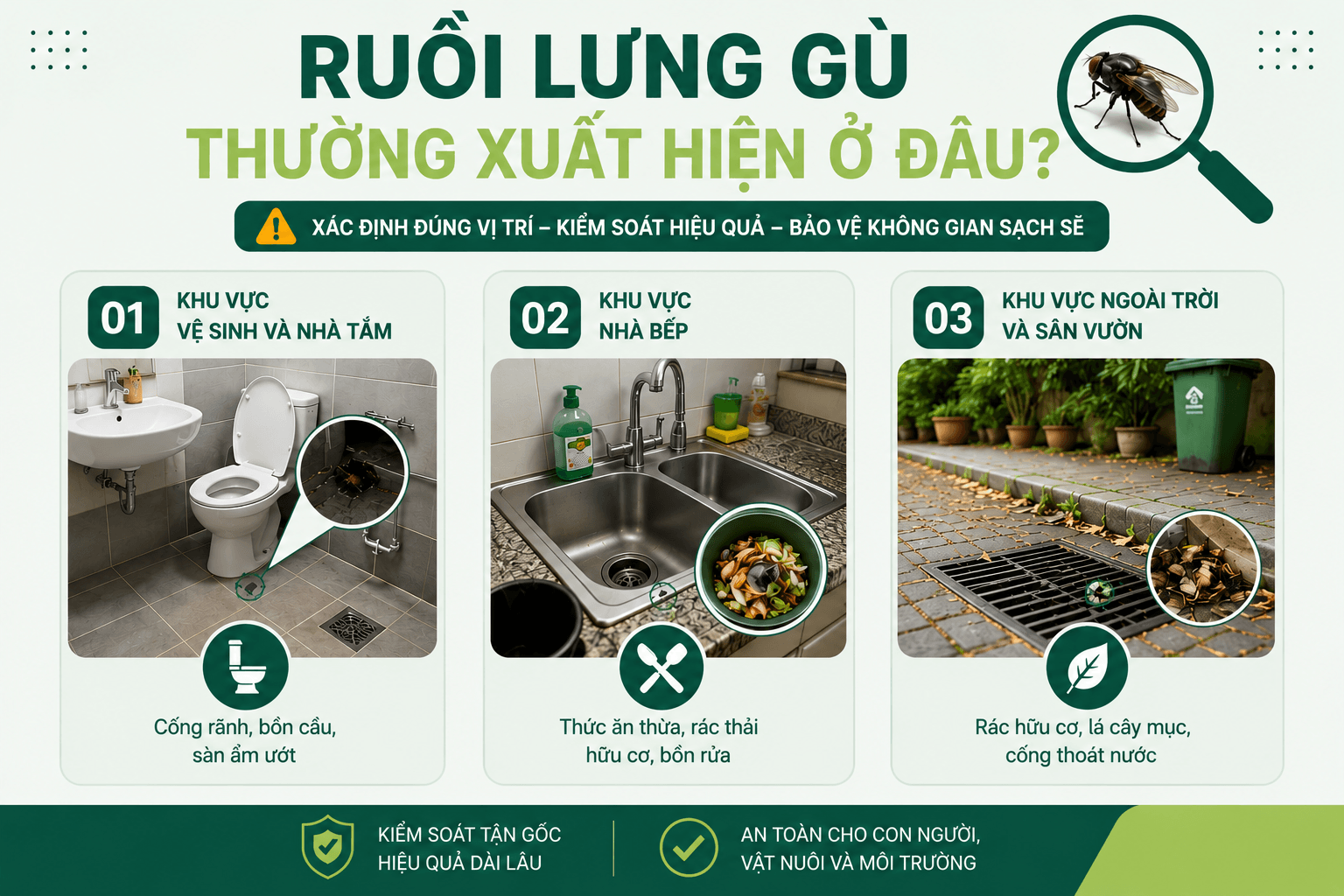
Areas where humpback flies frequently appear
3. Do phorid flies cause harm to human health and production lines?
Despite their small size and often being mistaken for harmless fruit flies, they possess extremely filthy living habits (in drains, dumps, animal carcasses, or contaminated decomposing soil). This turns them into disease vectors and formidable production pests.
3.1. Harms to human health
- Transmission of Harmful Bacteria: Because they frequently feed and lay eggs in contaminated environments, phorid flies can carry disease-causing microorganisms such as Salmonella, E. coli, and other pathogens associated with food poisoning, dysentery, and typhoid fever. These flies mechanically transfer bacteria when they come into contact with people or land on food and food-contact surfaces.
- Causes myiasis (Parasitic maggot infestation): This represents one of the most serious medical risks associated with phorid flies. Unlike common house flies, the larvae of certain phorid fly species can invade, develop within, and feed on living or dead tissue in open wounds, ulcers, or natural body cavities (such as the eyes, nose, and gastrointestinal tract) of both humans and animals. This condition can be particularly dangerous in healthcare facilities and nursing homes, especially for immobile or vulnerable patients.
3.2. Harms to production lines
This fly species is a "nightmare" for food processing, pharmaceutical, beverage plants, and cleanroom industries for the following reasons:
- Contamination of contact surfaces and products: Due to their small body size, they easily slip through gaps in machinery, filters, or standard insect screens. They land on products under processing, packaging, or surfaces in direct contact with food, spreading bacteria and causing cross-contamination.
- Regulatory and audit risks: The presence of phorid flies or their larvae in food production areas is considered an extremely serious food safety violation. Businesses can be heavily fined by regulatory inspectors, suspended from operation, or forced to destroy the entire batch of goods.
- Difficulties in isolation and eradication: Phorid flies are capable of laying eggs and developing in large numbers right under concrete floors if there are broken underground wastewater pipes. They crawl through small cracks to flood into production lines, making conventional surface insecticide spraying completely ineffective.
- Impact on the mushroom and agriculture industry: In edible or medicinal mushroom production lines, phorid flies are devastating pests because their larvae feed directly on mycelium and damage mushroom spawn, causing severe yield reduction.
4. How to control phorid flies effectively?
4.1. Locating and pinpointing the exact breeding source
Phorid flies usually lay eggs in places you cannot see. Use the following tip to find the source:
The tape trap tip: In the evening, dry the floor drains, sinks, or floor cracks. Use clear tape to completely cover the drain opening (sticky side facing down), poking a few tiny holes for air circulation.
Check results: the next morning, if flies are stuck to the underside of the tape, that is exactly the pipe or crack with the larval breeding source underneath.
4.2. Destroying the biofilm in pipes
Spraying conventional insecticides down the drain is ineffective because the organic slime layer protects fly eggs and larvae.
- Using specialized cleaning chemicals: Use foaming drain cleaners or drain opening solutions to clean hair, grease, and debris build-up on pipe walls.
- Using microbial products (recommended): Pour grease and organic-eating microbes (such as EcoClean, Bio-Drain) down the drain periodically. Microorganisms will consume the biofilm – the sole food source of fly larvae, causing them to die off naturally.
- Mechanical cleaning: Use a long-handled brush to vigorously scrub the inside of the drainpipe walls to break down the organic build-up.
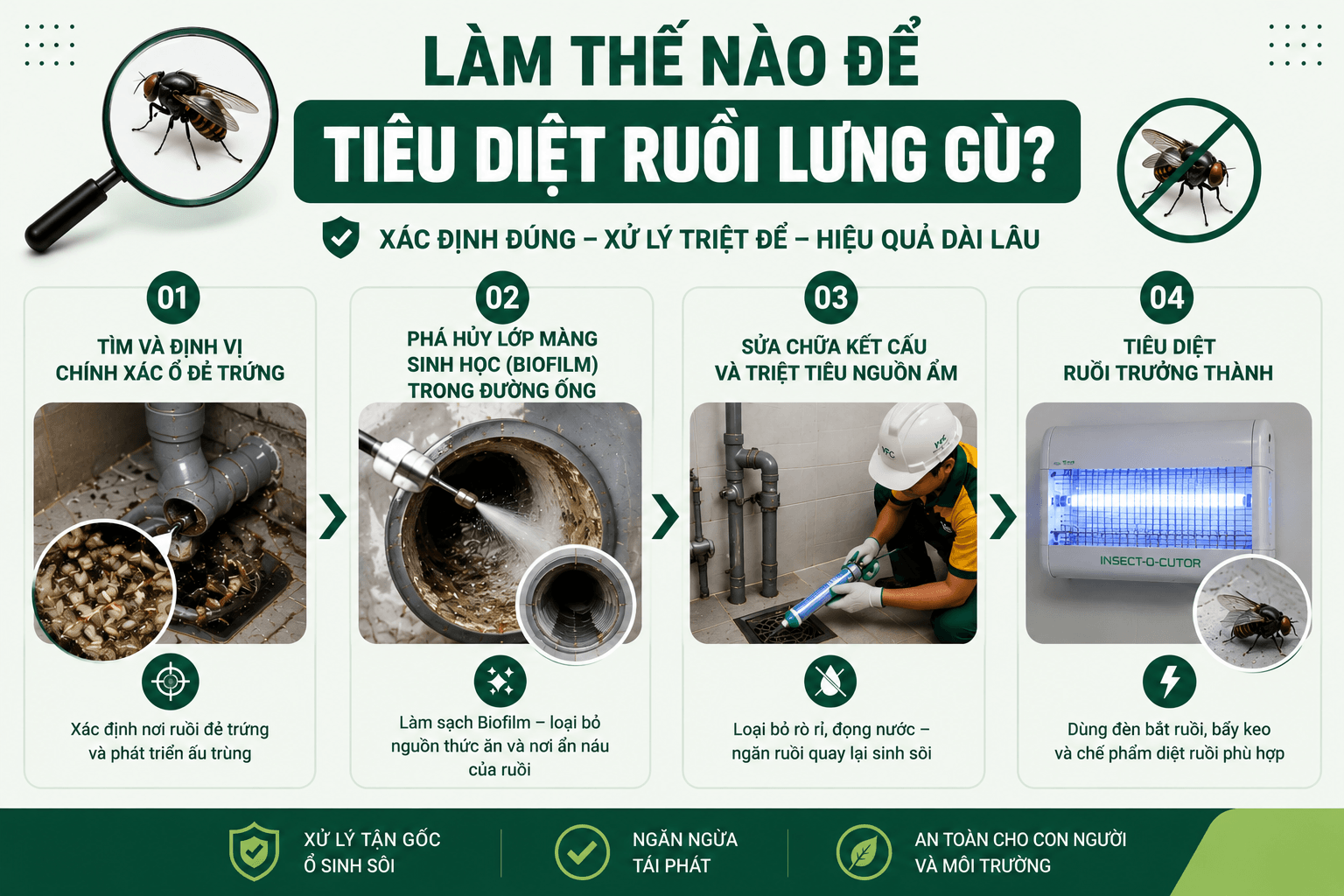
How to get rid of flies effectively?
4.3. Structural repair and moisture elimination
- Sealing cracks: Use silicone sealant or cement to seal all cracks on floors, toilet bases, and around sinks to prevent flies from emerging from underground or broken pipes.
- Handling leakage incidents: Repair broken underground pipes immediately. If you suspect a broken waste pipe beneath the concrete floor (when flies continuously emerge from tile gaps even though the drain is clean), it is mandatory to break the floor to patch the pipe.
- Replacing floor drains: Use odor-proof and insect-proof floor drains (types with water traps or mechanical flip covers).
4.4. Eradicating adult flies
- UV light traps (for factories/kitchens): Install glueboard insect light traps. Do not use electric grid traps (zappers) because when flies explode, they will scatter contaminated body fragments into the air/food.
- Homemade apple cider vinegar trap (for households): Pour apple cider vinegar and a few drops of dishwashing liquid into a cup, cover it with plastic wrap, and poke small holes. Flies entering will sink and die.
- Residual spraying: Spray insecticides with high residual effects (such as those containing active ingredients permethrin or deltamethrin) onto wall surfaces and hidden corners where flies usually rest.
5. VFC PestMan – professional pest control solutions
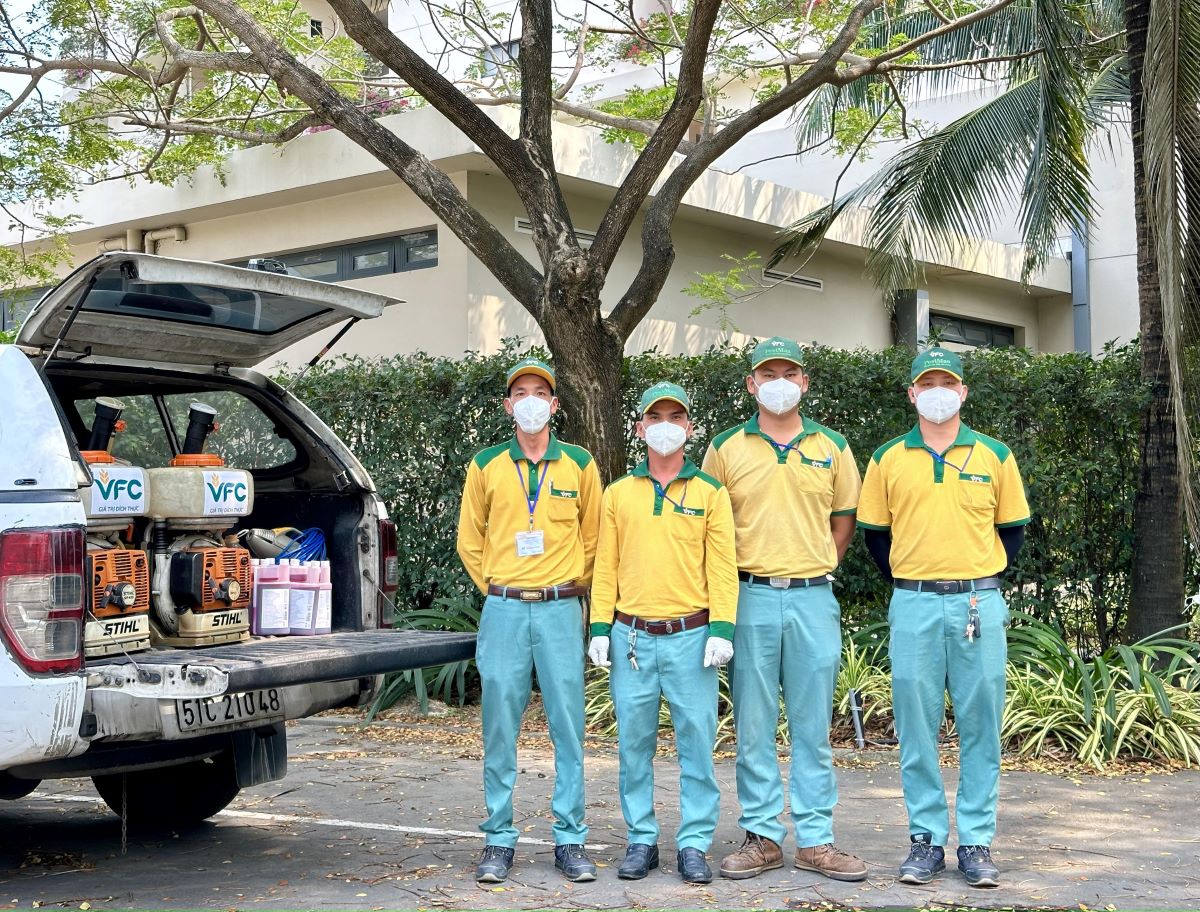
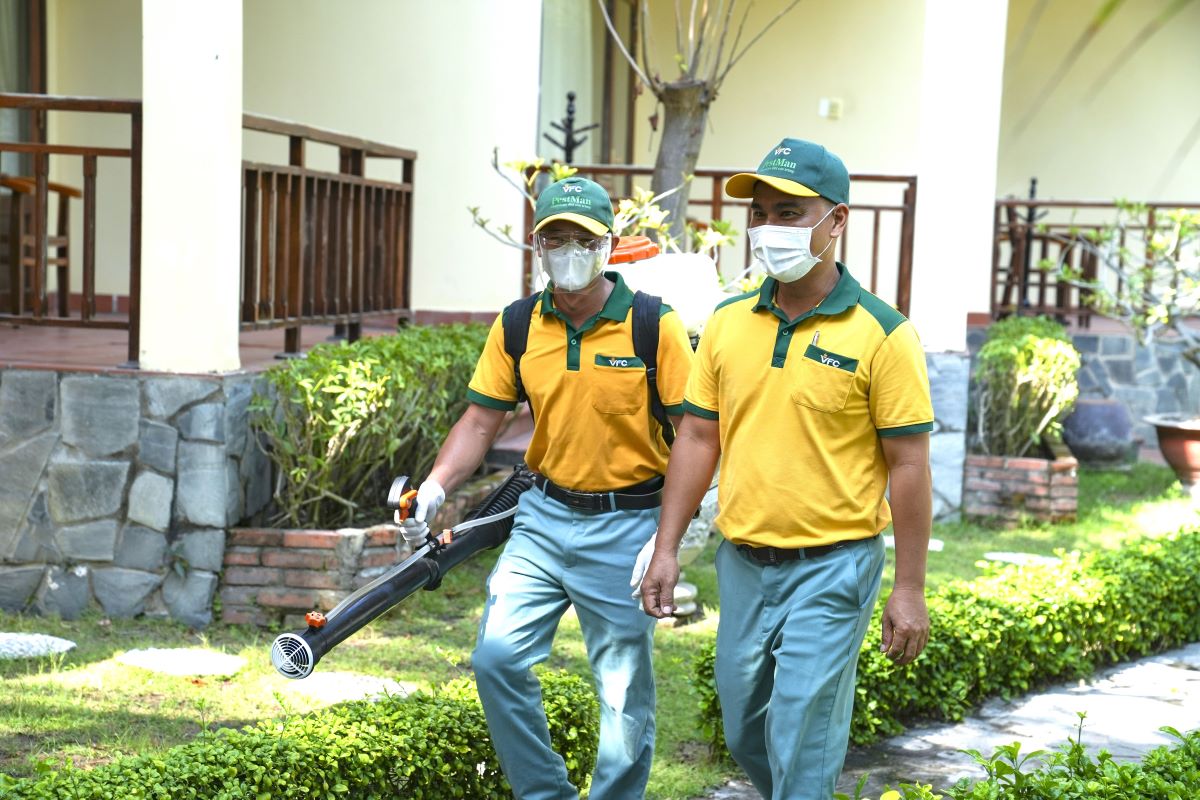
VFC PestMan is a leading prestigious brand in Vietnam specializing in providing international standard insect and pest control solutions. Not simply eradicating pests, VFC PestMan acts as a strategic partner helping factories, hotels, and facilities protect their brand reputation and fully meet strict audit standards such as AIB, BRC, or HACCP.
Applying a modern digital technology platform, VFC's online data management system continuously updates trap layouts and insect trend charts in real time. As a result, the management board can proactively demonstrate compliance to auditors at any time without prior preparation. In particular, VFC PestMan's experts spend most of the survey time providing technical recommendations on sealing gaps and controlling moisture, helping businesses proactively prevent pest intrusion risks right from the perimeter.
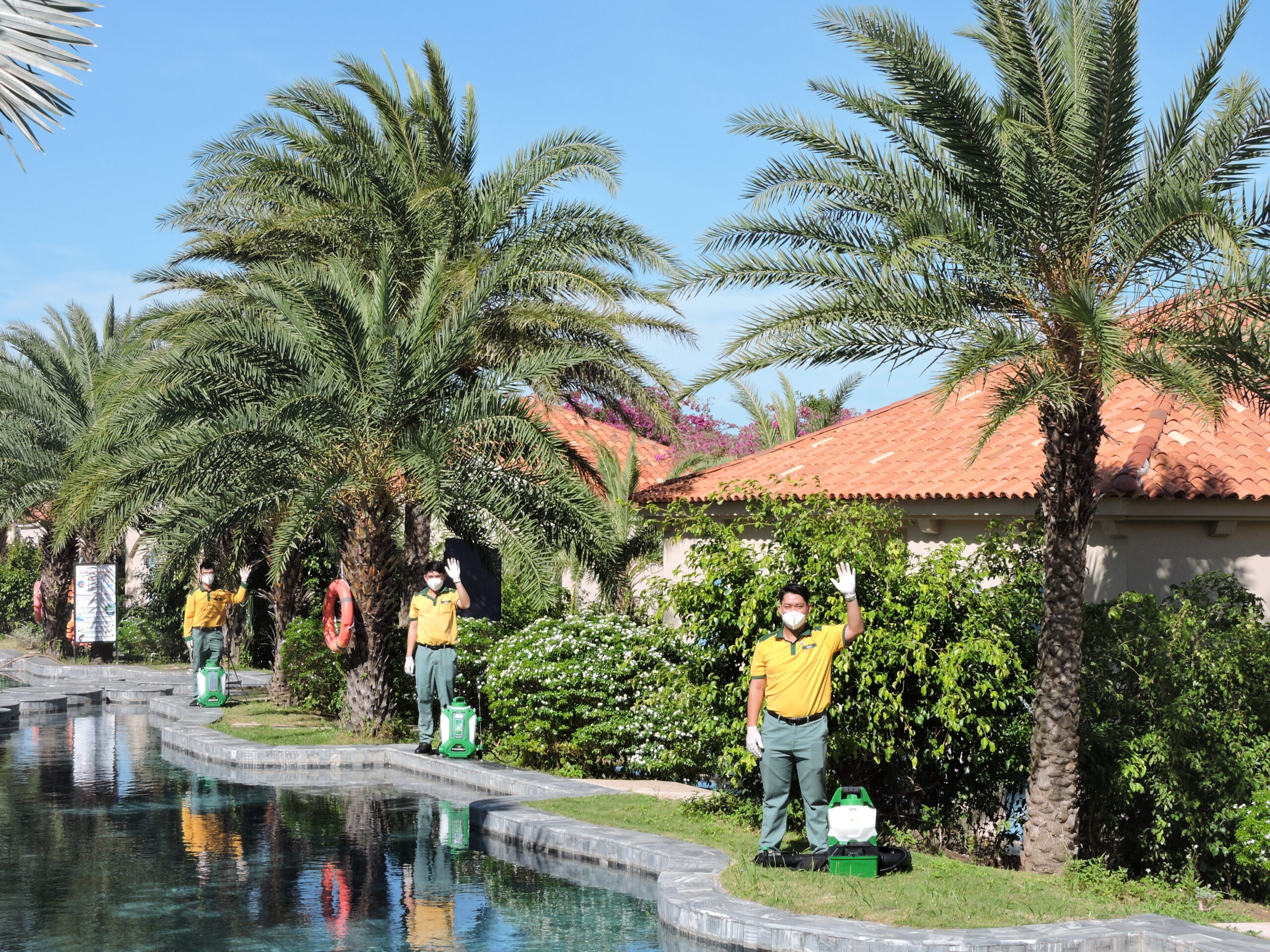
VFC PestMan – Professional pest control solutions
>>> See more: Pestman automated Dashboard: A pest control data management solution for factories & resorts


Mistakes that cause insects to recur in warehouses
Insects in warehouses can affect the quality of goods, efficiency, ...
Effective fly control in factories: Identifying the right species for root-cause treatment
In manufacturing environments, especially in food and beverage factories…
Related news

Ready to eliminate audit risks and proactively protect customer experience & brand reputation?





Dear Valued Visitor,
To protect our clients' interests, all materials here are copyrighted and may not be reproduced without permission.
We appreciate your cooperation. Should you need to use our content professionally, please contact us directly.