





By pestman | 28-01-2026
Bullet ants (Paraponera clavata) – sometimes referred to as the 24-hour ant or the conga ant – measure just over one inch in length (nearly 3 cm), yet their sting can cause excruciating pain. People unfortunate enough to be stung by these tiny rainforest creatures often describe the pain as unlike anything else on Earth.
However, despite the intense pain this tiny ant can inflict, its venom may offer certain medical benefits. Moreover, an indigenous Brazilian tribe from the Amazonas region traditionally uses the venom of these ants in an important initiation ritual for new warriors.
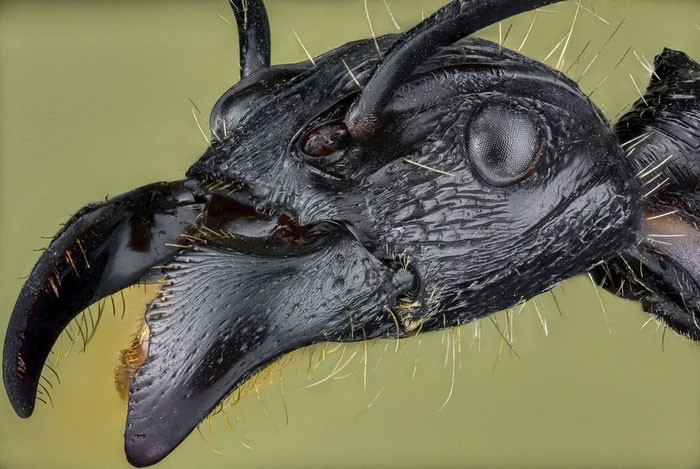
Paraponera clavata originates from the tropical rainforests of Central and South America.
>> Read more: Big-headed ants – Identification, prevention, and effective control methods
Why is the sting of the bullet ant considered a rainforest nightmare?
According to ThoughtCo, a fully grown bullet ant measures only about 1.2 inches in length. Like many other insects, it survives by feeding on nectar and small arthropods. This ant species also has a very short lifespan, typically surviving no longer than 90 days.
Although bullet ants may not appear particularly terrifying at first glance, there is a reason they are often called “tiny monsters.” Anyone who has experienced their sting describes the pain as something unlike anything they have ever felt before.
According to Culture Trip, entomologist Dr. Justin Schmidt once described the sting of the bullet ant as “pure, intense pain — like walking barefoot across burning charcoal with a long nail driven into your heel.”
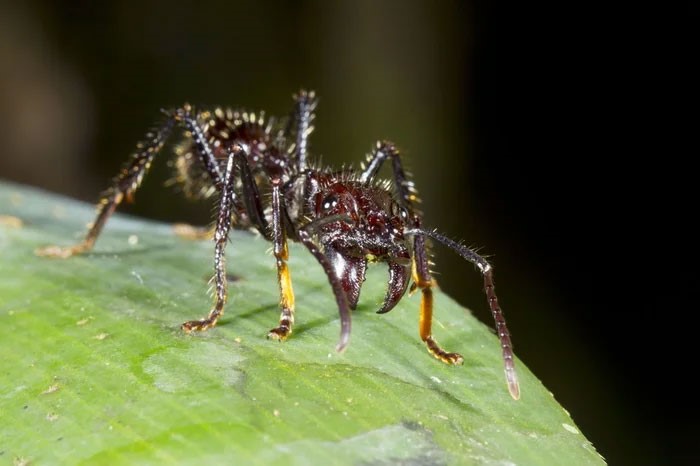
The pain caused by this ant’s sting is extremely intense
In fact, the pain from a bullet ant sting is so severe that it exceeds the highest rating of 4 on the insect sting pain index developed by entomologist Justin Schmidt. For comparison, a honeybee sting scores only a 2 on the same scale.
Fortunately, there have been no reported deaths caused by bullet ant venom. Moreover, the pain from their sting usually fades naturally within 24 hours — which is why Venezuelans nicknamed them the “24-hour ants” — and these insects generally become aggressive only when provoked.
Medical significance
It is not uncommon for venoms to be used in various medical treatments, and bullet ant venom is no exception.
In a 2001 scientific article published in Protein Spotlight, Vivienne Baillie Gerritsen noted that bullet ant venom had been used for centuries by indigenous Amazonian communities to treat rheumatism.
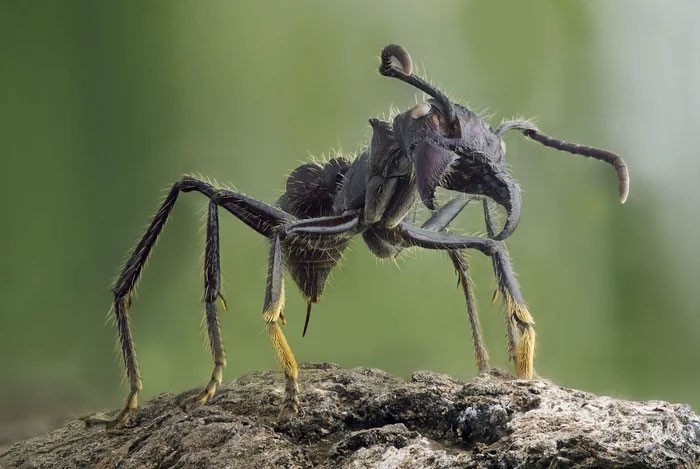
Bullet ant venom is used to treat rheumatism
In 1968, a German man named Gunter Holzmann, who was living and working in the Bolivian Amazon region, discovered this indigenous treatment method to relieve his arthritis pain. In fact, ant venom has historically been used in Eastern medicine practices because of its anti-inflammatory properties.
In addition, venom from various ant species has been used in India to improve eyesight, in Morocco to reduce fatigue, and in Australia to treat headaches.
Later, several cultures used bullet ant stings as part of coming-of-age ceremonies.
The brutal ritual of the Sateré-Mawé warriors
The Sateré-Mawé, an indigenous Amazonian group living in present-day Brazil, are known not only for cultivating guaraná — a plant used to produce soft drinks and energy beverages — but also for using bullet ant venom in initiation rituals for boys coming of age.
According to Smithsonian, tribe members first soak the bullet ants in a natural sedative, causing them to become unconscious. The ants are then woven into gloves made from leaves.
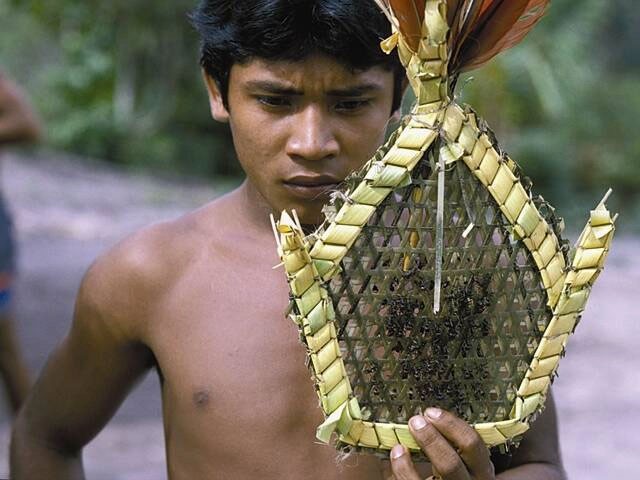
Sateré-Mawé warriors use bullet ant venom in coming-of-age rituals for young men in the tribe
The tribe’s 12-year-old boys must wear these gloves during their coming-of-age ceremony. Once the ants awaken, they become aggressive and repeatedly sting the boys’ hands for the next ten minutes.
Muscle spasms, disorientation, and even hallucinations may occur afterward in these children. However, young Sateré-Mawé warriors do not endure this painful ritual only once. They must go through it 20 times before being considered adults.
According to the tribal chief, the purpose of the ritual is to show the boys that no one can grow into adulthood “without enduring hardship or making any effort.”
However, unless you are a member of the Sateré-Mawé tribe, experts strongly advise staying away from bullet ants at all costs. If you happen to encounter one in the wild, do not provoke it or disturb its natural habitat. If you are stung, rest assured that the pain will fade within 24 hours. But it will almost certainly be the most painful 24 hours of your life.



Mistakes that cause insects to recur in warehouses
Insects in warehouses can affect the quality of goods, efficiency, ...
Effective fly control in factories: Identifying the right species for root-cause treatment
In manufacturing environments, especially in food and beverage factories…
Related news

Ready to eliminate audit risks and proactively protect customer experience & brand reputation?






Dear Valued Visitor,
To protect our clients' interests, all materials here are copyrighted and may not be reproduced without permission.
We appreciate your cooperation. Should you need to use our content professionally, please contact us directly.