





By pestman | 28-01-2026
Blow flies are not merely uninvited guests; they serve as a critical warning sign of severe unsanitary conditions within your living space. Characterized by their piercing buzz and distinctive metallic green sheen, these pests directly vector millions of bacteria from decaying carcasses onto your dining table. Let’s uncover the biological secrets of this insect to establish the most thorough prevention strategies.
1. What are blow flies?
Blow flies (scientific name: Calliphoridae), commonly referred to as bluebottle flies, are among the most troublesome insect species in urban and industrial environments. Accurate identification of blow flies is the “key” to locating sources of contamination within your area.
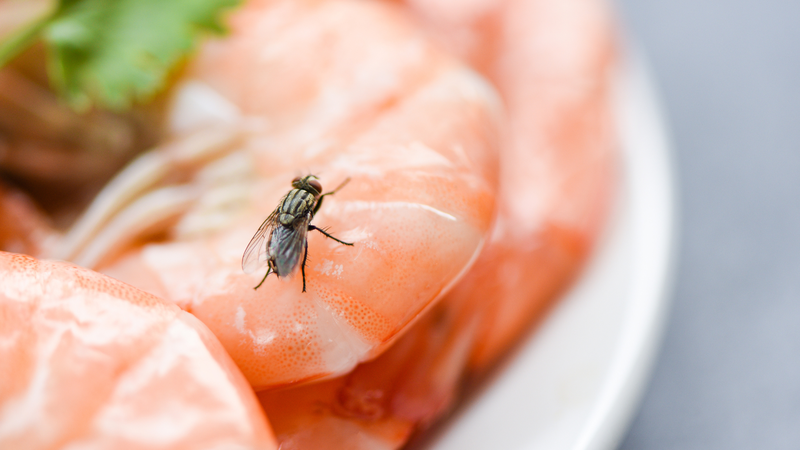
What are blow flies?
Read more: Common fly species
2. Unmistakable identification characteristics
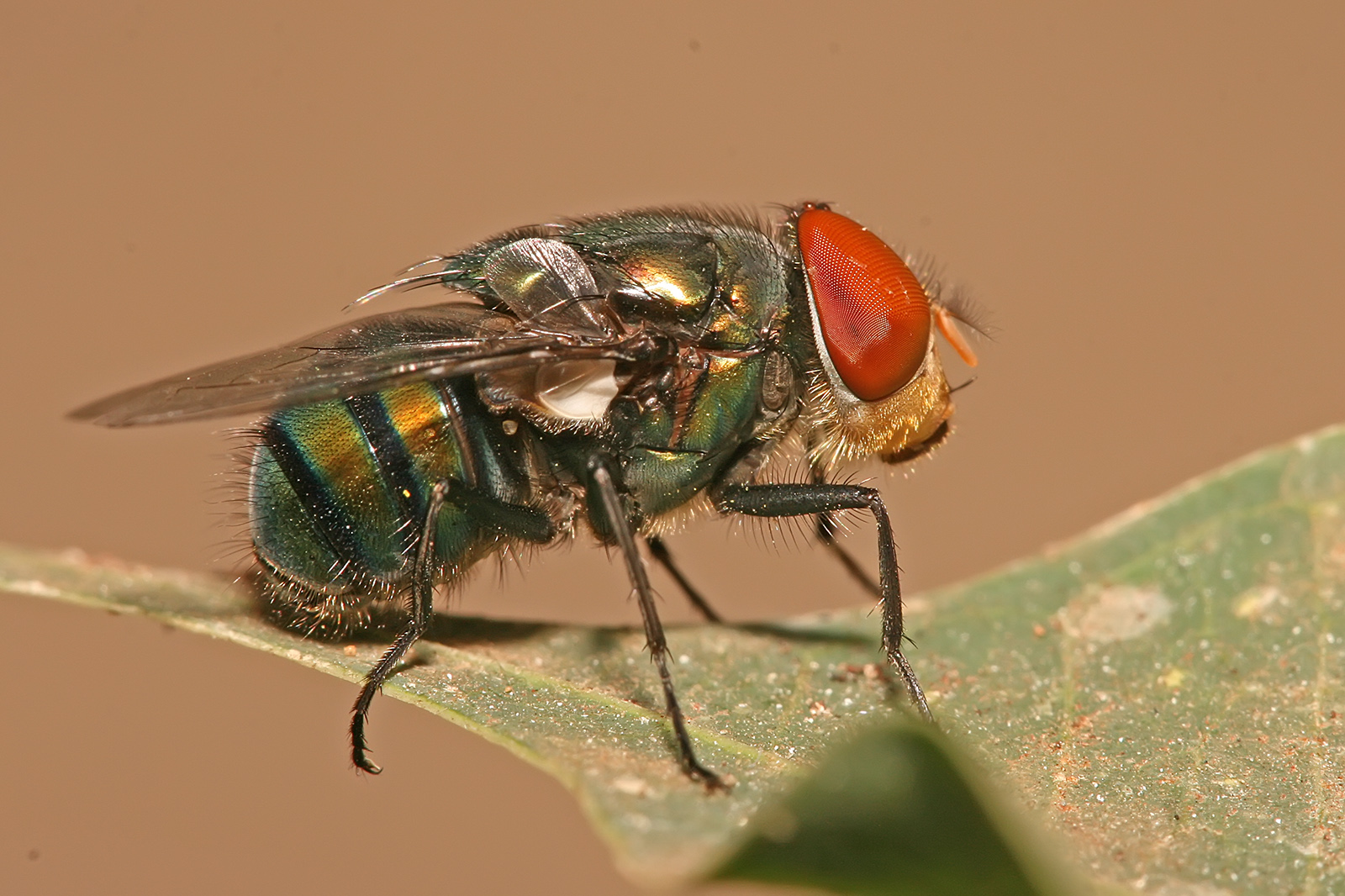
- Metallic coloration: Unlike dull gray house flies, blow flies possess a glossy outer body with metallic green, blue, or bronze reflections under light.
- Larger size: They are generally larger and more robust than house flies, with body lengths ranging from 6 – 12 mm.
- Distinctive buzzing sound: Due to their rapid wing movement and relatively large size, blow flies produce a loud buzzing sound that can easily be noticed as soon as they enter a room.
- Bright red compound eyes: The compound eyes of these insects are typically bright reddish-orange on the head, allowing them to react extremely quickly to human attempts at swatting or chasing them away.
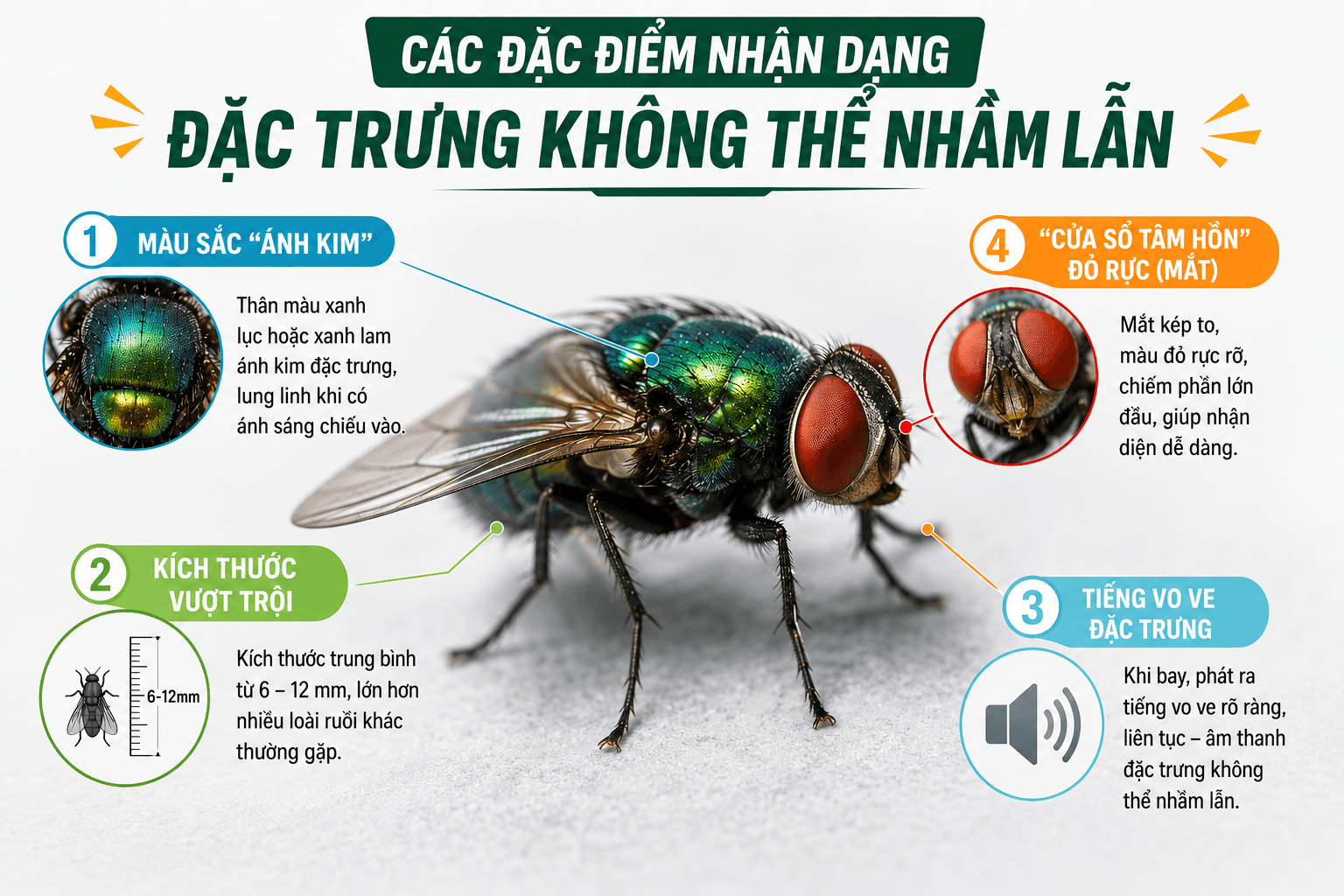
Identifying characteristics of blow flies
3. Behavioral habits and potential risks of blow flies
3.1. Behavioral habits of blow flies
The presence of blow flies indoors is never coincidental; they function as a biological "radar" constantly seeking decaying organic matter. Their bionomics are closely linked to putrid odors, particularly animal carcasses such as dead rodents or birds on roofs, or long-expired spoiled meat. Equipped with an exceptionally keen sense of smell, blow flies can detect food sources from vast distances and rapidly congregate to oviposit.
3.2. Adverse impacts of blow flies on human health
Transmission of gastrointestinal diseases: Flies are major carriers of diseases such as bacillary dysentery, amoebic dysentery, cholera, typhoid fever, diarrhea, and food poisoning.
Transmission of bacterial infections: They can carry bacteria such as Salmonella and E. coli, which may cause serious intestinal infections.
Eye and skin diseases: Eye flies (eyeflies) may cause trachoma, eye infections, and skin conditions such as acute dermatitis and fungal skin infections.
Transmission of parasitic infections: Flies can carry worm eggs, tapeworm eggs, and pork tapeworm larvae onto food sources.
Parasitic fly larvae (maggots): In certain cases, fly larvae may infest human organs, such as intestinal myiasis or open wound infestations.
Learn more: The terrifying diseases that flies can cause to humans
4. Rapid lifecycle - The driver behind uncontrolled blow fly proliferation
A pair of blowflies can produce an "army" of thousands in a short period of time:
4.1. The egg stage
Female blow flies deposit hundreds of eggs per batch onto decomposing organic substrate such as animal carcasses, refuse dumps, or spoiled food. A single female can lay 150 – 200 eggs per oviposition and up to thousands throughout her lifespan. Notably, certain blow fly species exhibit larviposition (depositing live maggots immediately instead of eggs) to shorten developmental time.
4.2. The maggot (larval) stage
Within just 8 – 24 hours, the eggs hatch into maggots and undergo three molting stages to rapidly increase in size. They continuously feed on surrounding organic matter to store energy and grow. Once fully developed, they crawl toward dry areas with loose soil in preparation for pupation.
4.3. The pupal stage
Maggots migrate to dry locations to form pupae. The pupa is enclosed within a hardened, reddish-brown outer shell (puparium), remaining quiescent and non-feeding. Depending on ambient temperature, this stage can conclude in 2 – 6 days during warm weather or extend significantly during cold periods.
4.4. The adult stage
After emerging from the pupal case, the fly requires approximately 2 hours for its wings to dry before it can fly. After about 10 – 30 days (depending on temperature), a new generation of flies continues the infestation cycle. Just 2 days after reaching adulthood, blow flies are already capable of mating and laying the next batch of eggs, continuing the cycle once again.
It is this shortening of each stage that creates a terrifying cumulative effect — from just a few initial flies, an "army" of green blowflies can form in less than two weeks.
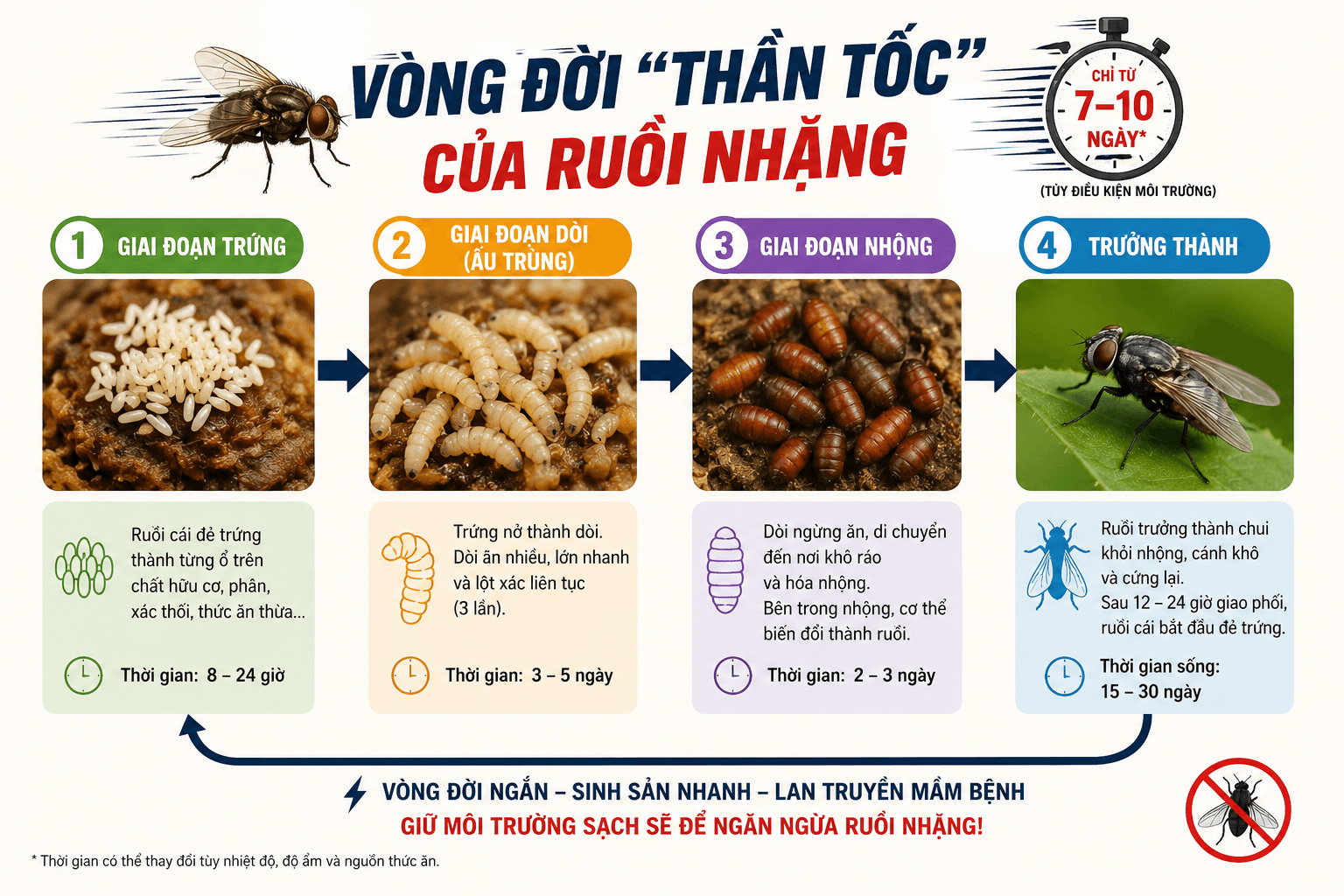
The incredibly fast life cycle of blow flies.
Read more: Neighbor of blow flies – House flies
5. Effective blow fly control and management
5.1. Eradication using diy traps (For kitchens and dining areas)
Apple cider vinegar and dish soap trap: Pour apple cider vinegar into a bowl and add a few drops of dish soap. The sour scent of the vinegar attracts flies, while the dish soap causes them to sink and die instantly.
Plastic bottle funnel trap: Cut a plastic bottle in half and invert the top section into the lower half to create a funnel shape. Place bait such as ripe bananas, rotten meat, or sugar water at the bottom. Flies can enter easily but cannot escape.
5.2. Utilizing professional pesticides (For restaurants, livestock farms, ...)
Rado fly bait: This is one of the most widely used fly baits in Vietnam. Simply sprinkle a small amount of powder onto cardboard or a plastic tray, and flies landing on it will die immediately.
Fendona 10SC spray: This product is odorless and safe for humans when used properly. Spray it on walls, fences, or areas where flies commonly rest for long-term control and prevention.
Using professional-grade chemicals on your own requires a solid understanding of mixing and spraying techniques. To better understand the differences between self-treatment and the technical procedures of a professional pest control company, you can read the detailed analysis here to make the most suitable decision for your farm or restaurant.”
See more: Ensystex LED insect light trap - Effective and safe flying insect control solution for every space
5.3. Natural repellent methods (Eco-friendly & safe)
Lemongrass and peppermint essential oils: Flies strongly dislike these scents. You can use an essential oil diffuser or dilute the oils with water for spraying around the house.
Hanging clear water bags: This method is effective during daytime near entrances. Light passing through the water creates refraction effects that disrupt the flies’ compound vision, discouraging them from flying through the area.
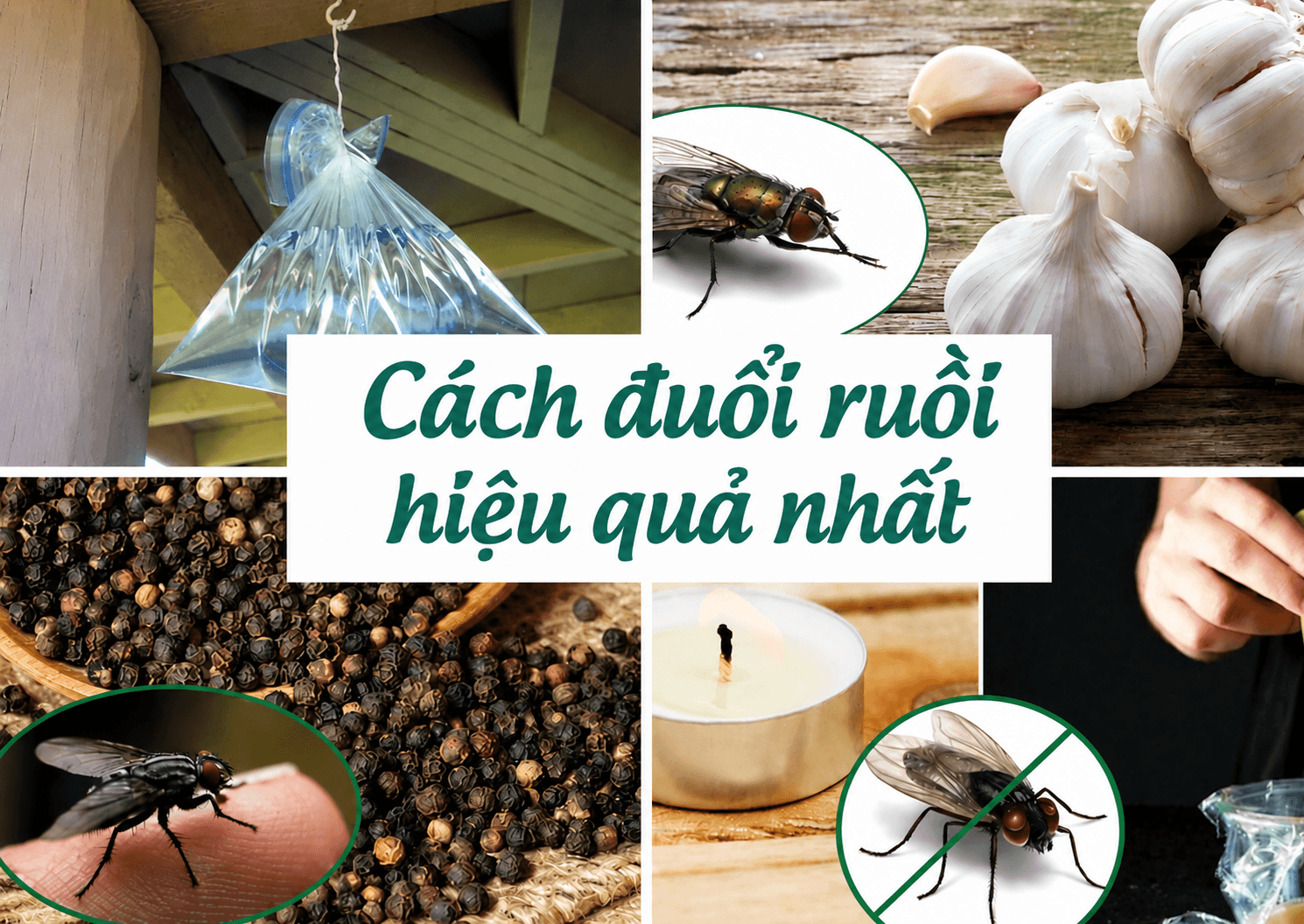
The most effective way to get rid of flies
5.4. Source reduction and root elimination
Eliminate food sources: Do not leave leftover food exposed, and always keep garbage bins tightly covered.
Eliminate breeding sites: Remove animal carcasses, pet waste, stagnant water, and decomposing organic waste — these are common egg-laying sites where flies produce maggots.
If you are facing serious pest problems, contact VFC PestMan for professional consultation and effective root-cause treatment solutions.
You may also be interested in: IPM and traditional insect spraying: Which is the optimal pest control solution for businesses?


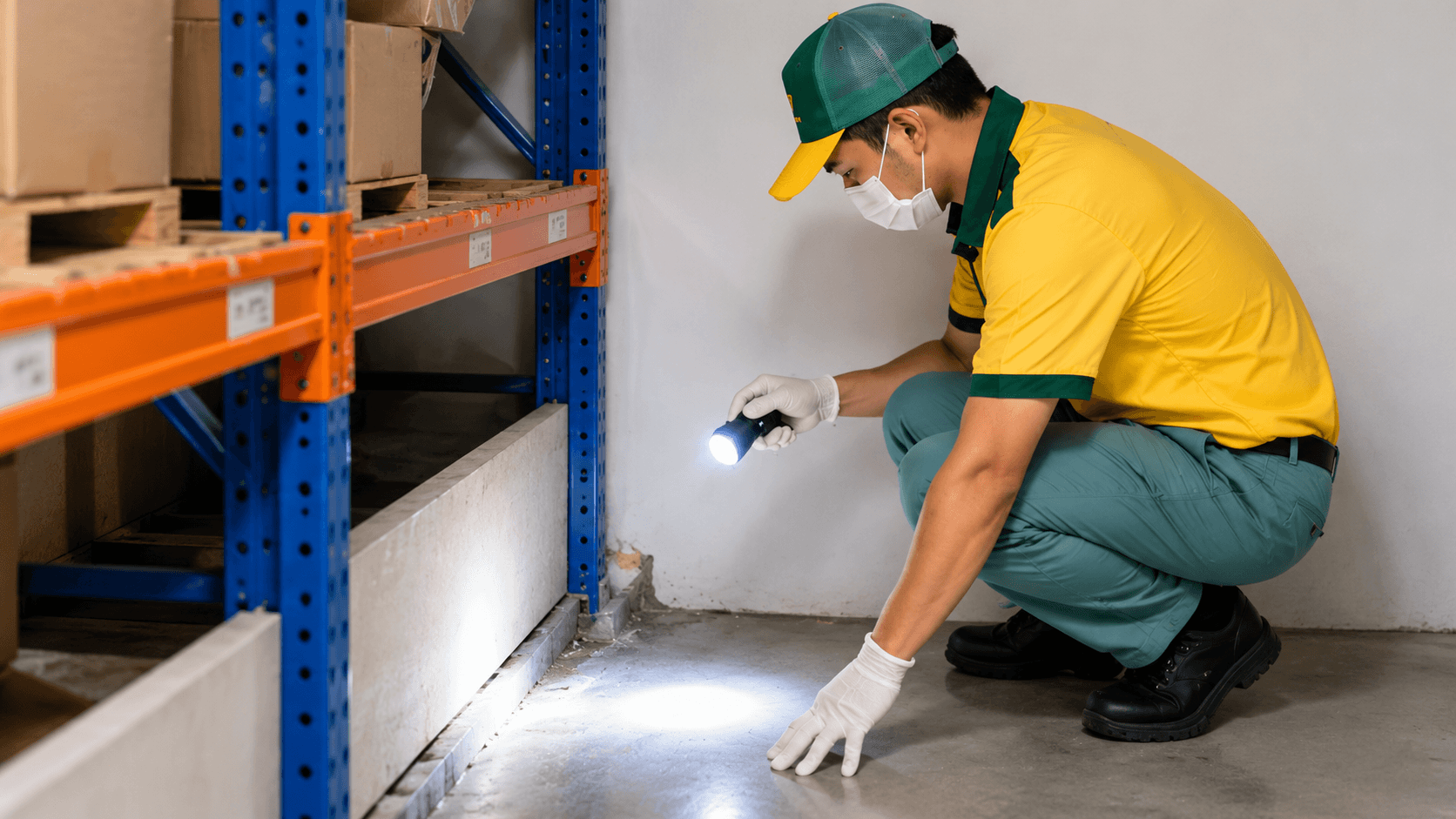
Mistakes that cause insects to recur in warehouses
Insects in warehouses can affect the quality of goods, efficiency, ...
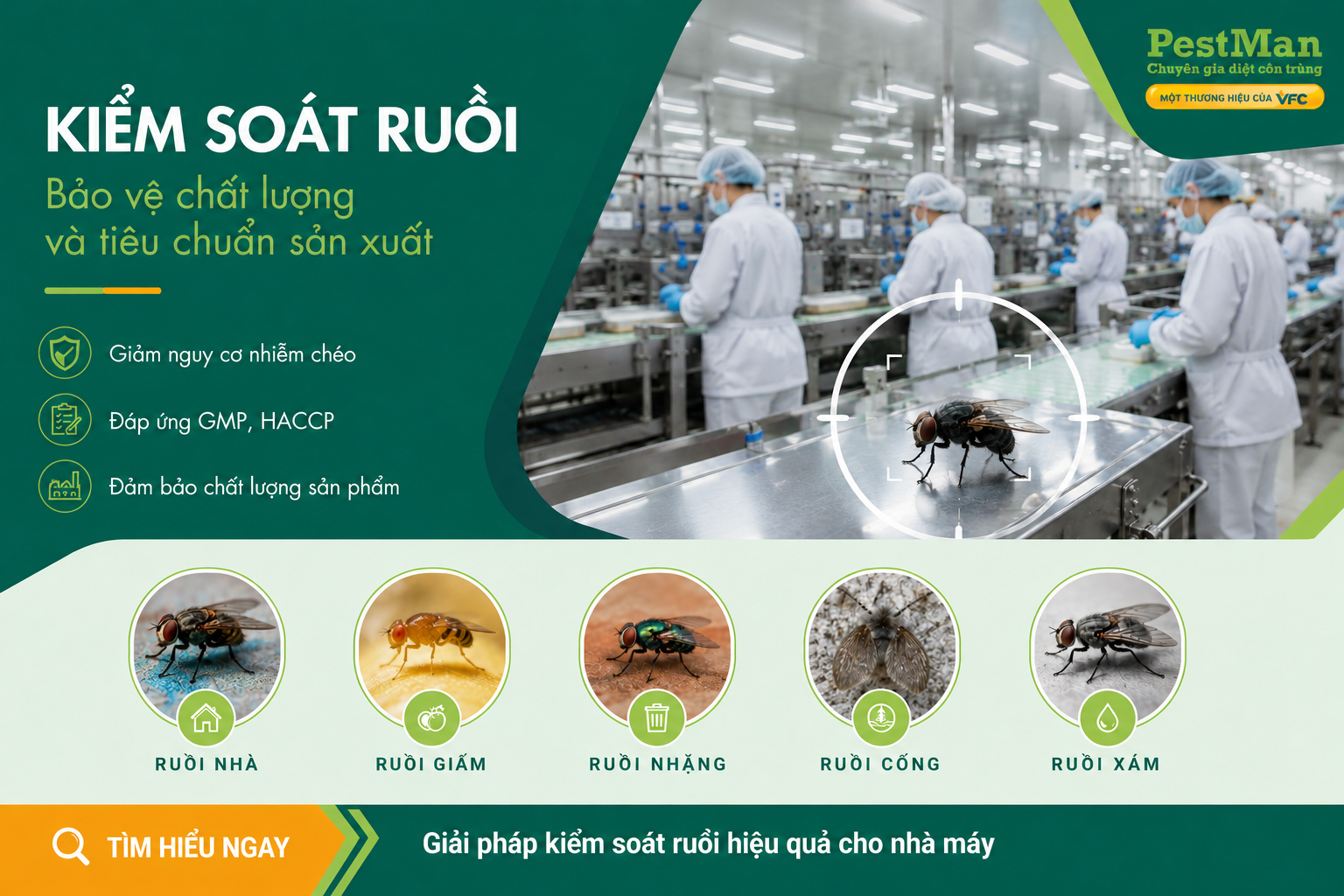
Effective fly control in factories: Identifying the right species for root-cause treatment
In manufacturing environments, especially in food and beverage factories…
Related news

Ready to eliminate audit risks and proactively protect customer experience & brand reputation?






Dear Valued Visitor,
To protect our clients' interests, all materials here are copyrighted and may not be reproduced without permission.
We appreciate your cooperation. Should you need to use our content professionally, please contact us directly.