





By pestman | 28-01-2026
What are fire ants?
Fire ants are the common name for a group of ants belonging to the genus Solenopsis, known for their aggressive behavior and painful bites/stings that feel like burning fire. These insects are widespread and can become a nuisance or even a danger to humans and pets.
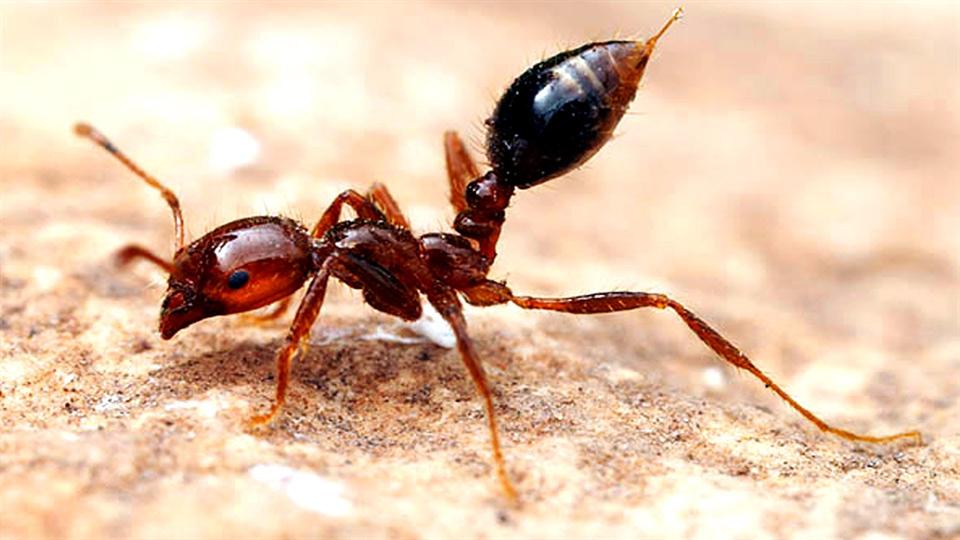 What are fire ants?
Behavior, diet & habits
Fire ants typically build their nests in the ground. In some cases, the nest appears as a mound measuring about 61 cm in diameter and 18 cm in height. Large colonies may contain up to 250,000 worker ants. This species is highly active and aggressive, attacking almost any creature that invades their territory.
Fire ants are omnivorous. They feed on both animal- and plant-based food sources. Worker ants commonly consume insects, earthworms, ticks, spiders, arthropod eggs, honeydew from insects, and other sugary substances. Their plant-based diet mainly consists of seeds. They may also prey on newborn vertebrates such as birds, mice, and small mammals.
In general, these insects readily consume decaying animal carcasses regardless of whether they caused the death or not. Fire ant larvae are fed by worker ants and consume only liquid food until the completion of their third larval stage. During the fourth larval stage, they become capable of digesting solid food.
Reproduction
The average development time from egg to adulthood is approximately 30 days; worker ants may live up to 180 days, while queens can survive for two to six years.
Signs of a fire ant infestation
Common signs of a fire ant infestation include the presence of worker ants and winged ants. Other indicators may include visible soil mounds, which are often more noticeable after rainfall, or complaints from people who have been bitten or stung.
Additional information
Fire ants prefer warm and sunny environments. They favor dry areas and tend to avoid shaded locations such as forests. A typical fire ant mound can grow up to 61 cm in diameter and 18 cm in height. A single colony may contain hundreds of thousands of ants, including at least one queen.
When attacking, this species uses its mandibles to grip the target tightly before injecting venom through its stinger.
The sting of this ant species is usually painful to humans and may become life-threatening if the victim develops severe reactions such as excessive sweating, nausea, or intense itching. In such cases, emergency medical services should be contacted immediately. Their stingers contain alkaloid venom that can cause severe irritation, red bumps, and white pustules on the skin.
The sensation caused by a fire ant sting is often described as “aching” and “burning.” Fire ants are also considered a major threat due to their aggressive predatory behavior and massive colony sizes. A single colony may contain between 100,000 and 500,000 ants, making their attacks potentially very dangerous.
Learn more: Small insects with the most painful sting on Earth
Fire ant treatment and prevention
To avoid being bitten or stung outdoors, always stay alert and pay attention to where you step, sit, or place items such as food and drinks. The most reliable way to deal with fire ants is to contact a local pest control company for a professional inspection and the implementation of appropriate fire ant control measures in your home.
You may be interested in: Professional pest control services: Fast, effective, and long-lasting results



Mistakes that cause insects to recur in warehouses
Insects in warehouses can affect the quality of goods, efficiency, ...

Effective fly control in factories: Identifying the right species for root-cause treatment
In manufacturing environments, especially in food and beverage factories…


Related news

Ready to eliminate audit risks and proactively protect customer experience & brand reputation?






Dear Valued Visitor,
To protect our clients' interests, all materials here are copyrighted and may not be reproduced without permission.
We appreciate your cooperation. Should you need to use our content professionally, please contact us directly.