





By VFC PestMan | 14-07-2026
Insects and other pests can enter manufacturing facilities through doors, structural gaps, drainage systems, raw material receiving areas and waste-handling zones. If action is taken only after flies, cockroaches, rodents or other signs of pest activity have been detected, businesses may miss the opportunity to manage risks at an early stage. Establishing a structured insect and pest control process for manufacturing facilities is therefore an important step in maintaining a controlled production environment and meeting quality requirements.
1. What is an insect and pest control process for manufacturing facilities?
An insect and pest control process is a structured system of activities designed to prevent, monitor, detect and manage pests within a facility. The process should clearly define target pests, areas requiring control, monitoring methods, inspection frequency, departmental responsibilities and the actions to be taken when abnormal pest activity is detected.
The scope of the process extends beyond pesticide application and trap placement. Businesses also need to manage conditions that support pest entry and activity, including structural gaps, food sources, standing water, waste, drainage systems, surrounding landscaping and incoming or outgoing material flows.
This is also the principle behind Integrated Pest Management (IPM). An IPM programme combines prevention, monitoring, data analysis and control measures selected according to actual risk, helping facilities manage pests systematically while reducing unnecessary reliance on pesticides.
2. Why do manufacturing facilities need a structured pest control process?
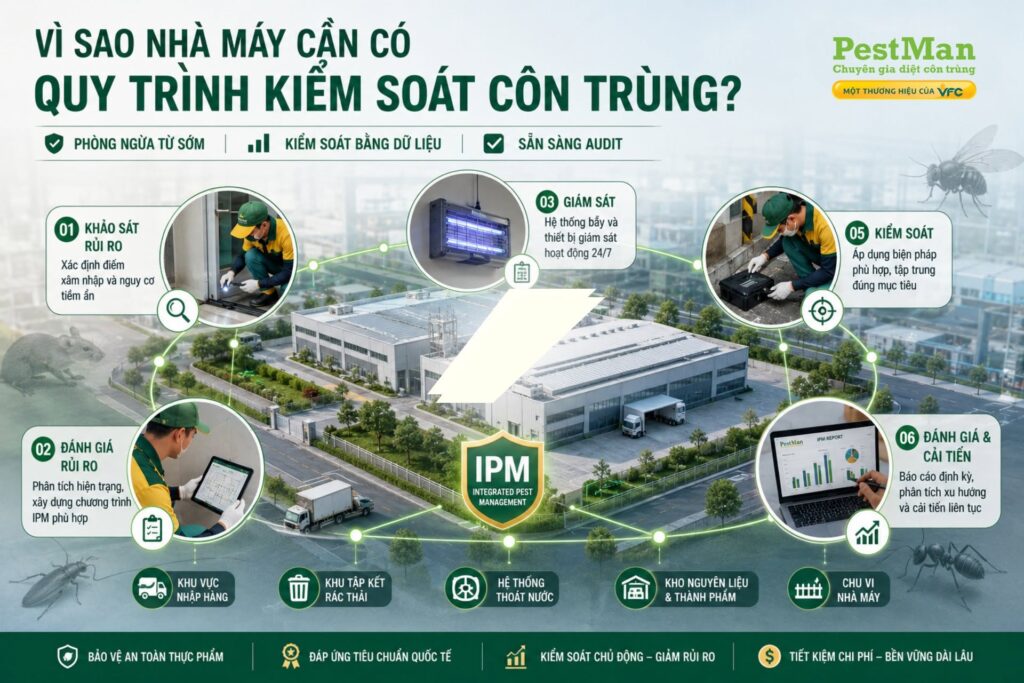
2.1. Prevent pest risks before they develop into incidents
Manufacturing facilities contain multiple conditions and pathways that may allow pests to enter. Frequently opened loading doors, utility penetrations, drains, waste areas, raw material stores and surrounding vegetation can all become pest entry routes or attractant sources.
If pest control begins only after employees see cockroaches, flies or rodents, early signs of pest activity may already have been missed. Signs detected in a production area may originate from harbourage sites, food sources or entry routes located elsewhere in the facility. Treating only the location where pests are observed may therefore fail to address the underlying cause. This is also a key difference between a “treat only when pests appear” approach and preventive pest management before incidents occur.
With a structured programme in place, risk areas can be inspected according to plan and monitoring devices positioned at appropriate locations. Inspection data can help identify unusual changes while pest activity is still relatively low, allowing the business to investigate and address causes before the issue spreads to production, raw material or finished-product areas.
Prevention also helps businesses shift from reactive treatment to proactive risk management. This is a core principle of IPM and is particularly relevant to facilities with stringent food safety, hygiene and product-quality requirements.
2.2. Protect product quality and safety
Flies, cockroaches, rodents and other pests can move between contaminated environments and production areas. During this movement, pests may carry microorganisms, debris or other contaminants onto equipment surfaces, raw materials, packaging and finished products. For food and beverage manufacturers, this is one of the contamination risks that should be managed within the food safety programme.
The impact of pests is not limited to contamination risk. Rodents may damage packaging, wiring and materials; stored-product insects may infest stored ingredients; and flying insects may enter production areas through doors or material-handling flows.A weakness at one control point may affect multiple downstream processes.
A structured control process allows businesses to classify areas by risk level and select appropriate monitoring methods. Production areas, raw material warehouses, packaging zones, loading docks, canteens, drainage systems and waste-handling areas should be assessed according to their individual risk profiles rather than managed using a single approach across the entire facility.
When preventive and monitoring controls are maintained consistently, pest risks can be identified and reduced before they reach sensitive areas. This helps protect raw materials and finished products while supporting hygienic conditions throughout production.
2.3. Support compliance with standards and audit requirements
Pest management is an important component of many food safety and quality management systems used in manufacturing facilities, including ISO 22000, FSSC 22000, BRCGS Food Safety, HACCP, GMP, SQF and AIB International. The scope and level of requirements vary between systems, but businesses generally need to demonstrate that pest management is appropriately implemented, monitored and maintained.
Businesses can review common pest control requirements across major manufacturing standards and systems to identify the monitoring, documentation and corrective-action requirements relevant to their facility.
During an audit, auditors may review both actual site conditions and the supporting pest management documentation. Device maps, inspection logs, pest activity history, treatment reports, trap condition, trend analyses and corrective actions may all be used to assess programme effectiveness. Vì vậy, A pest control report should therefore show pest activity levels, trends, abnormal areas and corrective actions rather than simply recording the number of technician visits.
Preparing documentation only immediately before an audit is unlikely to reflect the full history of the facility's pest management programme. A consistently maintained programme creates a continuous data record while clearly defining responsibilities between the pest management provider and internal teams such as QA/QC, production, warehousing and maintenance.
When abnormal activity is detected, the business can review historical records, investigate potential causes and document the actions taken. This traceability helps facilities prepare more effectively for customer audits, certification audits and other stakeholder reviews.
2.4. Use actual monitoring data to guide pest control
A structured pest management programme should generate enough data for the business to understand where pest activity is occurring, when it occurs and how it changes over time. Regular inspections therefore serve a broader purpose than simply confirming whether pests are present. The data should be used to identify trends and support control decisions.
For example, a sustained increase in captures across a group of insect light traps may indicate that further investigation is required. Possible causes may include frequently opened doors, inadequate exclusion measures, changes in external pest pressure or a new attractant source near the production area.
Through trend analysis, businesses can compare data across areas and reporting periods to identify hotspots requiring priority attention. If pest activity increases in a particular area, inspection frequency can be adjusted and preventive measures strengthened. Where activity remains stable, the historical data provide an additional basis for evaluating current programme performance.
For programmes with a large number of monitoring points, businesses can track trend analysis, heatmaps and pest hotspots through the PestMan Dashboard instead of manually consolidating individual inspection sheets.
Data-driven management also gives QA/QC teams greater visibility into programme performance. When equipment information, inspection results, site photographs and treatment history are properly recorded, businesses can evaluate performance over time and maintain supporting evidence for audits.
2.5. Reduce operating costs and pest-related risks
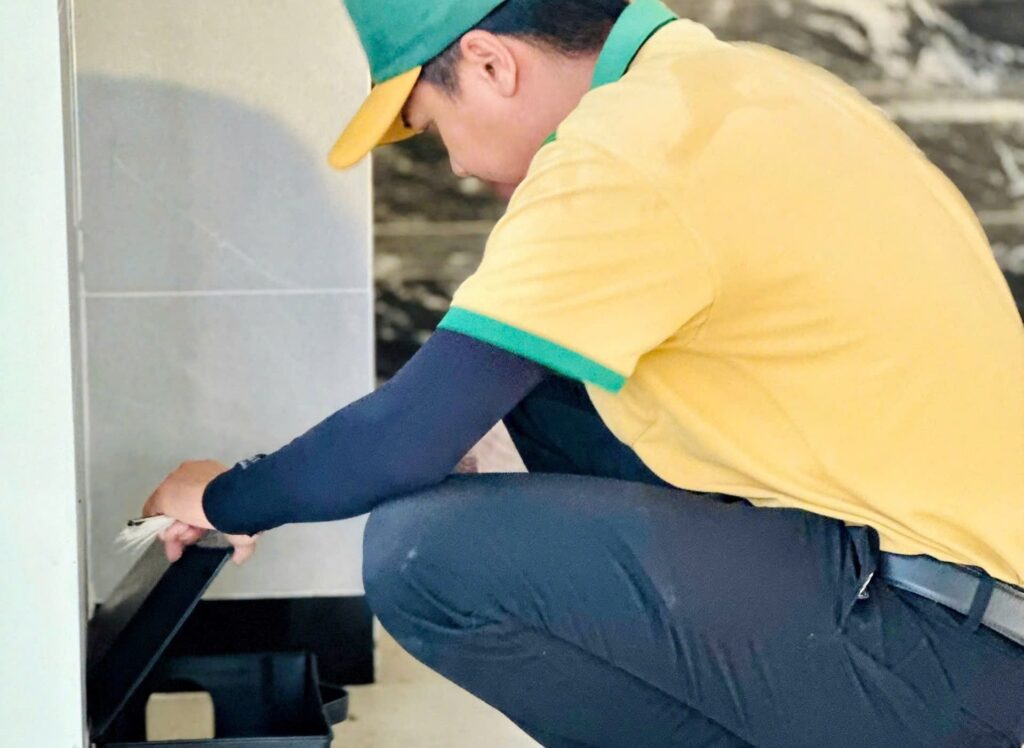
Pest-related incidents can create costs that exceed the routine cost of maintaining a preventive management programme. When a pest incident occurs in a production area, the business may need additional sanitation, inspection of raw materials and finished products, emergency treatment, structural corrective work or temporary operational restrictions while the cause is investigated.
For food and beverage manufacturers or facilities supplying customers with stringent requirements, the consequences may also include complaints, audit non-conformities or corrective-action requirements. These incidents can place additional demands on QA/QC, production, maintenance and facility management resources.
A consistently maintained pest management process helps businesses identify issues while they are still limited in scope and take action before production is significantly affected. Historical data also help identify areas that require priority resources, reducing unnecessary treatment and the likelihood of emergency intervention.
Over the long term, continuous prevention and monitoring can support a more stable production environment. This is also a key value of IPM: pest management becomes part of the facility's risk-management system rather than an activity carried out only in response to incidents.
3. What should a factory pest control process include?
An effective programme should begin with a site assessment and facility-wide pest risk evaluation. Production processes, facility structure, raw materials, material flows, drainage systems, waste areas, surrounding landscaping and historical pest activity should all be reviewed before the programme is designed.
Based on the assessment, a monitoring system can be designed for the relevant pest species and risk zones. The facility may use insect light traps, crawling-insect monitoring traps, rodent control stations and other specialised monitoring devices. Device placement should be based on likely pest entry routes, activity patterns and operational conditions so that the resulting data provide meaningful monitoring value.
Once the programme is in operation, technicians inspect monitoring points at defined intervals, record findings and track abnormal activity. When monitoring data exceed defined action thresholds or a new risk emerges, the cause should be investigated and appropriate corrective measures implemented. The effectiveness of corrective actions should then be reviewed during subsequent inspections.
The collected data are then consolidated for trend analysis and programme review. This creates a continuous control cycle of risk assessment, prevention, monitoring, analysis, corrective action and improvement, allowing the IPM programme to adapt to changes in facility operations.The data also help businesses determine when the pest management programme should be reassessed rather than continuing with an unchanged approach.
4. How does VFC PestMan develop pest management programmes for manufacturing facilities?
Each facility has different production processes, building designs, surrounding conditions and audit requirements. The pest management programme should therefore be designed around the actual risk profile of each site and adjusted when production lines, output volumes or operating conditions change.
With more than 50 years of experience in pest management, VFC delivers Integrated Pest Management (IPM) programmes covering site assessment, risk evaluation, monitoring-system setup, inspection and data analysis. Monitoring results are used to identify trends, recommend corrective actions and support QA/QC teams in managing the programme according to actual operating conditions.
A structured pest control process helps manufacturing facilities prevent pest risks proactively, protect products, maintain traceable monitoring data and better support quality, food safety and audit requirements. A continuously maintained programme also helps businesses identify risks earlier and reduce the additional costs that may arise once a pest incident begins to affect production.
VFC PestMan supports businesses in developing IPM programmes tailored to the operating conditions and risk profile of each facility, with a focus on proactive prevention, data-driven management and long-term programme effectiveness.


Dịch vụ kiểm soát côn trùng cho doanh nghiệp: Quy trình từ khảo sát đến giám sát định kỳ
Một chương trình kiểm soát côn trùng hiệu quả cần được xây dựng theo quy…

VFC PestMan – công ty diệt côn trùng cho doanh nghiệp
Doanh nghiệp cần xử lý côn trùng theo một hệ thống có khả năng kiểm…


Related news

Ready to eliminate audit risks and proactively protect customer experience & brand reputation?





Dear Valued Visitor,
To protect our clients' interests, all materials here are copyrighted and may not be reproduced without permission.
We appreciate your cooperation. Should you need to use our content professionally, please contact us directly.