


By VFC PestMan | 28-01-2026

Bathroom full of annoying moth flies, experts recommend "do not touch them carelessly" or the consequences will be terrible

Drain flies, also known as moth flies, are commonly found around floor drains, sinks and damp areas where organic matter accumulates. Crushing individual flies by hand is not an effective control method because it does not address the source. Effective control requires locating and removing the areas where larvae are developing.

What are drain flies and how can they be identified?

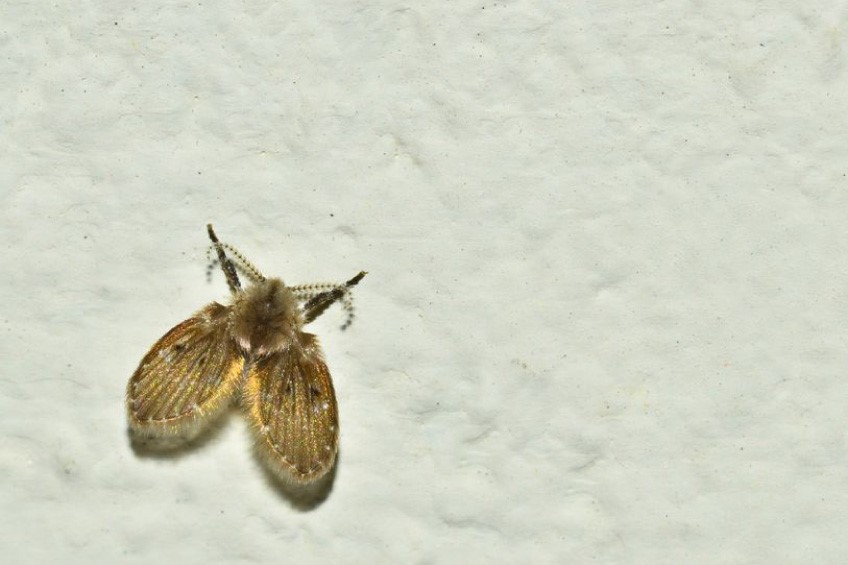
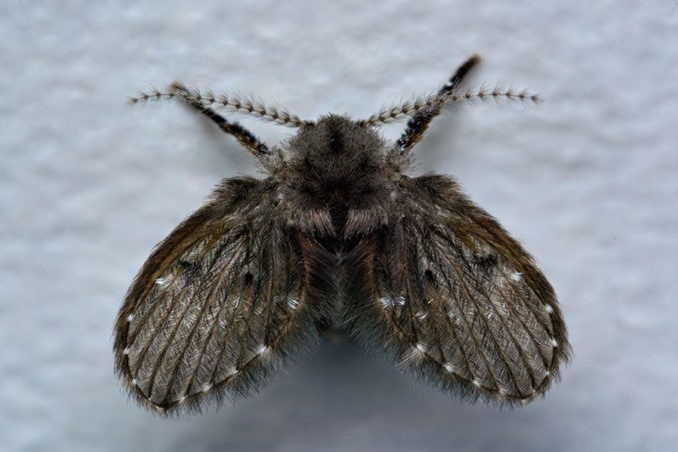
Drain flies are the common name for several fly species belonging to the family Psychodidae. These insects are also known as moth flies because the shape of their wings and the fine hairs covering their bodies give adult flies a moth-like appearance.

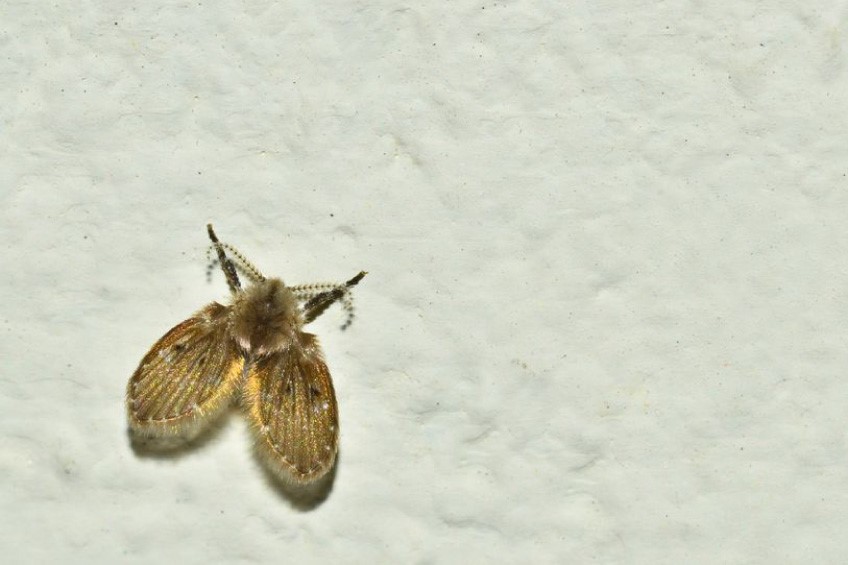
Drain flies are usually small and may be grey, greyish-brown or brown depending on the species. Their bodies and wings are covered with fine hairs. When resting on a wall, the wings are often held in a relatively broad shape, making them look distinctly different from house flies or fruit flies. Their flying ability is generally limited. Adult drain flies tend to make short flights and then rest on walls, surfaces near drains or other damp areas.

Ruồi cánh bướm

Moth flies

Why are they called moth flies?

The name comes from their external appearance and does not mean that they are a type of moth. Their wings are covered with fine hairs. When the fly is resting, the broad wing shape and the way the wings are held give it the appearance of a very small moth.

However, identification should not be based on size alone. Fruit flies, phorid flies and other small fly groups may also occur in washrooms or areas containing organic matter.

How are drain flies different from fruit flies?

Drain flies usually have hairy bodies and are associated with drainage systems, drains or moist organic films. Fruit flies, by contrast, are more commonly found around ripe fruit, beverages, sugary foods or fermenting materials.

Correctly identifying the fly group helps avoid a common mistake: seeing small flies and assuming they are all drain flies. If you are unsure about the species currently appearing, you can further cross-check common fly species and the identification characteristics of each group before choosing treatment measures.

Why are drain flies commonly found in washrooms and drains?

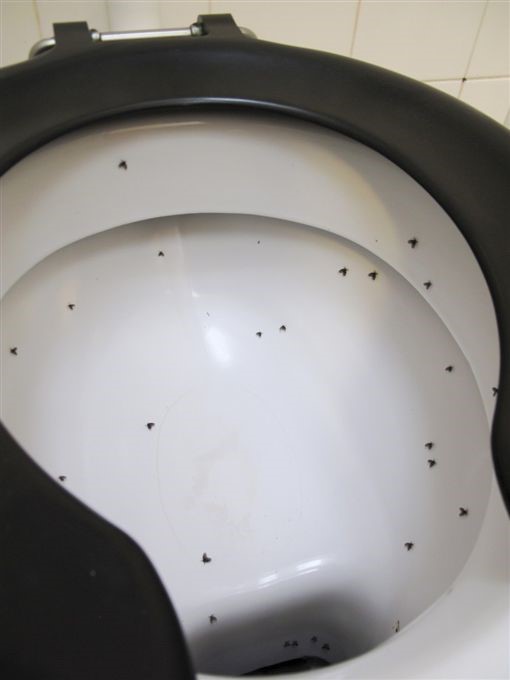
Drain flies are usually found in locations where three conditions occur together: moisture, organic material and a suitable surface for larval development. Restrooms, washing areas, floor drains and wastewater systems can provide all three conditions when accumulated organic residues are not removed regularly.

What is biofilm inside a drain?

Biofilm can be understood simply as a layer of organic matter, microorganisms and residue attached to damp surfaces inside a drainage system. For some drain fly species, this material provides both a food source and a suitable environment for larval development.

For this reason, mopping floors, flushing with water or treating adult flies resting on walls may not reach the actual source. If flies continue to appear around the same floor drain, the inside of the drain should be inspected rather than focusing only on the surface above it.

Why do flies still appear after the floor has been cleaned?

One common reason is that routine cleaning does not reach organic matter located deeper inside the drainage system. Infrequently used drains, sections of pipe with standing water, manholes, leakage areas or locations where residue accumulates may continue to provide suitable conditions for larvae.

In addition, the breeding source is sometimes not located right where flies are seen. Adult flies can fly from manholes, washing areas, or the shared drainage system to the restroom area. Therefore, when the issue recurs, it is necessary to inspect along the line rather than just cleaning individual spots. If flies are concentrated around drains, manholes, or shared drainage lines, you can see more about how to identify and control drain flies based on the drainage system.

Which locations should be prioritised for inspection?

In factories and manufacturing facilities, inspections should begin with floor drains, sinks, restrooms, equipment washing areas, manholes and drains that are rarely used. If flies are appearing in multiple rooms or areas, inspecting the shared drainage system may be more important than continuing to treat individual adult flies. Waste rooms, wastewater treatment areas and locations containing moist organic matter should also be included in the survey.

Ruồi cánh bướm thường xuất hiện trong nhà vệ sinh và cống

Drain flies are commonly found in restrooms and drainage areas

What is the life cycle of a drain fly?

Drain flies undergo complete metamorphosis consisting of four stages: egg, larva, pupa and adult.

Where do eggs and larvae develop?

Adult flies usually lay eggs in damp environments containing organic matter. After hatching, the larvae live within or close to this organic material. In drainage systems, accumulated residue inside the drain may provide a suitable development environment. The larvae do not resemble adult flies. This stage is focused primarily on feeding and growth before pupation.

What role does the pupal stage play?

After sufficient development, the larvae enter the pupal stage. During this stage, the insect body changes and develops into the adult form. Once development is complete, the adult fly emerges and begins appearing around the drain or nearby surfaces. If the organic source remains in place, the cycle may continue.

Why do flies reappear a few days after the adults have been treated?

The simple reason is that the remainder of the life cycle may still persist. Chemicals or traps can reduce the number of visible adult flies. However, eggs, larvae, or pupae can still continue to develop if the environment inside the drain remains unchanged. This is also why only treating visible insects usually fails to resolve the underlying breeding source.

For this reason, treatment effectiveness should not be assessed simply because “no flies are visible today”. Monitoring should continue over several days, together with confirmation that the breeding source has been addressed.

Vòng đời của ruồi cánh bướm

Drain fly life cycle

Do drain flies pose a health risk?

Drain flies commonly found around drainage systems are generally not regarded as biting or stinging insects like mosquitoes. The main concerns are nuisance, reduced perceptions of hygiene and the indication that damp organic conditions may be present and require inspection.

Statements such as “touching them is very dangerous” or “they carry countless disease-causing bacteria” should not be used without specific supporting evidence.

Should drain flies be crushed directly by hand?

There is no need to do so. Crushing a single fly by hand does not address the breeding source and is not an appropriate hygiene practice in a factory or manufacturing environment.

If accidental contact occurs with the insect or surfaces around the drain, following the facility’s normal hand-washing procedure is appropriate. The more important issue is identifying why the flies are appearing in that area.

Do drain flies bite or sting?

The drain fly species commonly found in buildings are not generally considered biting or stinging insects. If small insects are present and employees are also reporting bites, the species should be re-identified rather than assuming that drain flies are responsible. Incorrect identification may lead to investigation of the wrong source and selection of unsuitable control measures.

Can drain flies transmit disease?

Drain flies should not be described as major disease vectors without evidence relevant to the species and specific conditions involved. Medical literature has documented some rare cases involving larvae from the Psychodidae group, but this does not support the conclusion that drain flies commonly found around drains regularly cause disease in humans.

For factories and manufacturing facilities, a more appropriate approach is to treat their presence as an indicator that sanitation conditions, wastewater systems and accumulated organic matter should be inspected.

Why do drain flies still need to be controlled?

Although their health risk should not be overstated, persistent drain fly activity still needs to be addressed. In restrooms, production areas, canteens or customer-facing spaces, their presence can reduce perceptions of cleanliness.

In industrial environments, recurring activity may also indicate that the drainage system or sanitation programme has areas requiring attention. Drain fly control is therefore primarily a matter of sanitation, source management and recurrence prevention.

What is the appropriate way to control drain flies?

The most important principle is to treat the breeding source first and the adult flies second. If only the adults resting on walls are sprayed, activity may decrease temporarily while the source inside the drain remains.

What should be done first?

The first step is to identify the drain or area where flies are developing. This can involve observing where the flies commonly rest, when they appear and which areas record higher activity levels. The organic material inside the drainage system should then be inspected, together with related conditions such as standing water, leaks or rarely used drains.

How should organic material inside the drain be cleaned?

The core measure is mechanical cleaning to remove accumulated residue. Rather than simply pouring water down the drain, the internal surfaces should be physically accessed with suitable cleaning tools where technically feasible.

The objective is to break up and remove the organic material being used by larvae as a development environment. In complex systems or production areas, cleaning procedures should comply with the facility’s SOPs and safety requirements.

Should insecticide be poured down the drain?

This should not automatically be considered an appropriate measure. Pest control products should only be used according to the product label, in approved locations and in accordance with the facility’s requirements.

Pouring insecticide into a drain without proper assessment may fail to remove the biofilm and can introduce additional risks through incorrect product use. In many cases, the core problem remains accumulated organic material rather than a lack of insecticide.

Can baking soda, vinegar or hot water eliminate drain flies?

Home remedies may temporarily change conditions inside a drain, but they should not be described as methods that “eliminate the problem at the source”. Their effectiveness depends on whether the organic film is actually removed.

If biofilm remains attached to the internal surfaces of the drainage system, pouring a solution through the drain may not be sufficient to eliminate the larval development site. In factories and manufacturing facilities, priority should be given to methods with clear procedures that can be monitored and evaluated.

Should traps be used to capture adult flies?

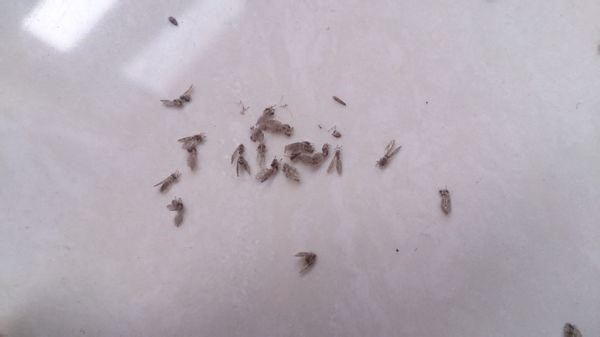
Glue traps or monitoring devices can help reduce the number of adult individuals and identify high-activity locations. However, traps do not replace source treatment. The greater value of monitoring equipment lies in its ability to indicate which areas have activity and trend changes following sanitation. When there are a large number of monitoring points, businesses can track hotspots and pest trends on the Dashboard instead of merely recording each individual trap.

Bẫy keo ruồi cánh bướm

Drain fly glue trap

When is professional pest control support required?

If flies continue to appear after drains have been cleaned, multiple areas are affected or the source may be located within manholes or complex technical systems, a more detailed inspection should be conducted. The pest control provider should confirm the species, map detection points and inspect organic sources, moisture conditions and drainage system characteristics.

In this case, the appropriate step is to assess risks and map breeding sources by area before increasing treatment frequency. For VFC PestMan, the suitable approach is to survey the current status, identify sources, record data, and recommend measures based on actual conditions rather than simply increasing spraying frequency.

How can drain flies be prevented from returning?

Prevention should focus on making the environment unsuitable for the fly life cycle. This requires drain sanitation, moisture management and monitoring of locations with a history of activity.

How should drainage systems be inspected?

Floor drains and other drainage points should be included in scheduled inspections, particularly in areas with previous drain fly activity. Accumulated residue, unusual odours, standing water and rarely used drains should be checked. For water traps, dry conditions or improper operation may alter conditions within the drainage system and should be reviewed by the technical team.

Why is moisture management important?

Drain flies depend on moist environments to maintain breeding sources. Water leaks, persistent standing water or areas that do not dry properly after cleaning may create favourable conditions. Correcting the cause of moisture often provides more lasting value than repeatedly treating adult flies.

Which points should factories monitor?

Locations with a history of pest activity should be marked and monitored over time. Floor drains, restrooms, washing areas, manholes, waste rooms, and wastewater treatment areas are common points of interest. If flies are recorded on monitoring equipment, data should be linked to the specific location and time rather than simply summed into a single general figure for the entire factory. This data should be compiled into pest control reports by point, density, and activity trends.

How often should follow-up inspections be conducted?

There is no single inspection frequency suitable for every facility. Frequency should be based on historical activity, drainage system design, type of operation and the risk level of each area. Locations with a history of high fly activity should be inspected more frequently than areas without previous issues. The objective of a preventive programme is not to promise that “flies will never return”. The objective is to detect favourable conditions early before activity levels begin to increase again.

When businesses need to turn drain cleaning, breeding point monitoring, and data tracking into a routine operational program, they can refer to PestMan's insect and rodent control services.

Frequently asked questions about drain flies

1. Are moth flies the same as drain flies?

In common usage, moth flies are often referred to as drain flies. The name comes from the fact that many species develop in moist organic environments within drainage systems.

2. Why do drain flies appear in restrooms?

Restrooms contain many damp locations, including floor drains, sinks and drainage lines. If sufficient organic material accumulates inside the drain to support larval development, adult flies may continue to appear.

3. Do drain flies cause disease?

Drain flies should not generally be regarded as major disease vectors under normal conditions. However, persistent activity may indicate moist organic material and sanitation conditions that require investigation.

4. Why do drain flies return a few days after treatment?

Eggs, larvae or pupae may still remain inside the drain. If the organic material is not removed, the life cycle can continue and new adult flies may emerge.

Featured News
con-trung-trong-kho-hang
Logistics warehouse

Các loại côn trùng trong kho hàng: Nhận diện và giải pháp kiểm soát toàn diện

Khu vực lưu trữ hàng hóa và kho nguyên liệu tập trung mật độ cao…

kiem-soat-dich-hai-kho-lanh-vfc-pestman
Pest control by industry

Kiểm soát dịch hại trong kho lạnh: 5 điểm mù doanh nghiệp thường bỏ qua

Kho lạnh giữ vai trò quan trọng trong chuỗi cung ứng thực phẩm, dược phẩm…

Kiem-tra-moi-mot-bang-Termatrac-iTracker
Pest control technology

Termatrac iTracker – Thiết bị hỗ trợ phát hiện mối trong công trình trước khi đục phá

Mối có thể hoạt động phía sau tường, sàn, trần và nội thất gỗ suốt…

Building

Quy trình IPM kiểm soát côn trùng toàn diện cho trường nội trú

IPM trường nội trú là phương pháp quản lý dịch hại theo hướng phòng ngừa, giám…

Related news

Building

Quy trình IPM kiểm soát côn trùng toàn diện cho trường nội trú

IPM trường nội trú là phương pháp quản lý dịch hại theo hướng phòng ngừa, giám…

Building

Chương trình kiểm soát côn trùng và dịch hại cho bếp ăn bán trú gồm những gì?

Bếp ăn bán trú tập trung thực phẩm, nước, nhiệt, chất thải hữu cơ và…

Building

Kiểm soát côn trùng và dịch hại trong trường học và cơ sở giáo dục

Kiểm soát côn trùng và dịch hại trong trường học và cơ sở giáo dục…

Building

Diệt côn trùng ký túc xá sau thời gian đóng cửa dài ngày cần chú ý điều gì?

Ký túc xá đóng cửa dài ngày vẫn có thể xuất hiện gián, kiến, muỗi,…

image

Ready to eliminate audit risks and proactively protect customer experience & brand reputation?
    Fill out the form below and a PestMan specialist will contact you as soon as possible.

    Dear Valued Visitor,
    ​To protect our clients' interests, all materials here are copyrighted and may not be reproduced without permission.
    ​We appreciate your cooperation. Should you need to use our content professionally, please contact us directly.